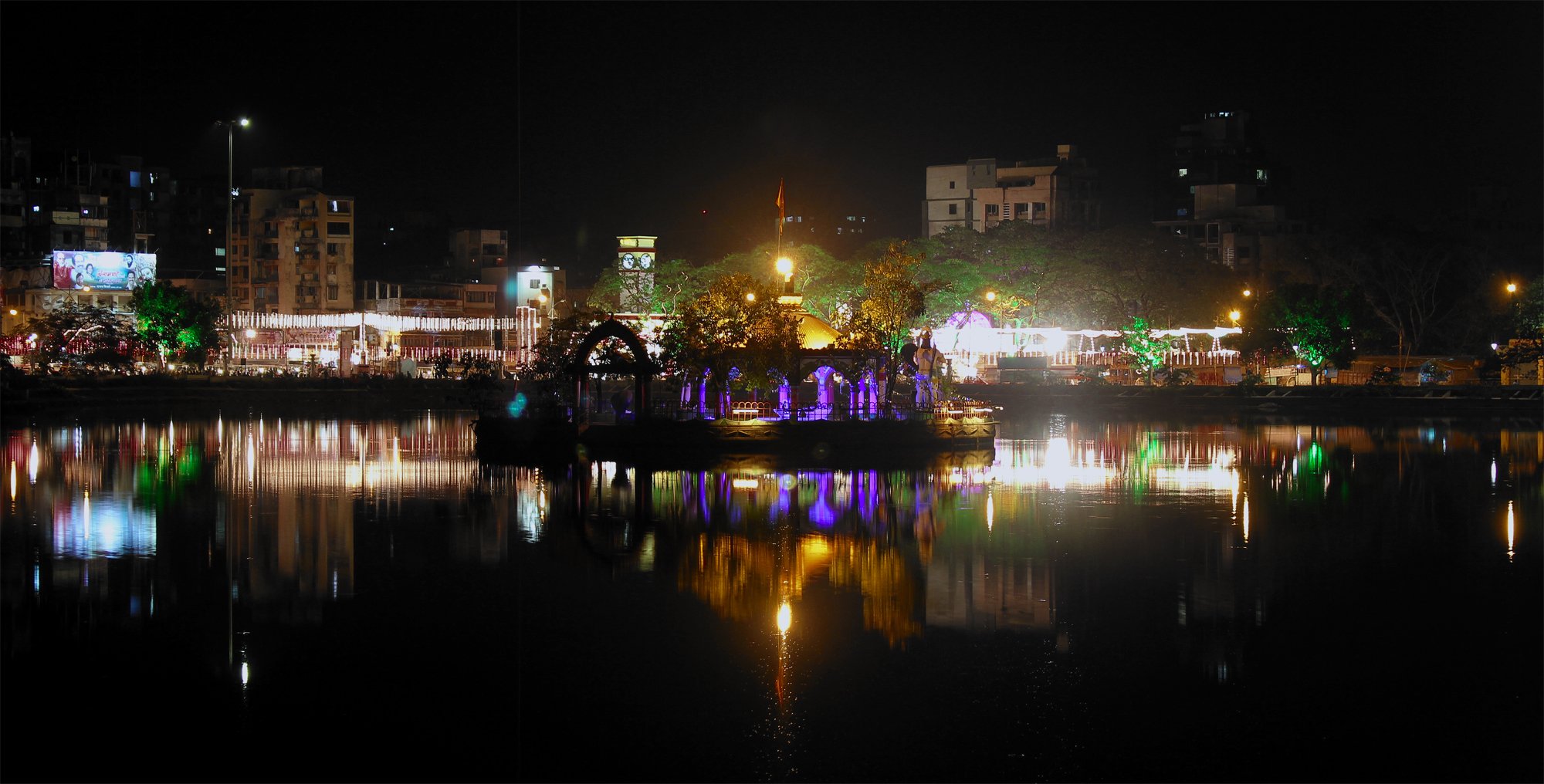
Thane sits at the northeastern edge of Mumbai's urban sprawl, separated from the city by Thane Creek and surrounded by a chain of shallow lakes. Once a quiet town and later a dormitory suburb, it has grown into one of Maharashtra's largest cities in its own right — dense, chaotic, and alive with the rhythms of everyday urban India.
The city's most distinctive feature is its lakes. Masunda Lake (also called Talao Pali) sits right in the centre of town, ringed by a walking promenade where residents stroll in the evenings. Upvan Lake to the west is quieter and popular with morning joggers. Several other lakes dot the city, remnants of an older landscape that somehow survived the construction boom. The lakeside areas are the most pleasant parts of Thane to explore on foot.
The Kopineshwar Mandir, near the old waterfront, is one of the oldest Hindu temples in the Konkan — the city's name itself derives from Sanskrit for "place of the deity." Beyond the city, the surrounding Thane district stretches north along the coast towards Vasai and east into the Western Ghats foothills. The coastline offers beaches that, while not pristine, are far less crowded than anything closer to Mumbai. Historically the district encompassed a large area — much of what is now separate Palghar district was carved out of it in 2014.
Thane is primarily a base rather than a destination: easy to reach from Mumbai by train, useful for exploring the northern coastal areas, and home to a few sights of its own worth a half-day visit. The old Thane town around the station retains traces of its Portuguese-era past.