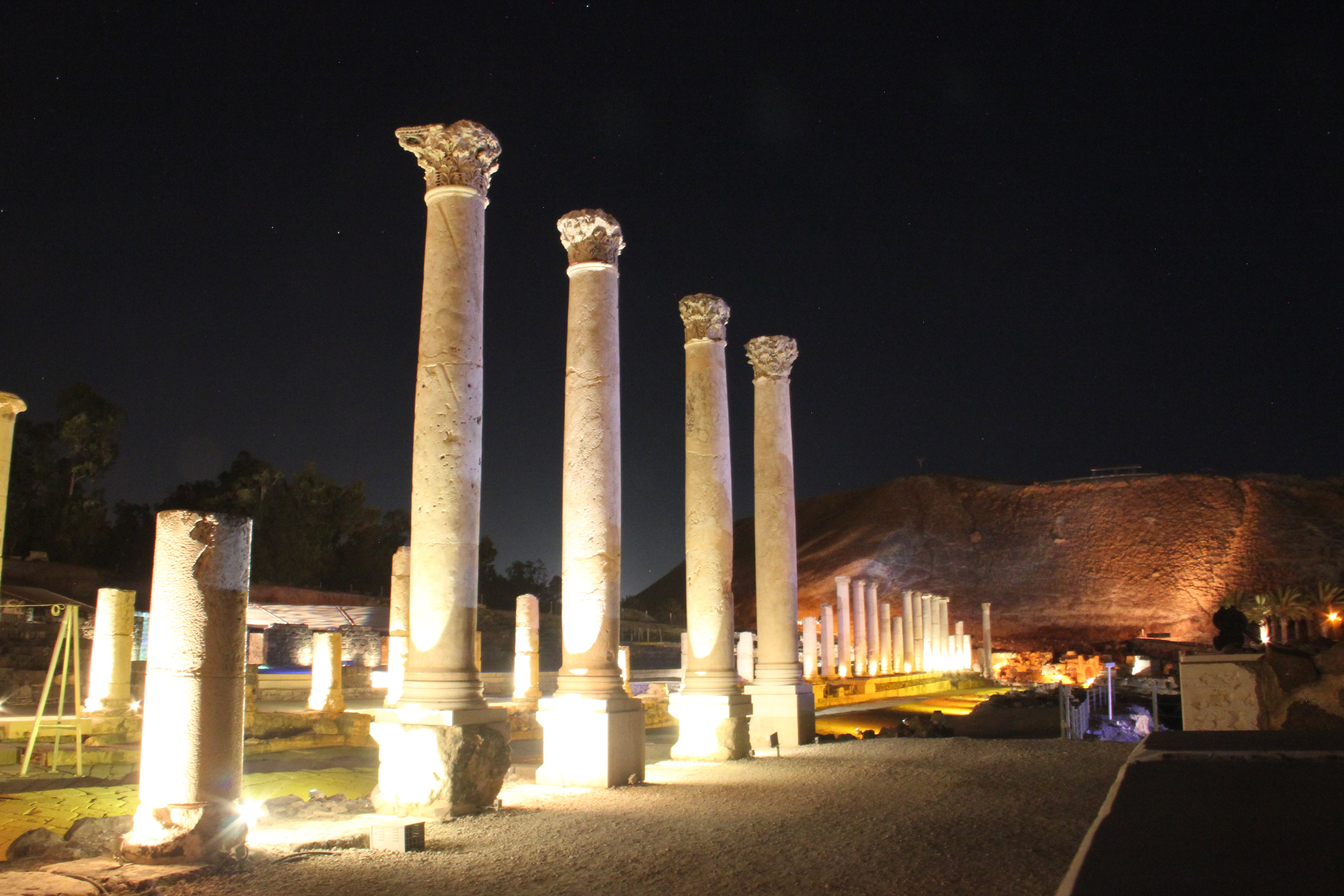
Beit Shean has been continuously inhabited for seven thousand years, which makes most ancient sites look like newcomers. The tel — the mound of accumulated cities — rises beside the Roman lower city, and together they form one of the most impressive archaeological sites in Israel.
The location explains everything. Beit Shean sits at the junction of the Jordan Valley and the Jezreel Valley, controlling trade routes between Egypt and Mesopotamia. Every empire that passed through — Canaanites, Egyptians, Philistines, Macedonians, Romans, Byzantines, Arabs — left something behind. The Philistines, who defeated the Israelites at nearby Mount Gilboa, hung the bodies of King Saul and his sons on the city walls here. The Romans, recognizing the strategic value, made it one of the ten cities of the Decapolis. Under Byzantine rule it became the capital of Palestina Secunda. A catastrophic earthquake in 749 CE ended its run as a major city in a single night.
What you see today is largely Roman: a theatre that seated five thousand people, colonnaded streets paved in basalt, bathhouses spread over more than half a hectare, a nympheum, and a temple. The scale is striking. Stand in the theatre and it still works acoustically. Walk the cardo and you can imagine the market stalls on either side. The excavations have been going on for decades and are not finished — new finds turn up regularly.
The site gets hot and exposed by mid-morning. Come early, bring water, and allow at least two hours. Beit Shean is an easy day trip from Tiberias or Nazareth, roughly 30 km from either.