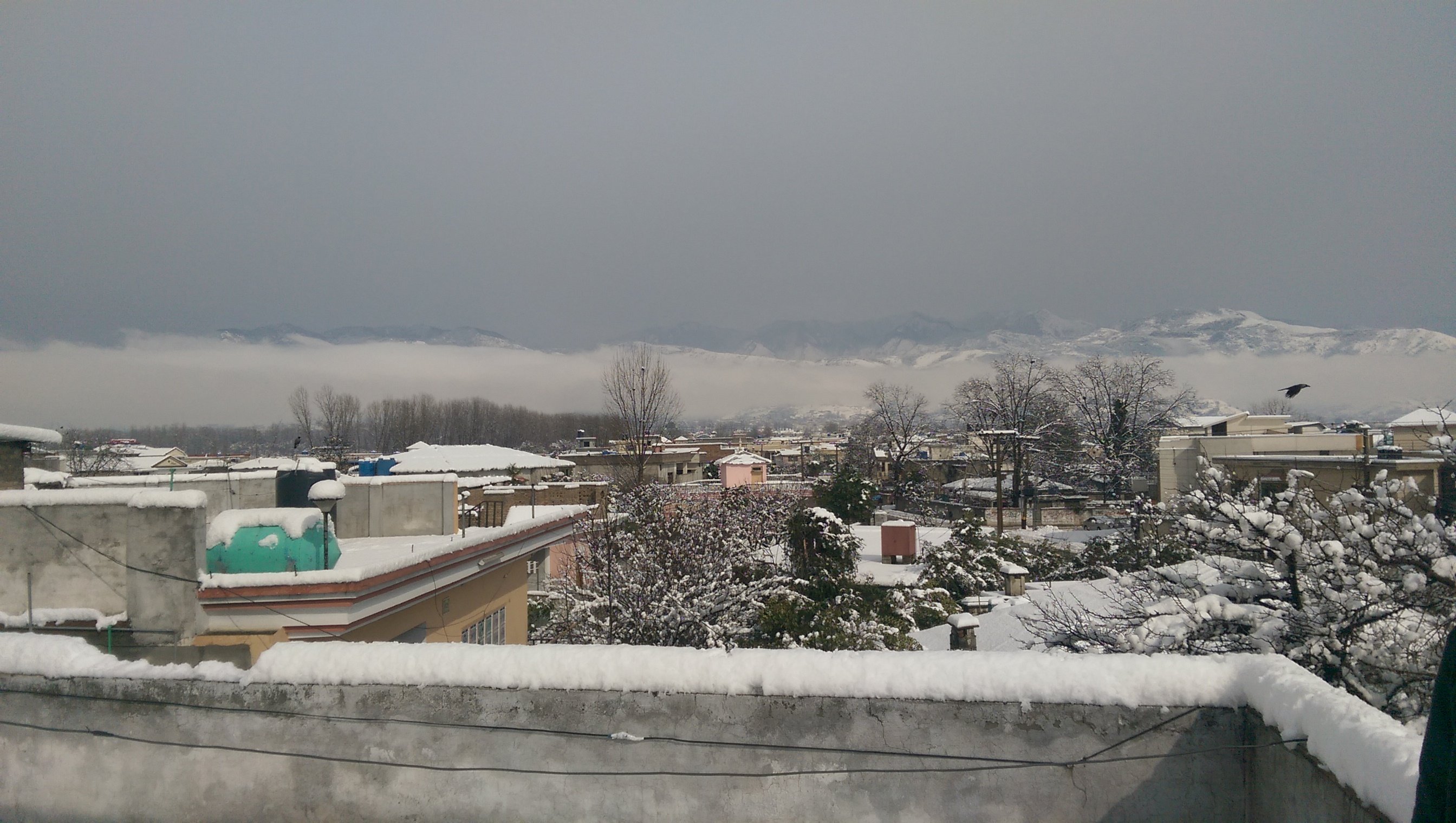
Abbottabad sits in a wide valley at 1,260 metres in the foothills of the western Himalayas, an hour and a half north of Islamabad. It was founded as a British hill station in 1853 and named after Major James Abbott, its first commissioner; the cantonment laid out then still defines the centre of the city today, with its wide avenues, parade ground, gardens, and the Anglican St Luke's Church. The Pakistan Military Academy at Kakul, on the city's northern edge, keeps the military character active.
For travellers, Abbottabad is mainly a gateway. The Karakoram Highway begins climbing into the mountains from here, and the route to the major mountain destinations of northern Pakistan — Naran, Gilgit, Skardu, Hunza — runs straight through. The drive up to Nathiagali and the other Galyat hill stations takes an hour and is the standard summer escape from the heat of the plains. Shimla Hill in town gives a fine wide view over the valley, and Thandiani — a small high plateau 31 km to the east — is the closest place where you can see the Karakoram and Kashmir peaks together on a clear day.
The city itself attracts unfair notoriety from a single event: the killing of Osama bin Laden by US special forces in a Bilal Town compound in May 2011. The house was demolished in 2012 and is now a fenced empty lot. Most visitors come for the cooler weather, the mountain views, and the road north.