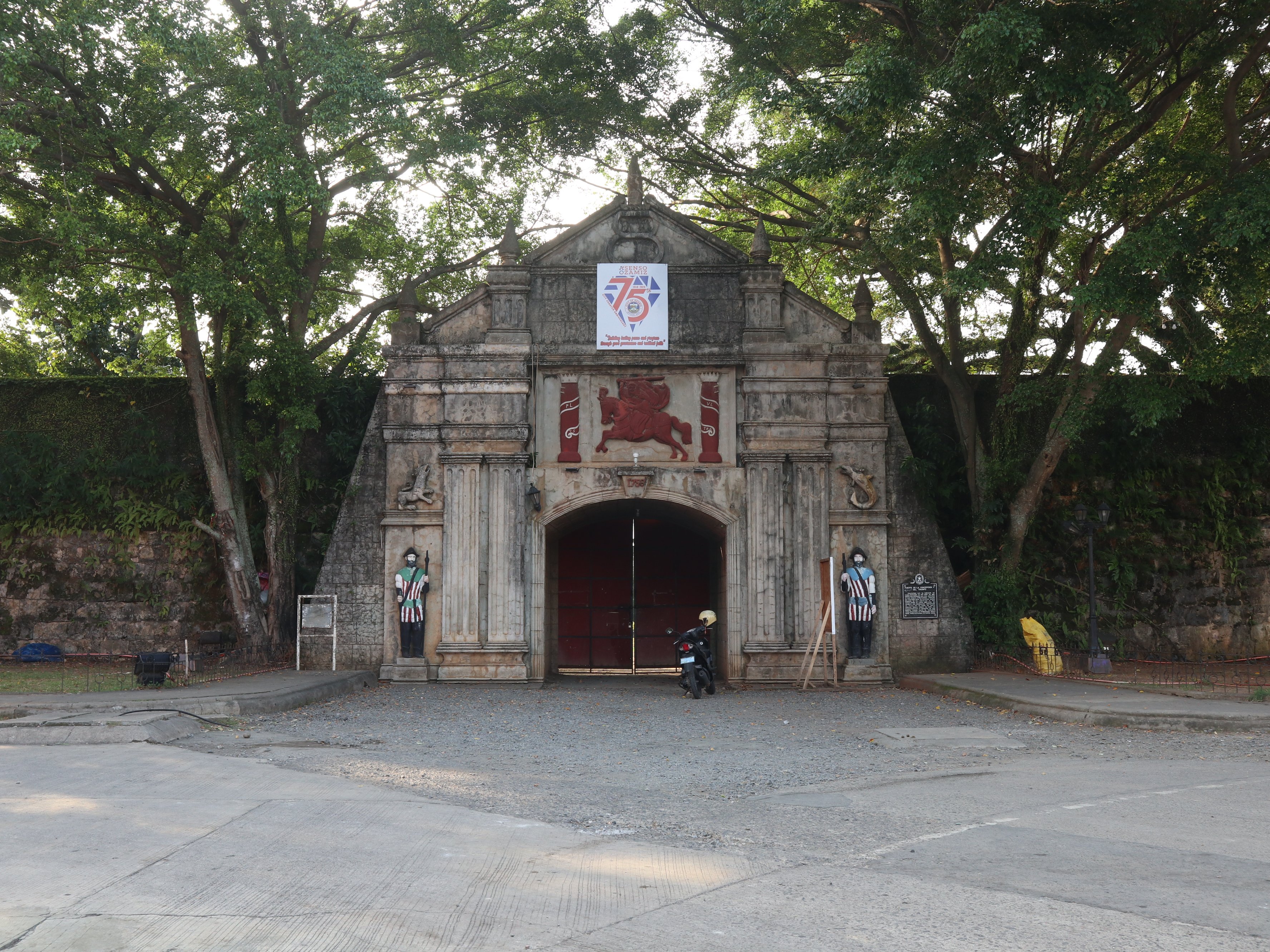
Northern Mindanao bay city with Spanish Misamis roots and a coral-stone fort on the waterfront.
Ozamiz City sits at the western tip of Misamis Occidental province on the shores of Panguil Bay in northern Mindanao, where the bay narrows to a strait separating Misamis from Lanao del Norte. The city grew from the Spanish settlement of Misamis, established around 1756 and important enough in the 18th and early 19th centuries to be called the most significant town in northern Mindanao. That history is still visible: the Fuerte de la Concepción y del Triunfo, a coral-and-sandstone fort built that year to repel Moro pirates, stands largely intact on the southern waterfront.
Modern Ozamiz is the most populous city in Misamis Occidental, with around 144,000 people, and it functions as a regional hub for commerce, education, and the Catholic church — it is the seat of an archdiocese whose Metropolitan Cathedral was designed by Leandro Locsin, the National Artist for Architecture. The cathedral houses the only pipe organ in Mindanao, which tells you something about the city's quiet ambitions.
The pace here is provincial, in the best sense. The city market runs on seafood from Panguil Bay, tricycles outnumber cars in many streets, and the bayfront promenade is where people go to watch the evening light drop behind the mountains of Lanao del Norte. The Port of Ozamiz at the southern end of the waterfront has been moving people and goods around the southern Philippines for centuries, and still does.
The city changed significantly in September 2024 when the Panguil Bay Bridge opened — a 3.77-kilometre crossing that reduced the journey to Lanao del Norte from a two-and-a-half-hour ferry trip to a short drive. For the traveller, Ozamiz now makes more sense as a base for exploring both sides of the bay.
Guide
Getting Around
Ozamiz is compact enough that most of the main attractions are within a few kilometres of each other. Tricycles are the standard local transport — they are everywhere, cheap, and will take you anywhere in the city proper for minimal fare. Agree on a price before you get in if the driver does not mention one.
Habal-habal (motorcycle taxis) are also common and useful for reaching slightly more distant barangays. Jeepneys run fixed routes and are the cheapest option if you know where they are headed. For the fort, the cathedral, and the port, you are better off on foot once you reach the waterfront area — the distances are short and the streets around the old town are best seen slowly.
UV Express vans (air-conditioned shared minivans) connect Ozamiz to nearby towns and to Cagayan de Oro. These depart from designated terminals and leave when full, which in a busy city like Ozamiz usually means a short wait.
Guide
Getting There
Ozamiz is well connected by air and sea, and the 2024 opening of the Panguil Bay Bridge has made overland access from Lanao del Norte far easier.
By air: Labo Airport (also called Ozamiz Airport) operates a few kilometres north of the city centre on the road toward Gango. PAL Express and Cebu Pacific both run domestic flights connecting Ozamiz to Manila and Cebu. The airport is small but functional; tricycles and taxis wait outside.
By sea: The Port of Ozamiz handles inter-island ferry services. 2GO Travel runs to Manila, and Cokaliong Shipping Lines and Trans-Asia Shipping Lines serve Cebu City and Iligan City. Ferry travel is slower than flying but considerably cheaper and, on an overnight sailing, can be an experience in itself.
By road: From Cagayan de Oro, buses (Rural Transit, Super Five) follow the coastal highway northwest along Iligan Bay and into Ozamiz — around two to three hours depending on traffic and stops. From the Lanao del Norte side, the Panguil Bay Bridge has cut what was once a multi-hour journey into a short drive, making Ozamiz far more accessible from Iligan and the interior of Mindanao.
Guide
When to Go
Ozamiz has a relatively even climate throughout the year, with average temperatures between 22°C and 31°C and around 955mm of annual rainfall spread across all months. Unlike much of the Philippines, it lacks a sharp dry season, so you are unlikely to arrive in the middle of a true monsoon but equally unlikely to find a stretch of reliably rainless weeks. The relatively moderate rainfall makes the city more accessible year-round than some Philippine destinations.
The best time to visit is between December and February, when temperatures are slightly cooler and the sea is calmer — useful if you are arriving by ferry. This also coincides with the Sinulog Festival in January, one of the more vibrant Catholic festivals in the region, celebrated with street dancing and processions.
The Perangat Festival on July 16 honours the founding of the city and recognises the indigenous Subanon people of the region. It is a smaller event but an interesting one for anyone interested in the culture that predates Spanish colonisation.