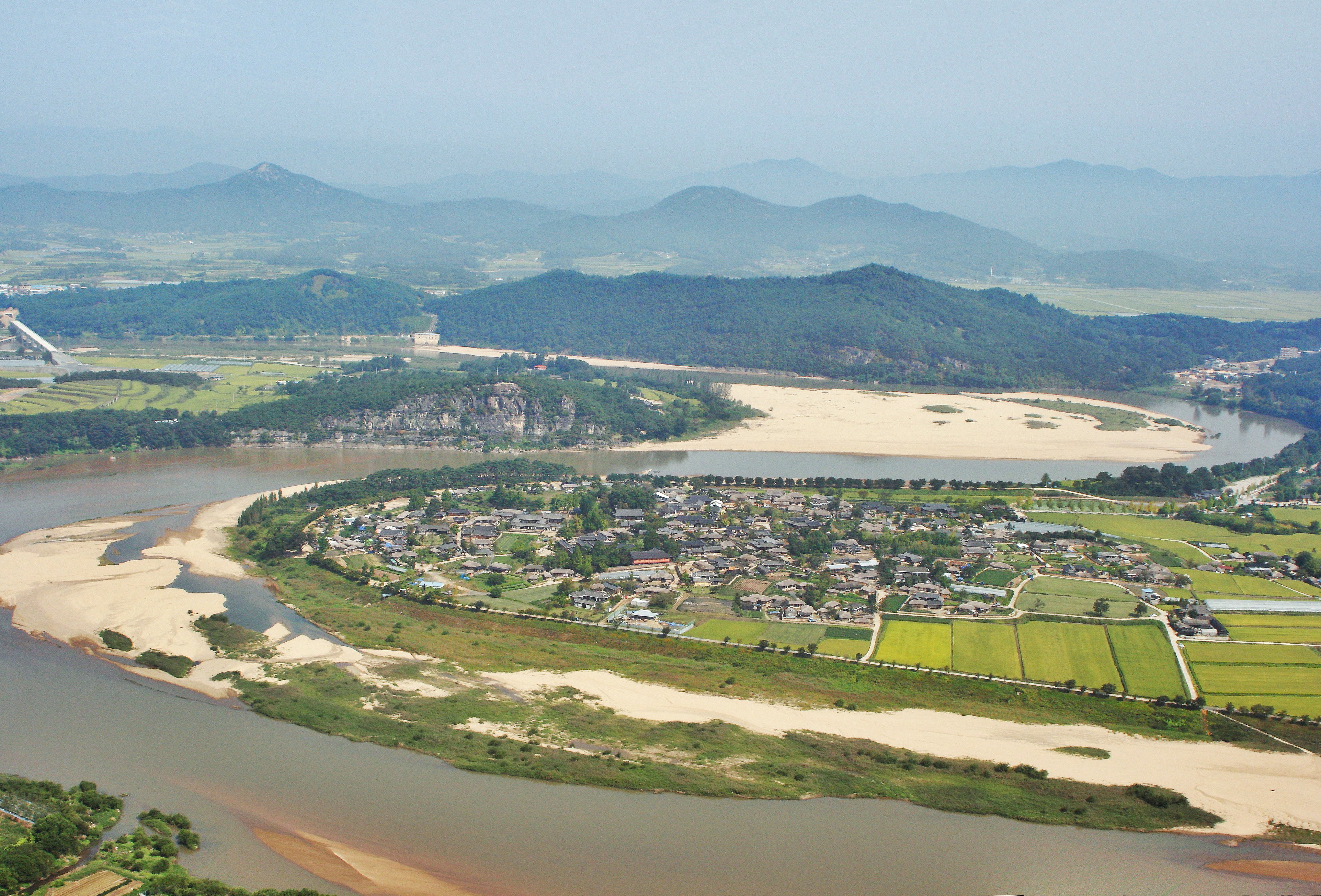
Andong is the most Confucian city in South Korea, a distinction it wears with pride. Inland in North Gyeongsang Province, it sits where the Nakdong River winds through forested hills and rice-growing valleys. The city considers itself the spiritual capital of Korean traditional culture — it's where lineage associations still hold their ancestral rites, where Joseon-era aristocratic clans maintained their estates, and where the scholar Yi Hwang (pen name Toegye) shaped the moral framework that defined Korean society for four hundred years.
The main draw is Hahoe Folk Village, a UNESCO World Heritage Site about 25 km west of the city. A living village of thatched-roof and tile-roof aristocratic residences arranged in a careful landscape, it has been home to the Ryu clan since the 14th century. The village sits in a bend of the Nakdong River, with a forested hill protecting it from the north — a classic example of Korean geomantic site selection. Queen Elizabeth II and President George W. Bush both visited during their Korea trips, which locals cite with quiet satisfaction.
Also worth your time is Dosan Seowon, the Confucian academy built to commemorate Yi Hwang after his death in 1570. It's beautifully situated on a hillside above a reservoir and contains the scholar's study, lecture halls, and dormitories, all maintained with monastic care. The Andong Folk Museum near the dam is an excellent introduction to the region's culture and preserves artefacts rescued when the Andong Dam flooded several traditional villages in the 1970s.
Andong is also famous throughout Korea for two things: its soju, which is brewed here in a traditional way different from the industrial soju sold everywhere else; and Andong jjimdak, a braised chicken dish in a dark, slightly sweet sauce with glass noodles and vegetables that has become a national comfort food. The alley of jjimdak restaurants near the old market is a required stop.