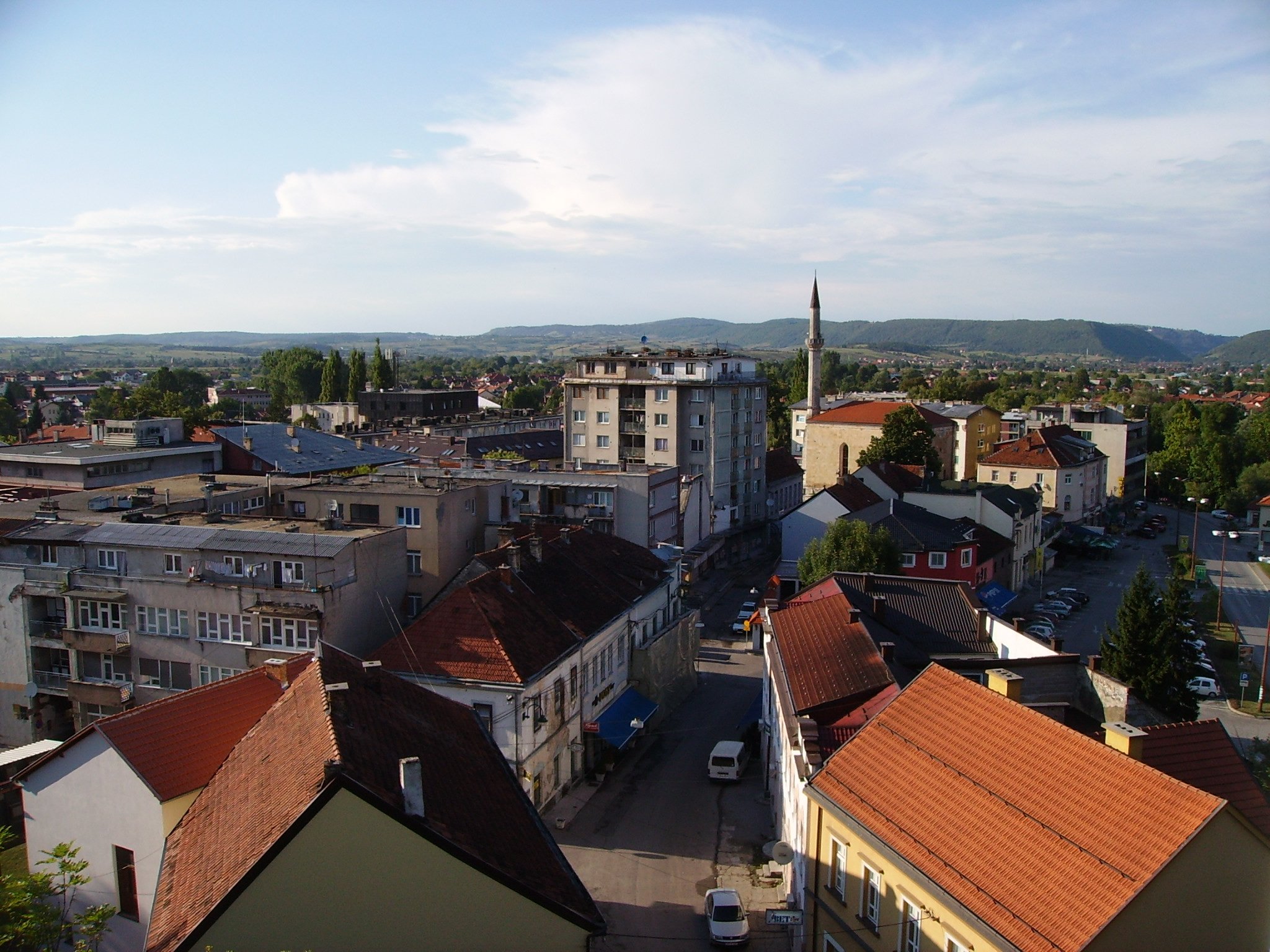
Bihać sits in the far northwest corner of Bosnia and Herzegovina, where the emerald Una River curls through a limestone valley ringed by forested hills. It is one of the country's most scenically blessed towns and the main gateway to Una National Park, where the river drops over a series of spectacular travertine waterfalls and cascades.
The town itself is small and walkable, centred on a pleasant riverside promenade. The Captain's Tower, a medieval fortification on the Una's bank, is the most visible landmark and houses a small museum. The nearby Fethija Mosque — a fifteenth-century Gothic church converted after the Ottoman conquest in 1592 — is one of the few buildings in Bosnia where that architectural transformation is still so clearly visible. Bihać endured a brutal siege during the 1990s war — the longest of the conflict — and reminders of that period are still visible, but the town has rebuilt with quiet determination.
Most visitors come for the river. The Una is one of the cleanest in Europe, its water an almost unreal shade of green. Rafting through the rapids and canyons is the signature experience; the full route from Lohovo runs 13 kilometres through spectacular limestone gorges. Una National Park extends along the river south toward the Croatian border, where the 25-metre Štrbački Buk waterfall is the park's most dramatic sight. In summer the riverbanks fill with picnickers and swimmers. The national park trails are well-marked and uncrowded, a welcome contrast to the more touristed parts of the Balkans.
Bihać is not on most travellers' itineraries, which is part of its appeal. Accommodation is limited but decent, the food is hearty Bosnian fare — ćevapi, pita, freshwater trout — and the pace is slow. If you are travelling between Zagreb and Sarajevo, the detour through Bihać and the Una valley is well worth the extra hours.