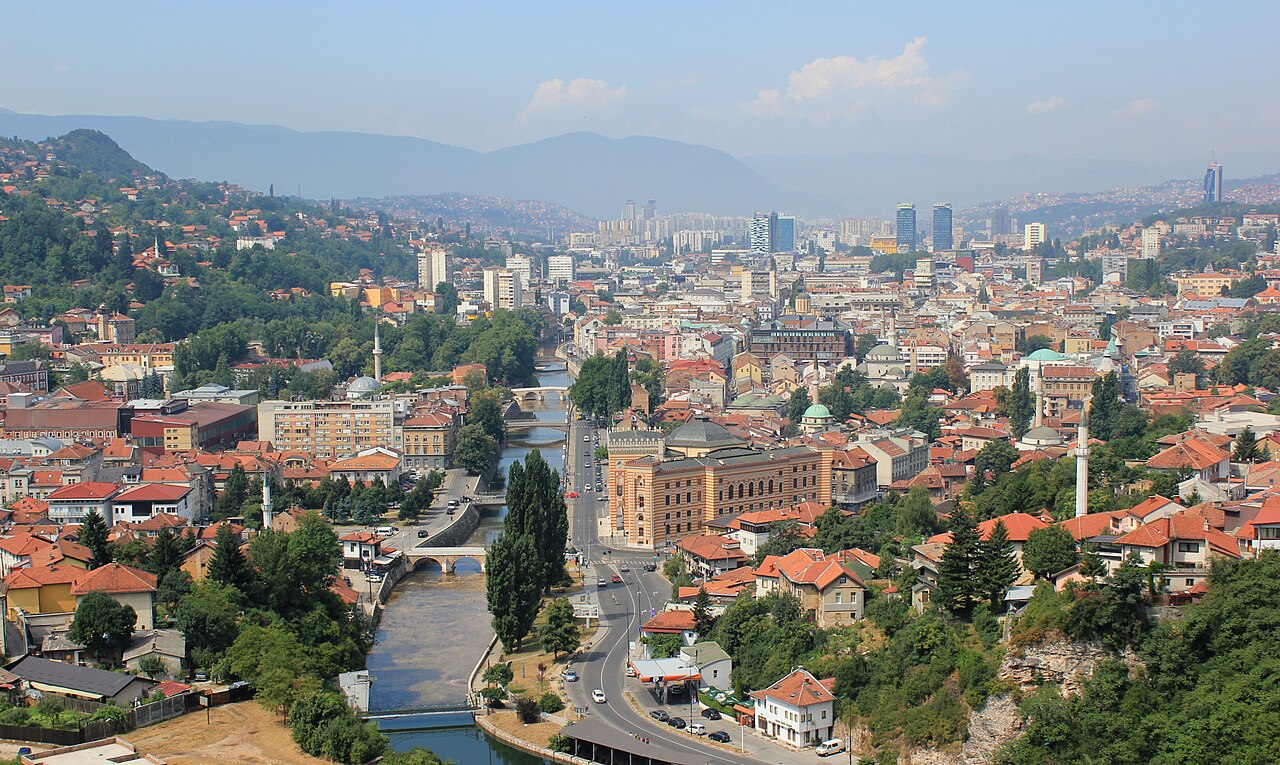
Sarajevo has always been a place where civilisations meet — Ottoman, Austro-Hungarian, Yugoslav, and now Bosnian — and the result is a city unlike any other in Europe. You can walk from a 16th-century Ottoman bazaar to a Habsburg boulevard in five minutes, passing mosques, Catholic churches, Orthodox churches, and a synagogue along the way.
The city endured one of the longest sieges in modern warfare from 1992 to 1996, and the scars are still visible — bullet-pocked facades, Sarajevo Roses (mortar scars filled with red resin), and the remarkable Tunnel of Hope, an 800-metre passage dug under the airport runway that was the city's lifeline during the siege. Many tour guides served in the army during the war and offer compelling firsthand perspectives.
The Old Town (Baščaršija) is the heart of the city — cobblestone streets lined with Ottoman-era shops, copper workshops, and cafes serving Bosnian coffee in traditional džezva pots. The Latin Bridge is where Archduke Franz Ferdinand was assassinated in 1914, setting off World War I. The National Museum and War Childhood Museum document the war with images and exhibits that are not for the faint-hearted but are essential for understanding the city.
For scenic views, walk up to the Yellow Bastion or take the cable car up Mount Trebević — but stay on paved roads and sidewalks in the hills, as some landmines remain in outlying areas. The city is compact and walkable, and its food scene — grilled ćevapi at Žjelo, burek made under a sač, sweet baklava and tufahija — is one of the best in the Balkans.