Trebinje is the southernmost city in Bosnia and Herzegovina, sitting in a fertile valley surrounded by low hills just 20 kilometres from Dubrovnik. It is a small, handsome place — about 36,000 people — with a relaxed Mediterranean feel that sets it apart from the rest of the country.
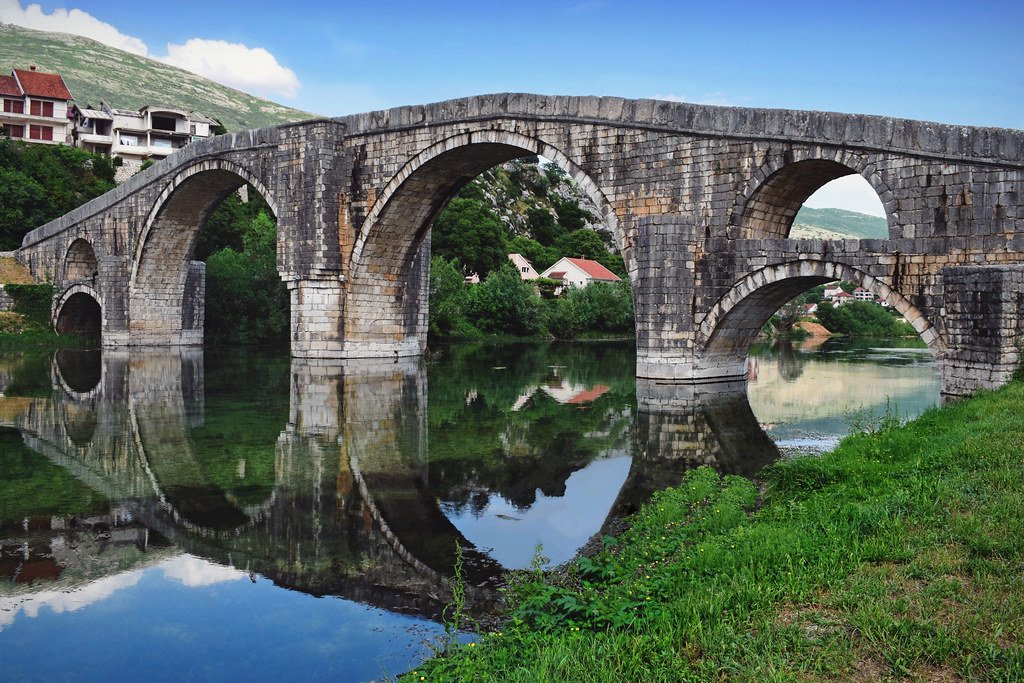
The old town, centred on the plane-tree-lined Trg Slobode along the Trebišnjica River, has a distinctly Austro-Hungarian character with stone buildings, a clock tower, and plenty of open-air cafes. The river itself is remarkable: the longest sinking river in Europe's karst landscape, it disappears underground through sinkholes and caves before eventually reaching the Adriatic through subterranean passages. The 1574 Arslanagić Bridge, a short walk east of the centre, was dismantled stone by stone in the 1960s and reassembled here when the original site was flooded by a dam.
Trebinje has an unusual concentration of churches and monasteries. Hercegovačka Gračanica, a replica of the medieval Gračanica monastery in Kosovo, sits on Crkvina hill above the town and offers fine views over the valley. The Tvrdoš Monastery, a few kilometres south, has been producing wine since the fifteenth century and still sells it today. The surrounding area, known as the "Garden of Herzegovina" for its fertile soil and mild climate, produces excellent wines and is increasingly recognised as a wine destination.
For travellers, Trebinje works well as a day trip from Dubrovnik or as a quieter, cheaper base for exploring the region. The Vjetrenica cave near Zavala, one of the most important karst caves in Europe, is within easy reach.