Vis is the most remote of Croatia's major Adriatic islands, lying about two hours by ferry from Split. For decades it was a Yugoslav military base, closed to foreigners until 1989, and that enforced isolation is precisely what makes it special today. While closer islands like Hvar and Brac have been heavily developed for tourism, Vis retains a quiet, unhurried character that feels like the Dalmatian coast of thirty years ago.
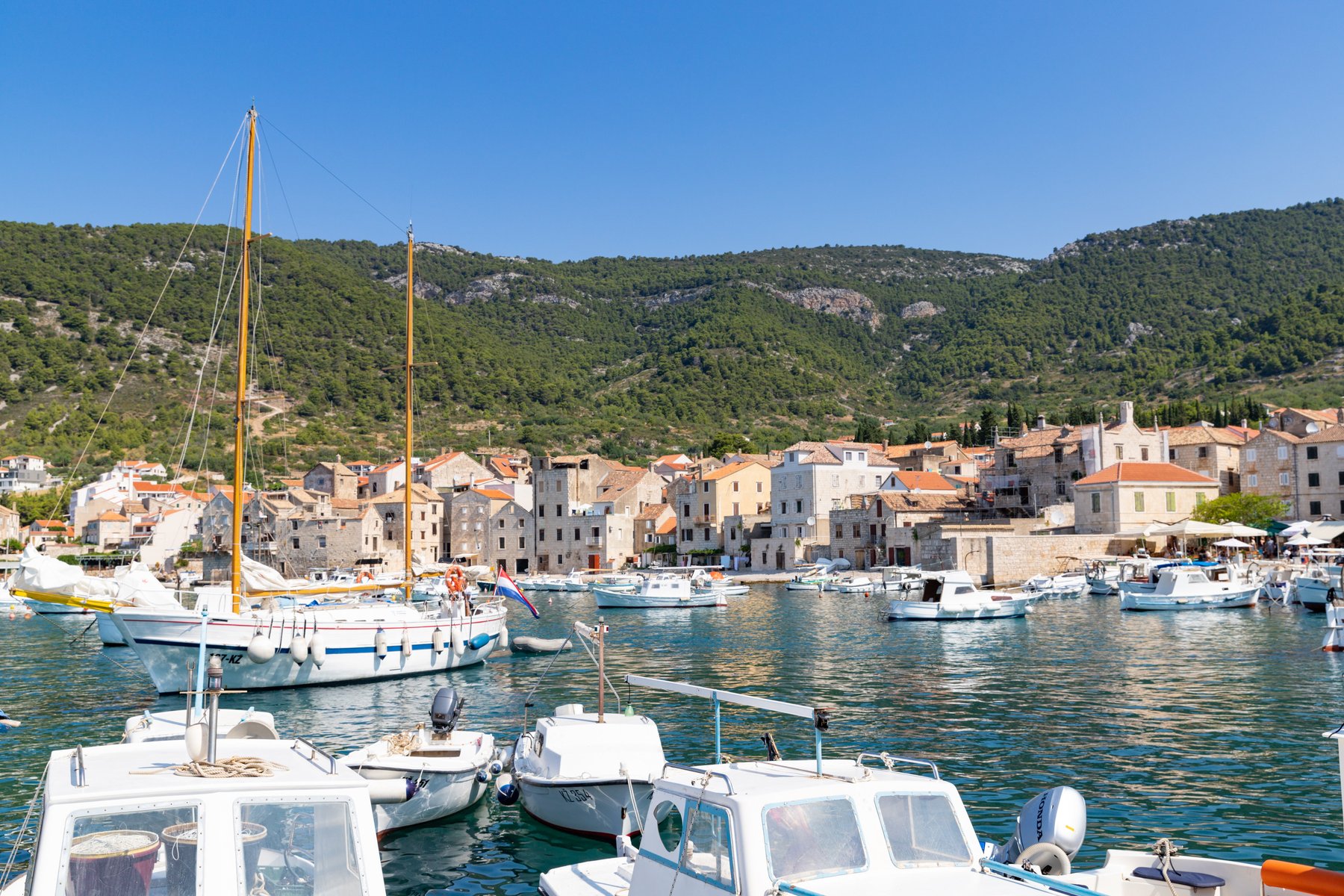
The island has two main towns. Vis town on the eastern side has a long waterfront promenade, the remains of the Greek-Roman Issa archaeological site, and several excellent seafood restaurants along the harbour. Komiža on the western coast is a traditional fishing village built around a deep bay, and the starting point for boat trips to the Blue Cave on the nearby island of Biševo — a sea cave where sunlight enters through an underwater opening and turns the water an electric, luminous blue.
The interior of the island is given over to vineyards, olive groves, and scrubby Mediterranean hillsides. Vis produces Vugava, a white wine grape found almost nowhere else, and the local reds are also worth trying. Mount Hum at the centre is the highest point and the best viewpoint; the abandoned Yugoslav military tunnels honeycombing the cliffs are a strange, slightly haunting reminder of the closed years.
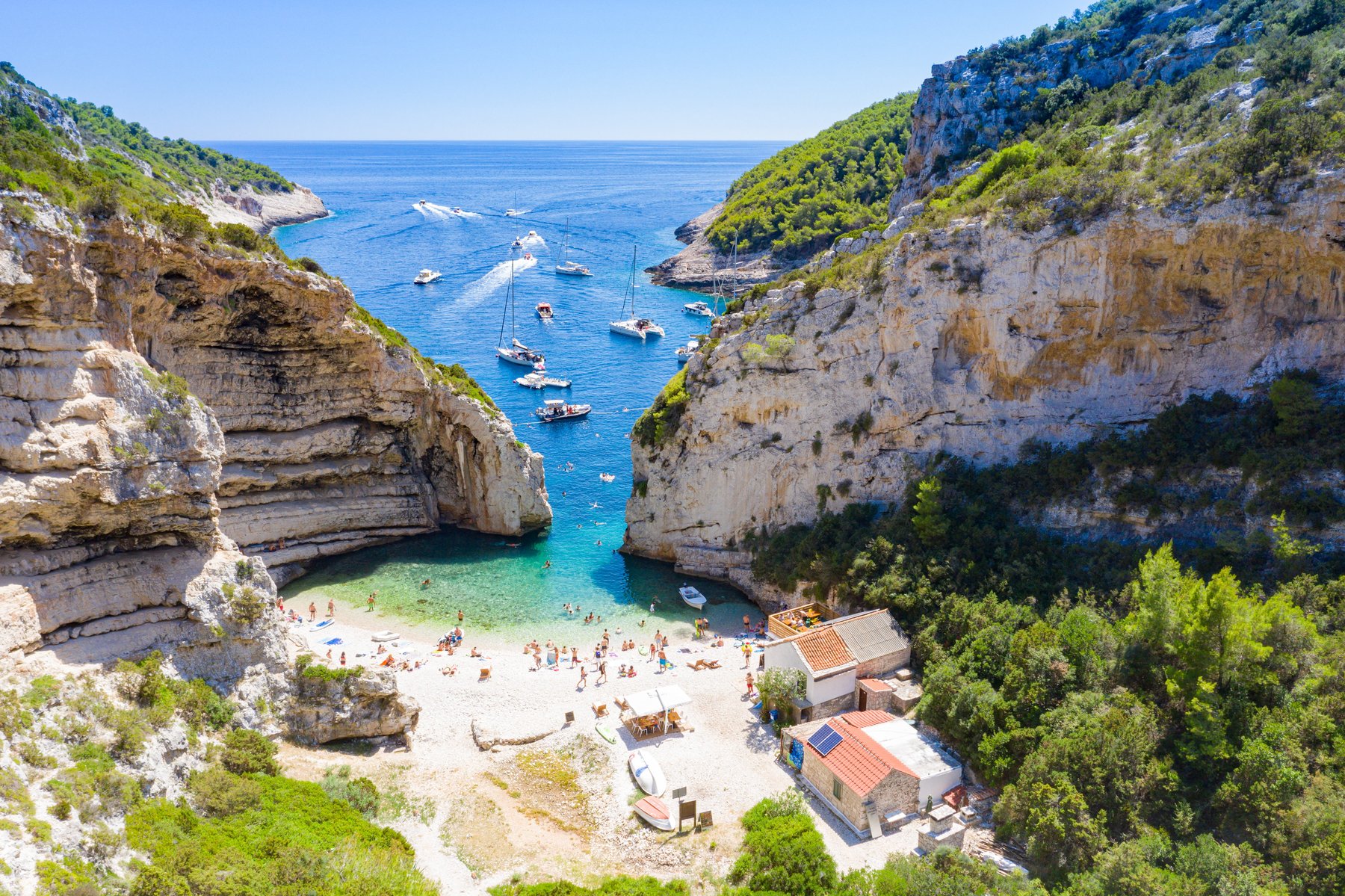
The beaches tend to be pebbly coves rather than long sand stretches, and several of the best are only reachable by boat or on foot. Stiniva, a dramatic cove enclosed by towering cliffs, regularly makes lists of Europe's finest beaches.