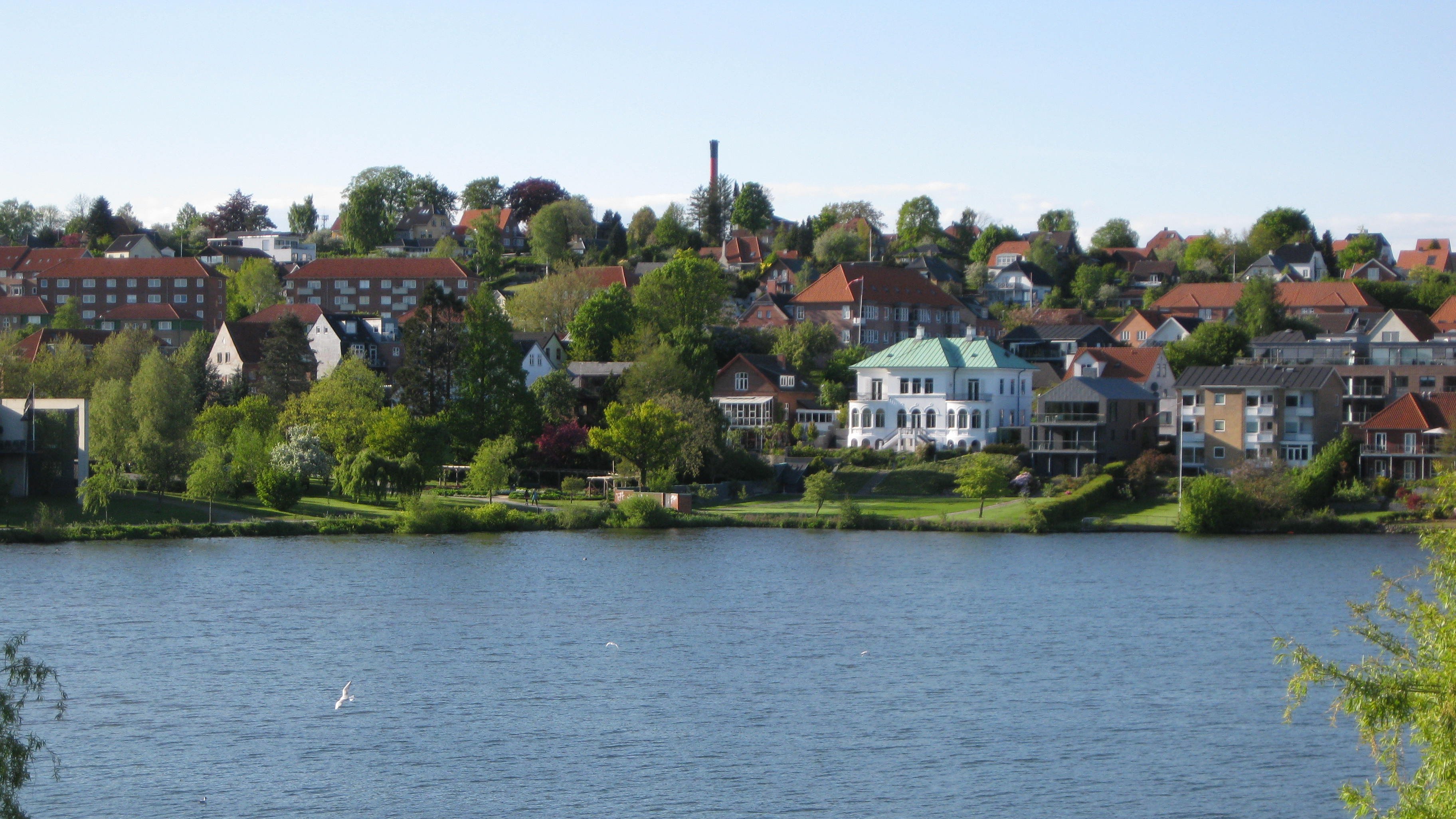
Kolding sits at the head of Kolding Fjord in southeast Jutland, a mid-sized Danish city that most people drive past on the E45 motorway. That is a mistake. The city has one of Denmark's most striking buildings and a pleasant, walkable centre that rewards a half-day stop.
Koldinghus, the medieval royal castle on the hill above town, dominates the skyline. Originally built in 1268, it was gutted by fire when Napoleon's Spanish troops were garrisoned here in 1808 — the soldiers reportedly lit fires to keep warm and lost control. The ruin stood open to the weather for nearly two centuries before a bold modernist restoration wrapped new spaces inside the old walls. The result is both a museum and an architectural conversation between medieval brick and raw concrete.
Below the castle, the compact old town has good cafes around Akseltorv square and along the pedestrianised streets. The Trapholt museum of modern art and design, 5 km east of town on the fjord shore, is worth the detour for its furniture collection and sculpture park. The Geografisk Have behind the castle holds 2,000 plant species from around the world, laid out by continent — a pleasant spot for a stroll.
Kolding is a natural stop on the way between Copenhagen and Jutland's west coast, and makes a practical base for visiting Legoland in Billund, about 40 minutes northwest.