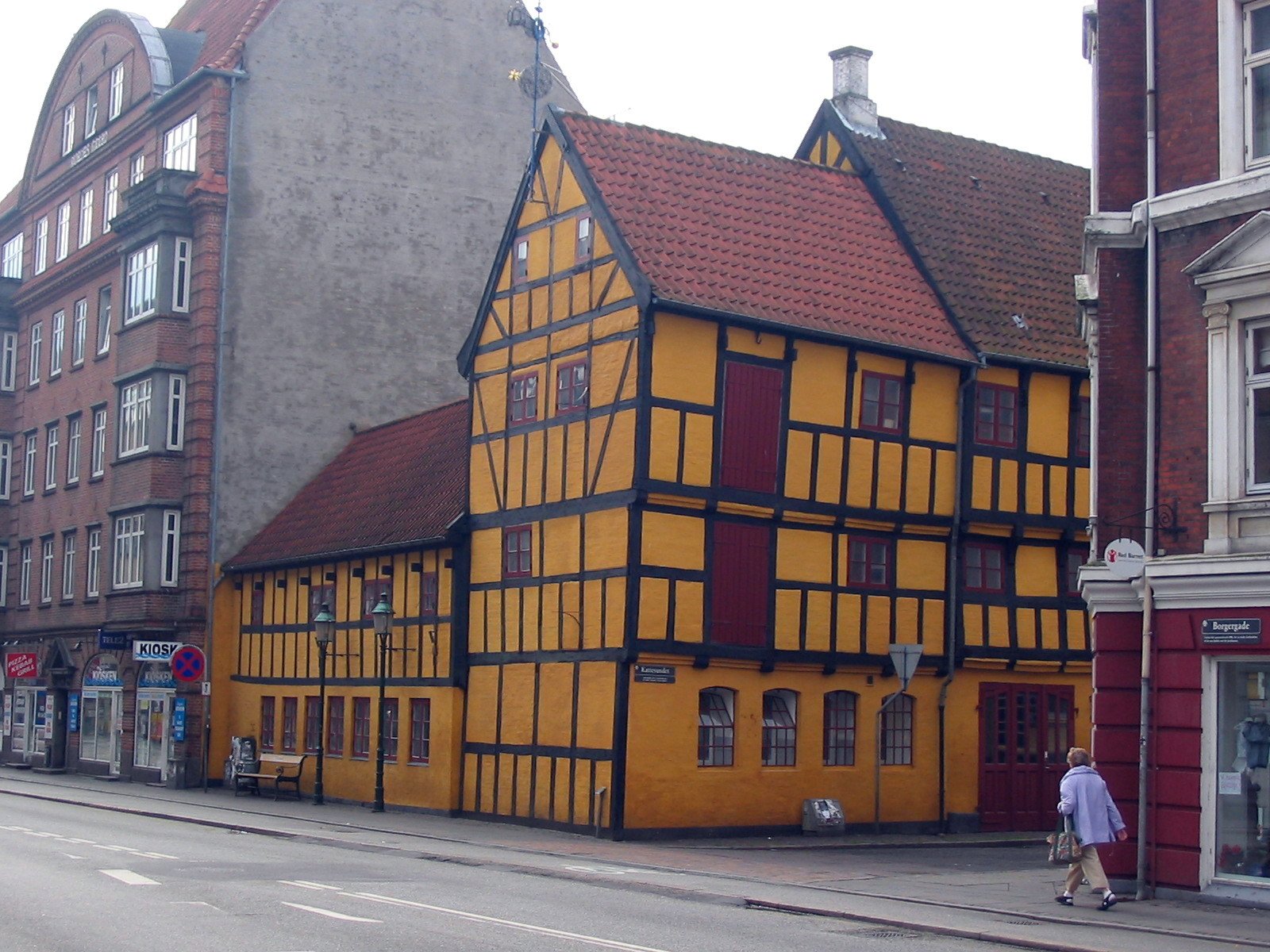
Aalborg sits on the Limfjord in northern Jutland. The local tourist board calls it "the little Paris of the North" — a stretch, perhaps, but the location by the water is genuinely lovely, and the city has more to offer than its size suggests.
Founded by the Vikings, Aalborg developed into one of Denmark's busiest trading centres. A walk through the pedestrian area reveals a wealth of fine old buildings: Jens Bang's House from 1624, Jørgen Olufsen's House from 1616, and the handsome Aalborghus castle from 1539. The 15th-century Budolfi Cathedral, dedicated to the English St Botolph, and the Monastery of the Holy Ghost from 1431 — Denmark's oldest social welfare institution — bear witness to the city's long history. Across the Limfjord, Lindholm Høje preserves 682 Viking and Iron Age graves on a windswept ridge above the water.
The contemporary scene is strong too. Kunsten, the museum of modern art, is housed in an Alvar Aalto building from 1972; the Utzon Centre on the waterfront was Jørn Utzon's final project. Aalborg is a lively place at night — Jomfru Ane Gade is northern Europe's longest bar street, especially on summer evenings when the terraces fill up.
From Aalborg it is not far to the white beaches of the North Sea coast, the forest of Rold, the Rebild Hills, or the gentle slopes of the Jutlandic Ridge — all good territory for hiking and cycling.