Aarhus is Denmark's second city and the capital of Jutland, a university town with a well-preserved old centre, excellent museums, and a lively bar and restaurant scene. It has the cultural weight of a much larger city — ARoS, the art museum topped with Olafur Eliasson's rainbow panorama walkway, is genuinely world-class — but keeps the easy, walkable scale of a place where everything is within reach.
The standout attraction is Den Gamle By (The Old Town), an open-air museum of 75 restored buildings from across Denmark, dating from the 17th and 18th centuries. It is one of the best museums of its kind in Europe: immersive, detailed, and big enough to fill half a day. The Moesgaard Museum, south of the centre, houses the Grauballe Man — a 2,000-year-old bog body found preserved in a peat bog in 1952, with his hair, skin, and fingernails still intact.
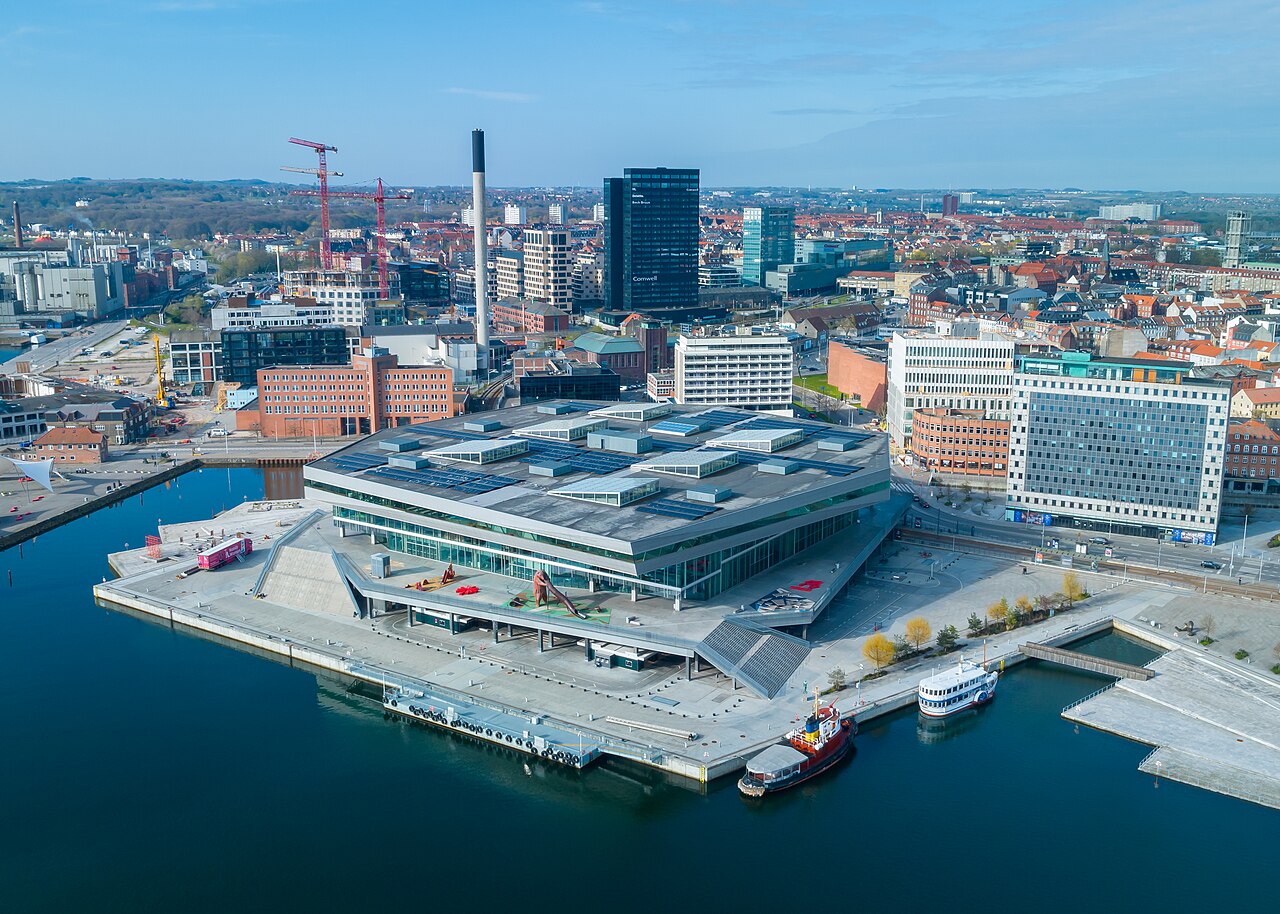
Aarhus Cathedral, begun in 1201, is Denmark's longest church and has more preserved medieval frescoes than any other cathedral in the country. Dokk1, the main public library on the waterfront, is one of the best library buildings in Europe. Tivoli Friheden, just outside the centre, is a smaller, more relaxed version of Copenhagen's Tivoli with rides, gardens, and cafes.
The city's beaches are close — easily reachable by bike — and the surrounding countryside offers good hiking and cycling. But Aarhus is at its best after dark, when the restaurants along the river at Aaboulevarden fill up and the bars in the side streets get going. Keep an eye out for Cirkuskroen, the legendary dive bar with over 1,300 clown figurines on its walls.