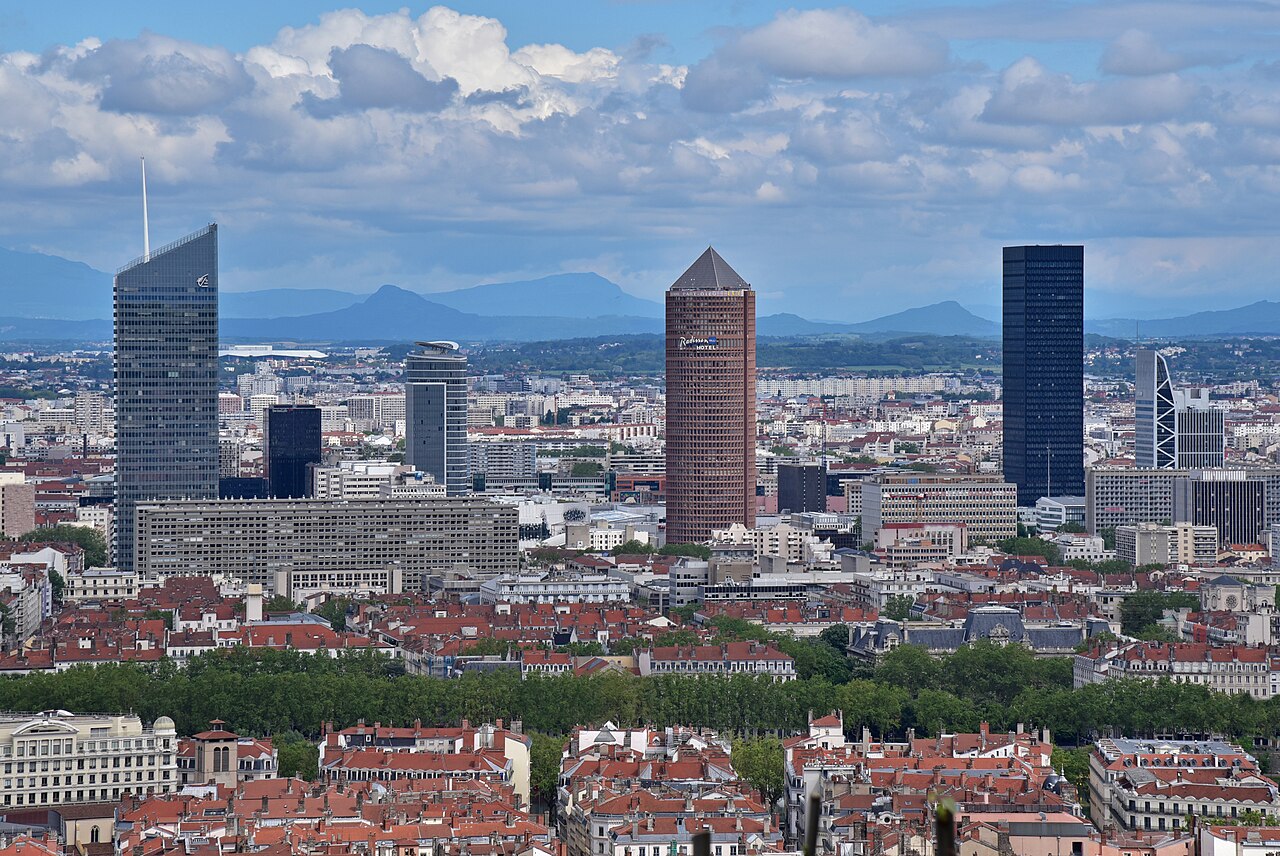
Lyon is the second-largest urban area in France and, for many, the country's most satisfying city after Paris — a place with 2,000 years of history stacked in layers, a UNESCO-listed historic centre of extraordinary beauty, and a fanatical devotion to good food that has earned it the widely-held title of gastronomic capital of France. It sits at the confluence of the Rhône and Saône, in the east of the country, halfway between Paris and Marseille, with the Alps rising to the east and the Beaujolais wine country to the north.
The city divides neatly into layers. Fourvière, the hill on the west bank of the Saône, is where the Romans founded their colony of Lugdunum in 43 BC — the ruins of two theatres and the Gallo-Roman Museum buried into the hillside give a vivid sense of the city's Roman past. The Basilique de Notre-Dame de Fourvière crowns the hilltop with its white Byzantine domes. Below and across the river, Vieux Lyon is the Renaissance old town — narrow cobbled streets of honey-coloured buildings, secret traboules that tunnel through the blocks, three remarkable churches including the Cathédrale Saint-Jean, and the ever-present smell of frying onions from the bouchons. The Presqu'île, the peninsula between the two rivers, is the grand 19th-century shopping and café city — Place Bellecour, the Opéra, the Musée des Beaux-Arts (one of France's finest art museums), and the Place des Terreaux with its Bartholdi fountain. North of that, the old silk-weavers' district of Croix-Rousse climbs the hill in a grid of tall houses designed around the Jacquard looms — find the Maison des Canuts and the vast Mur des Canuts trompe-l'oeil mural at its foot.
And the food. Lyon invented the bouchon — a small informal restaurant serving rich pork-heavy Lyonnais classics like quenelles de brochet, tablier de sapeur, saucisson brioché, pralines-rose tarts and lashings of red Beaujolais — and the tradition is alive and well in dozens of cheerful places concentrated in Vieux Lyon and the Presqu'île. The essential shopping stop is Les Halles de Lyon Paul Bocuse, the covered food market on Cours Lafayette. South of the centre, the Institut Lumière marks the birthplace of cinema. And the Parc de la Tête d'Or — 117 hectares with a free zoo and a lake — is the city's great escape. Come hungry.