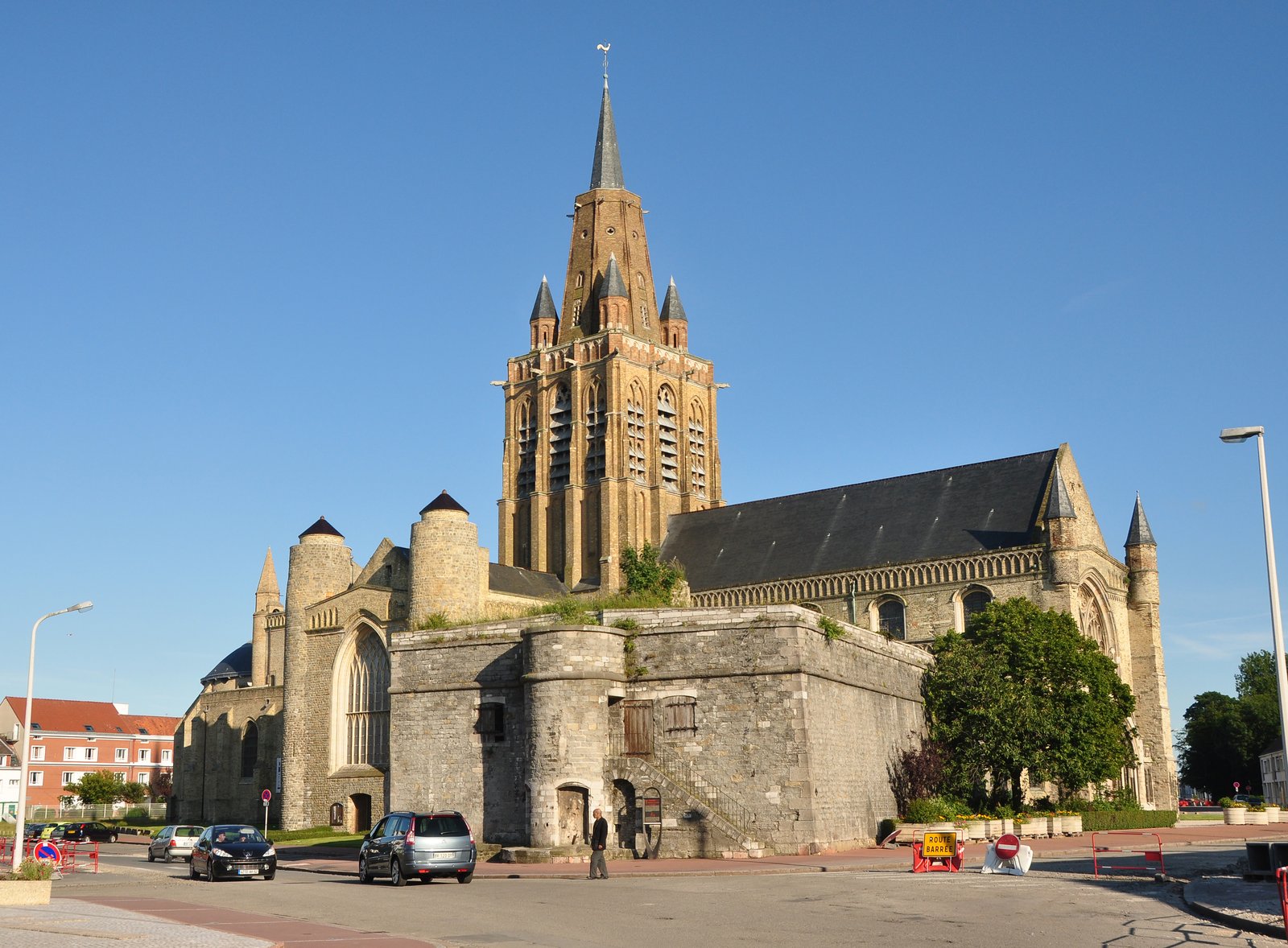
Calais occupies a peculiar position in the French imagination — it is the busiest passenger port in the world, yet most people who pass through it see only the motorway to or from the ferry terminal. That is a shame. The city has a compact and surprisingly characterful old town, a collection of museums better than you'd expect, and an identity shaped by centuries of belonging to England, siege warfare, and the lace-making trade.
The shortest sea crossing between England and France — just 34 kilometres at the Strait of Dover — has defined Calais since the Middle Ages. Edward III of England besieged it for almost a year in 1346–47, and the city remained English for over two hundred years until the French retook it in 1558. The memory of that final recapture is still raw enough that a famous English saying attributed to Queen Mary I held that when she died, the word "Calais" would be found engraved on her heart. Auguste Rodin captured an earlier moment from the siege in his famous sculpture, Les Bourgeois de Calais, which stands outside the Hôtel de Ville.
The city was heavily bombed in World War Two and largely rebuilt in a functional 1950s idiom, but pockets of older fabric survive, especially around the Église Notre-Dame and the Tour du Guet. Calais also has a strong claim to be the lace capital of France — the local machine-lace industry dominated textile production for a century, and the Cité de la Dentelle et de la Mode tells the whole story surprisingly well.
If you have a few hours rather than a few minutes, the town repays exploration. The market on Wednesday and Saturday mornings fills the place d'Armes; the old lighthouse gives views across the Channel on clear days; and the waterfront walk past the port has a bleak, grey-skied energy that is peculiarly northern French.