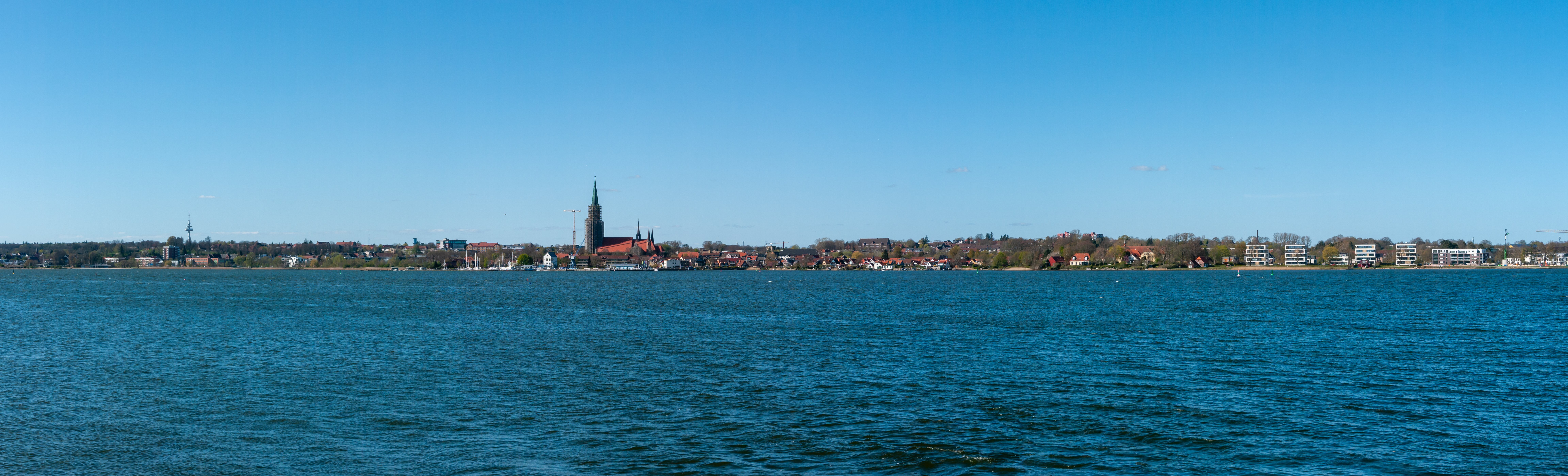
Schleswig is one of northern Germany's most quietly rewarding towns — small (around 25,000 people), but historically substantial. It sits at the head of the Schlei, a long, narrow fjord that cuts inland from the Baltic, and for centuries it was the most important city in the Danish-German borderlands. That layered past — Viking, medieval, Danish, Prussian — is visible everywhere you look.
The centrepiece of the old town is the Dom St. Petri, a red-brick Gothic cathedral with a carved wooden altarpiece by Hans Brüggemann that is genuinely one of the finest pieces of medieval woodwork in northern Europe. It rewards close attention. Nearby, the Graukloster — a medieval Franciscan friary — is tucked into a quiet corner east of the Dom. Across the water on a small island sits Schloss Gottorf, a Renaissance palace that houses two excellent state museums covering art history and archaeology.
Just south of town, the Viking settlement of Haithabu was one of the most important trading posts in early medieval Europe. The Wikinger Museum Haithabu and its reconstructed longhouses give a vivid sense of 9th-century life. The finds from the site — excavated over decades — are displayed with real depth.
The Schlei is the unsung pleasure of a visit. Rent a kayak or take a boat trip along the fjord. Down near the Dom, the small fishing quarter of Holm — narrow lanes, low cottages, a graveyard ringed by fishermen's houses — has barely changed in 150 years. The surrounding landscape is flat, green, and unhurried.