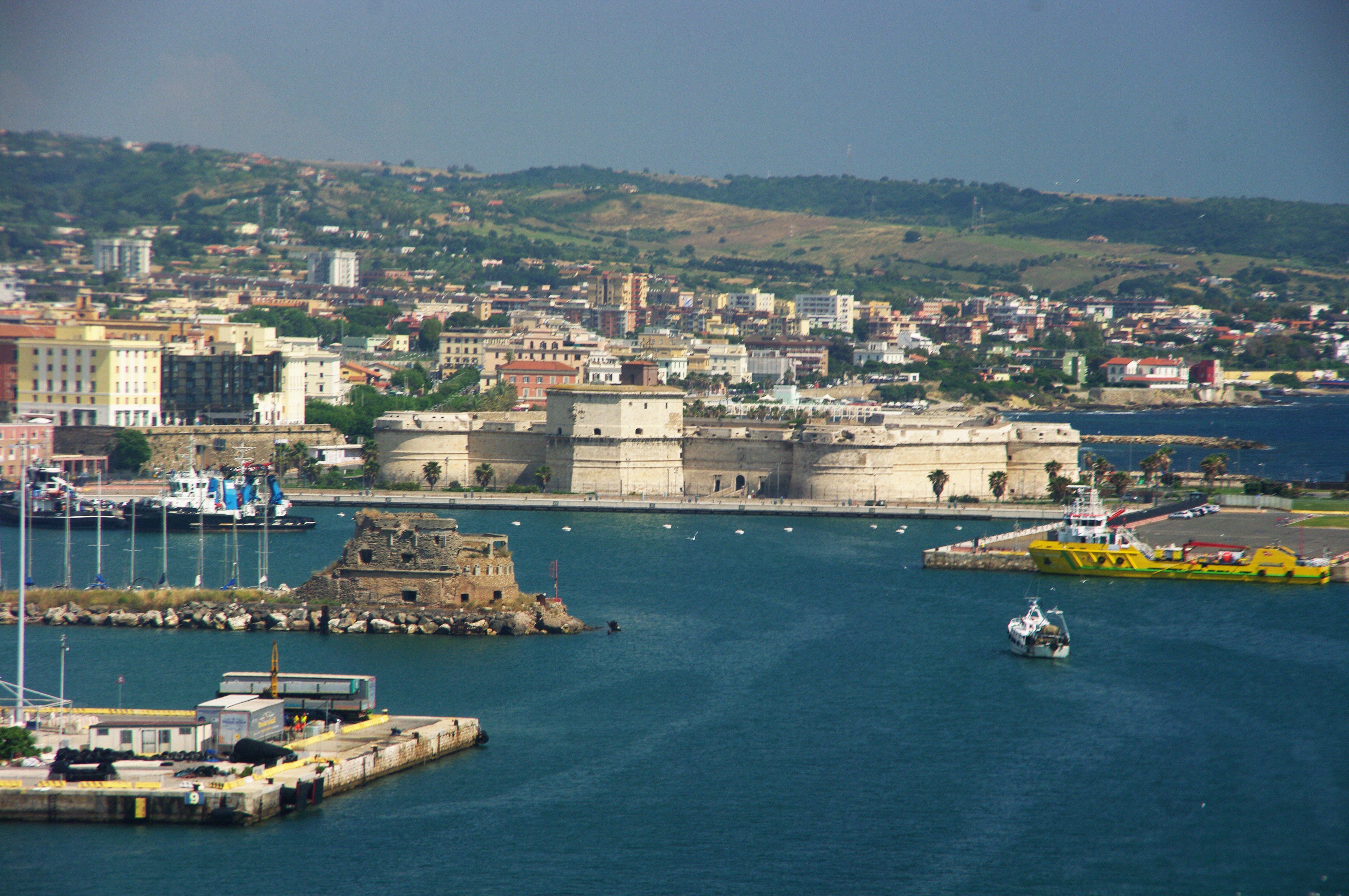
Civitavecchia — Latin Centumcellae, "the hundred cells" — is the port of Rome, and for most travellers it is exactly that and nothing more: a place to board a cruise ship to the Mediterranean or a ferry to Sardinia, Sicily or Tunisia. The town was bombed flat by Allied air raids in 1943-44, so most of what stands today is post-war and unremarkable. But the genuine pieces of the old city that survived — and a few Roman remains in the hinterland — are worth a couple of hours if you have a long wait between connections.
The headline survivor is Forte Michelangelo, the squat hexagonal fortress that dominates the harbour. Pope Julius II commissioned it from Bramante in 1508; Sangallo the Younger continued the work; and Michelangelo himself designed the central keep under Pope Paul III. It is one of the very few civilian works by Michelangelo that has come down to us, and it is still in good shape. Walk around the seaward side of the port for the best view.
Behind the fort, the small historic centre climbs the hill towards Piazza Leandra and the Baroque cathedral, with a few narrow medieval lanes that escaped the bombs. The National Archaeological Museum holds finds from the Etruscan and Roman sites of the surrounding agro romano, and the Terme Taurine — Trajan's old thermal baths — sit four kilometres east in the open countryside.
Pragmatically: the cruise terminal is a 15-minute walk or a free shuttle bus from the central waterfront. Trains to Roma Termini run every half hour and take about 80 minutes; if you have a full day you should spend it in Rome rather than Civitavecchia. Closer at hand, the Etruscan necropolis at Cerveteri and the painted tombs at Tarquinia are easy half-day trips with much more to see than Civitavecchia itself.