Sabaudia is a planned town on the Tyrrhenian coast about 100 km south of Rome, built between 1933 and 1934 on land reclaimed from the Pontine Marshes. The town was designed and constructed in 253 days by a young team of rationalist architects — Cancellotti, Montuori, Piccinato, and Scalpelli — and it is, with Latina and a handful of others, the most coherent surviving example of Italian Fascist-era new-town planning. Where Latina has been swallowed by sprawl, Sabaudia has stayed close to its original scale, and the centre is now protected as a piece of twentieth-century heritage.
The architecture is angular and white, with travertine cladding, slim brick towers, and long horizontal lines that read very differently from the medieval hilltowns elsewhere in Lazio. The main civic axis runs from the Palazzo Comunale and its tower across Piazza della Rivoluzione (now Piazza del Comune) to the Santissima Annunziata church, all built at the same time and to the same design language. Mosaics, friezes, and rationalist civic art are scattered through the centre.
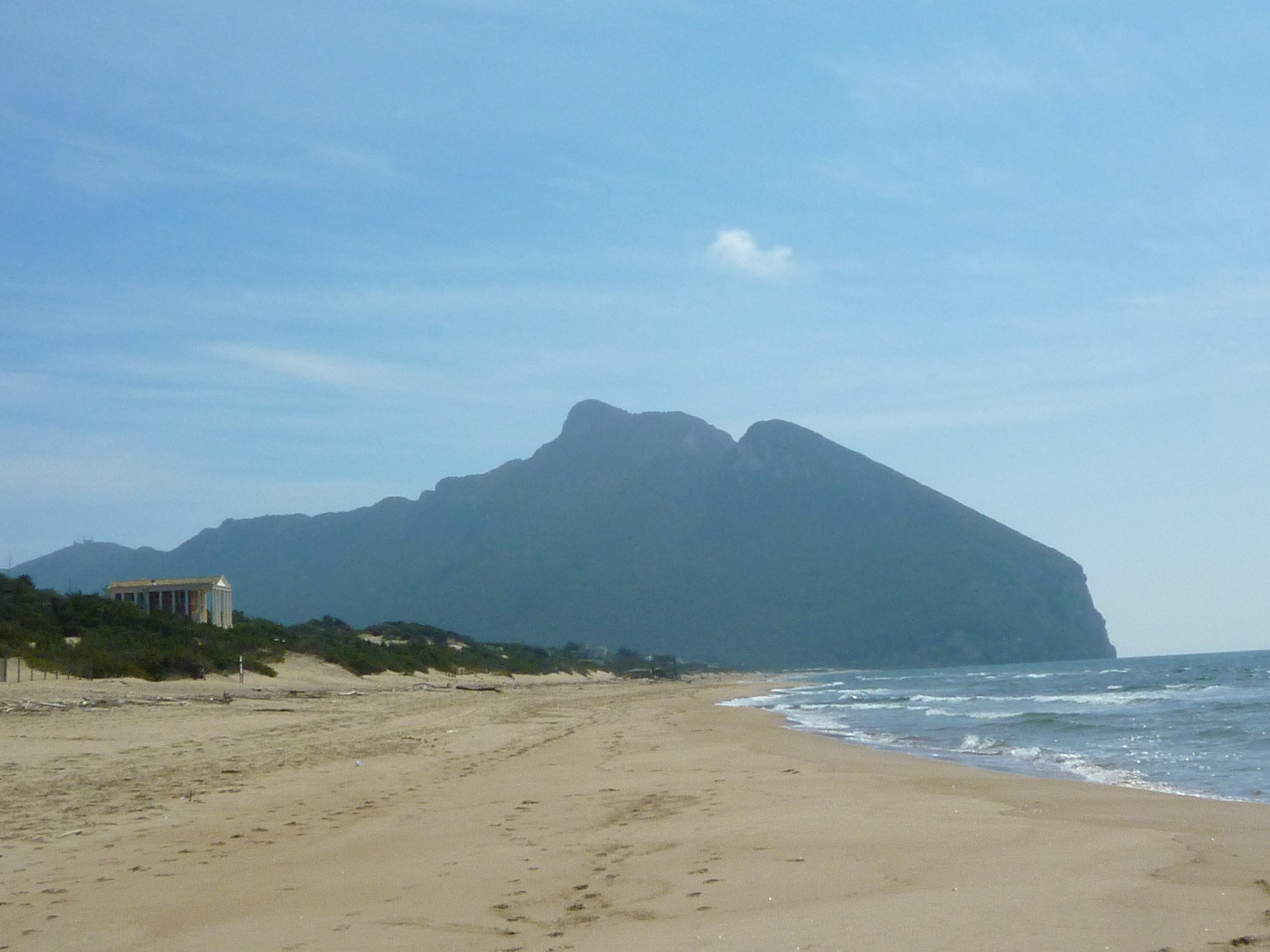
Beyond the town, Lake Sabaudia — a long lagoon separated from the sea by a strip of pine forest and dunes — stretches south towards Mount Circeo. The whole area lies inside Circeo National Park, and the beach that runs for some 15 km between the lake and the sea is one of the wildest and most beautiful in Lazio. Sabaudia has long been a discreet summer escape for Roman intellectuals and politicians, Pier Paolo Pasolini and Alberto Moravia among them, drawn by the empty beach, the modest architecture, and the absence of the package-tourism that scars other stretches of the coast.
The best time to visit is May–June or September, when the sea is warm but the Romans have not yet arrived in force.