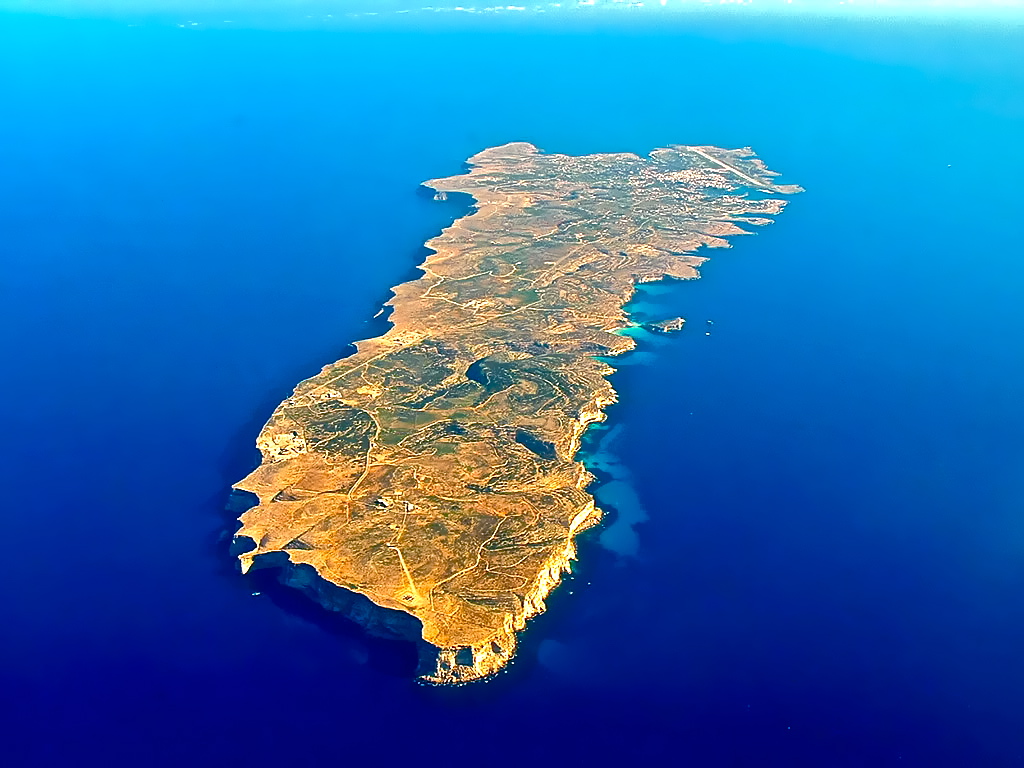
Lampedusa sits closer to Tunisia than to Sicily, and the landscape makes no secret of it. Flat, sun-scorched rock, wild rosemary, and a sea that turns an improbable shade of turquoise — this small island belongs geologically to Africa, even if it flies the Italian flag.
The town is compact and unpretentious: a working harbour, a single main street, a handful of trattorias that know how to handle a grilled fish. Almost all the beaches and coves are a short distance away, reached by scooter, boat, or on foot along dusty tracks. The most famous is Spiaggia dei Conigli — Rabbit Beach — which regularly tops lists of the world's best beaches and deserves the reputation.
Lampedusa is also a nesting ground for loggerhead sea turtles, and the waters around the island are some of the clearest in the Mediterranean. Divers come from all over Italy for the visibility and the wrecks. The Lampedusa Nature Reserve protects the southwestern coast and its sea caves. On the cliffs above the sea, the Porta d'Europa monument faces Africa as a memorial to the thousands who have died crossing the strait. Outside July and August the island is genuinely quiet, and the contrast with the summer crowds is dramatic.