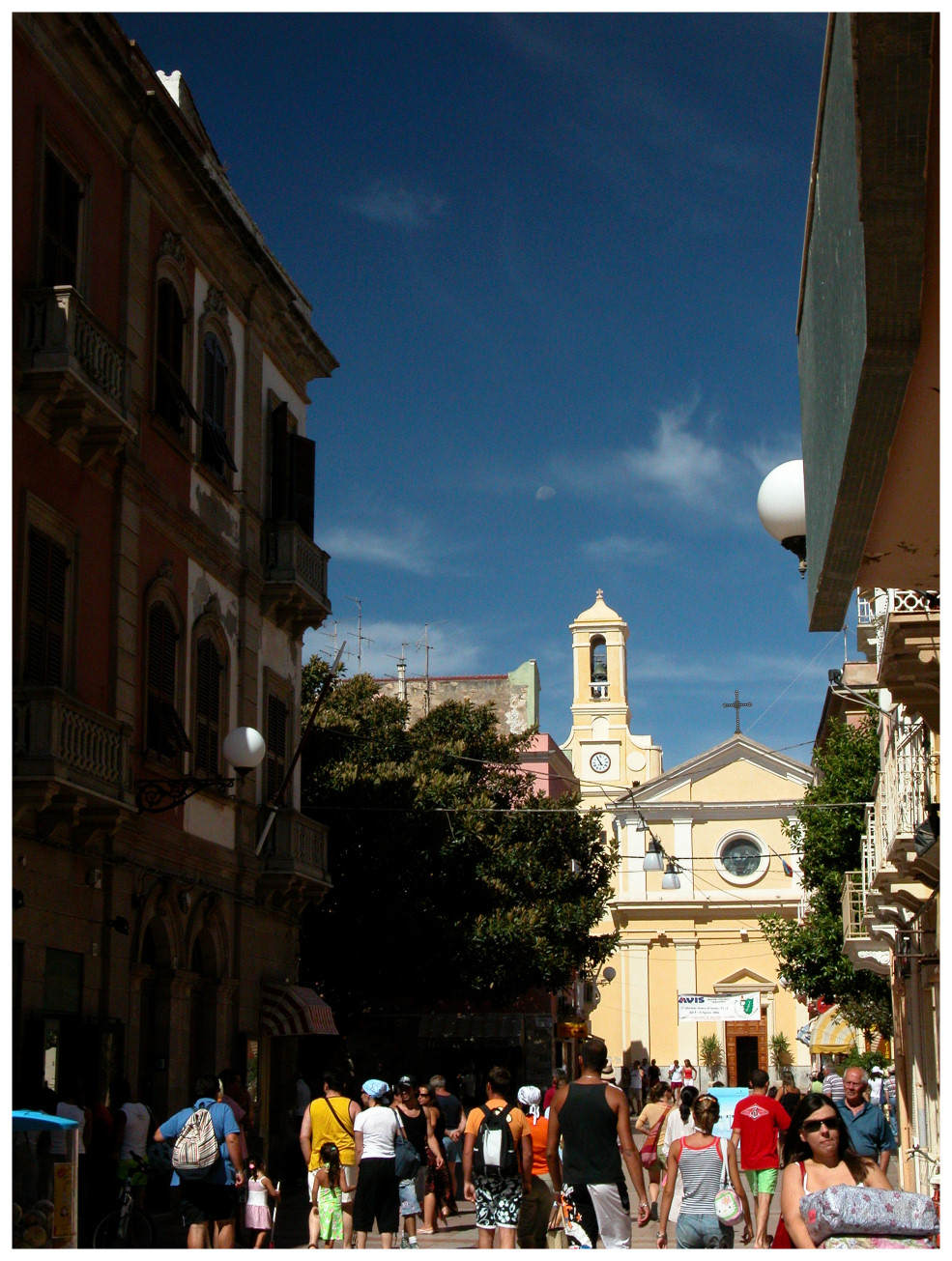
Island harbour town off Sardinia, founded by Tabarchino-speaking settlers of Genoese origin.
Carloforte is the only town on Isola di San Pietro, a small island off the southwest coast of Sardinia. Despite being Italian, the place has a distinct identity: it was founded in the 18th century by Genoese-origin settlers from the island of Tabarka off Tunisia, and their descendants still speak a Ligurian dialect called Tabarchino. Carlofortini don't consider themselves Sardi, and if you pay attention you'll hear it.
The town has a distinctly un-Sardinian look — pastel-coloured harbour buildings, a relaxed piazza shaded by tall palms, and narrow lanes climbing the hillside toward the remains of old fortifications. The sea here is excellent for swimming and snorkelling, and the waters around the island are a marine reserve. The best beaches are on the southwest coast: La Bobba is the largest, and Punta delle Colonne at the island's tip has dramatic basalt column formations rising from the sea.
The island's economy runs on tuna fishing and tourism. The annual Girotonno festival in late May-June celebrates bluefin tuna with food, music, and cooking competitions from tuna-fishing cultures around the world. Outside peak summer, Carloforte is quiet, unhurried, and genuinely pleasant.
Guide
Eating Out
Carloforte has a handful of good restaurants that make the most of the island's tuna tradition and the quality of Mediterranean seafood in these waters.
Al Tonno di Corsa on Via Marconi is the restaurant most associated with Carloforte's tuna heritage — the name refers to the running tuna (the schools of bluefin that once passed the island in large numbers during migration). The preparations are traditional: tuna in olive oil, ventresca (belly cut), tarantello (the back). Booking is wise in summer.
For something simpler, the harbour front has several restaurants and bars where grilled fish and pasta are reliably good. The local pasta speciality is cassulli — a short, rough pasta similar to orecchiette, traditionally served with tuna-based sauces.
Carloforte also produces a local red wine, Carignano del Sulcis, grown on the sandy soils of the surrounding islands. It is robust and goes well with the heavier fish dishes. Most restaurants serve it by the carafe.
Guide
Getting Around
Carloforte town is small and easily covered on foot. The town centre, harbour, and main piazza are all within a few minutes' walk of each other.
To reach the island's beaches — particularly the good ones on the west coast such as La Bobba and Girin — you'll need a car, scooter, or bicycle. All three can be hired in Carloforte. The island roads are narrow and winding; a scooter or bicycle suits the terrain better than a car for most purposes.
Guide
When to Go
The island is at its best in late May, June, and September. In late May, the Girotonno tuna festival adds to the interest. June brings warm weather and sea temperatures that are already good for swimming, without the full summer crowds. September is excellent — the water is at its warmest, the crowds thin, and the light is beautiful.
July and August are peak season. The island fills up, particularly on summer weekends when day-trippers come from the Sardinian mainland. Accommodation is harder to find and more expensive. The ferries run frequently but can have queues for vehicles.
October through April, Carloforte is quiet to the point of sleepiness. Most restaurants and many shops close or reduce hours. The island is still pleasant for walking in October and November, but if you are coming primarily for the sea and restaurants, come in the shoulder season.