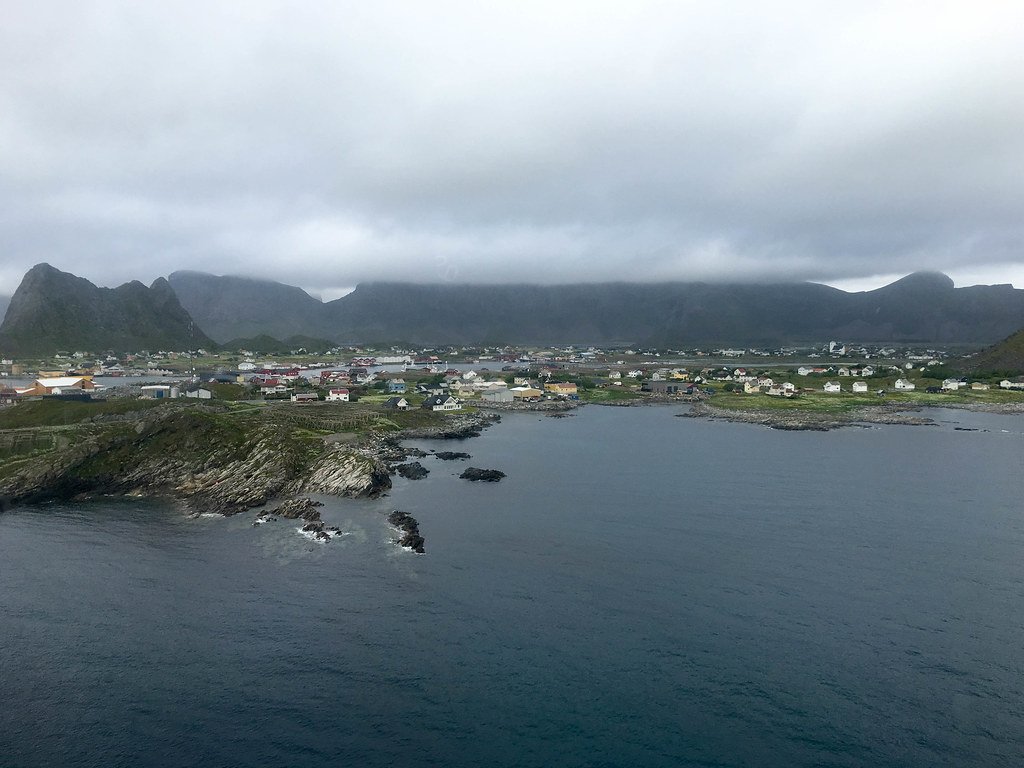
Værøy is the southernmost inhabited island of Lofoten, a small, rugged place where fishing still runs everything and the mountains drop straight into the sea. About 700 people live here, most of them in the village of Sørland on the sheltered eastern side. The rest of the island — the wild southwestern face with its towering bird cliffs — belongs to the seabirds.
The island is defined by a long mountain ridge running northeast to southwest. East of the ridge lies Sørland, with its shops, harbor, school, and most of what passes for infrastructure. West of the ridge is something else entirely: sheer cliffs dropping into the Atlantic, home to hundreds of thousands of nesting seabirds. In summer, organized boat trips run daily to the cliffs — one of the best wildlife experiences in northern Norway.
Værøy has one peculiar claim: it is the only place where people once caught eagles with their bare hands. Hunters would lie in caves baited with meat and grab the birds as they landed. You can still visit these eagle-hunting caves today.
The abandoned village of Mostad, on the far side of the ridge, is a good hike from Sørland. Around 150 people once lived there, catching puffins to supplement their diet using the unusual Norwegian Lundehund (puffin dog) — a breed so specialized it has six toes on each foot. The village was evacuated after World War II, the harbor too exposed and the isolation too complete. Today only ruins remain, and the puffins are back in force.
The ferry crossing from Moskenes to Værøy crosses the Moskstraumen, one of the most powerful tidal currents in the world. It inspired Edgar Allan Poe's "A Descent into the Maelström" and Jules Verne's Twenty Thousand Leagues Under the Sea. On a rough day, you'll understand why.