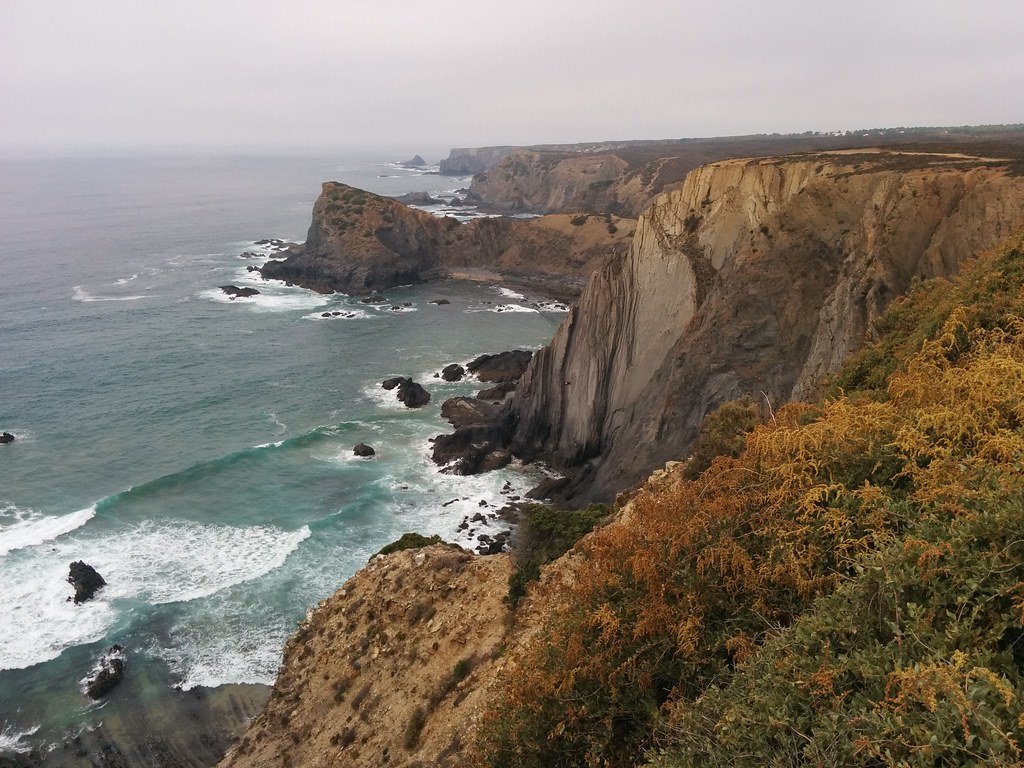
Western Algarve town split between a Moorish hill quarter and wild Atlantic surf beaches.
Aljezur is a small town on the western Algarve coast, inside the Parque Natural do Sudoeste Alentejano e Costa Vicentina — a protected stretch of wild Atlantic coastline that has escaped the resort development further east. The town itself is split in two: the old Moorish quarter climbs a hillside topped by a ruined 10th-century castle, and the newer part sits in the valley below.
The beaches are the main draw. Praia da Arrifana, a wide crescent of sand beneath high cliffs, is one of the best surf spots in the Algarve. Praia de Monte Clérigo is a quieter, more sheltered option to the north of town. Praia da Bordeira, near Carrapateira to the south, is vast and windswept — a kilometre of sand backed by dunes where you can walk for an hour and barely see another person. The Rota Vicentina hiking trail passes through the area, following the clifftops south toward Sagres.
Aljezur has a relaxed, slightly bohemian atmosphere — a handful of good restaurants, a weekly market, and a pace of life that feels far removed from the tourist bustle of Lagos or Albufeira an hour to the east.
Guide
Getting There
Aljezur is not served by train. The nearest rail connection is at Lagos, about 50 km southeast, which is on the Algarve line from Faro and Lisbon.
From Lagos, the EVA bus company runs a service north to Aljezur several times a day, continuing to Odeceixe. From Lisbon there are direct express buses to the western Algarve. The journey from Lisbon by bus takes roughly three and a half hours.
If you are driving, the IC4/N120 runs west from the main A22 motorway (Via do Infante) to Aljezur. The roads to the beaches are mostly good tarmac. A car is essentially required if you want to explore the coastline independently — public transport within the municipality is minimal.
Guide
When to Go
The western Algarve has a different climate from the south coast — cooler in summer and wetter in winter, tempered by the Atlantic. July and August are warm (25–28°C) and busy, but never as overrun as the resort coast. September and October are excellent: warm enough for swimming, the summer crowds gone, and the coastal light at its best.
Surfers come year-round. Winter swells from the North Atlantic are powerful and consistent, and the breaks at Arrifana work in almost any season. The Rota Vicentina is best walked in spring (March to May), when the wildflowers are out on the clifftops, or in October.
The annual Festa da Batata-Doce (sweet potato festival) takes place in November and is an unexpectedly good excuse to visit — the Aljezur area has been growing sweet potatoes for centuries and the festival celebrates them with unusual seriousness.