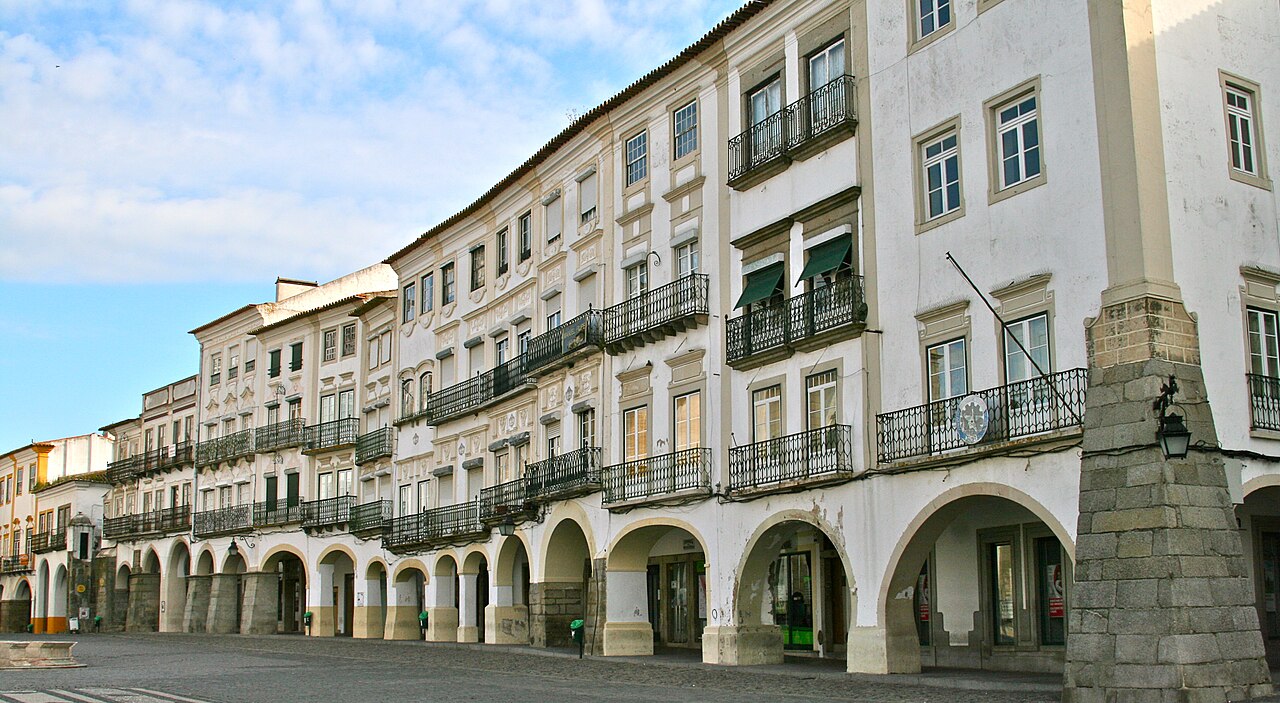
Évora is the finest city in Portugal's Alentejo region and a UNESCO World Heritage Site — described by UNESCO as "the finest example of a city of the golden age of Portugal after the destruction of Lisbon by the earthquake of 1755." The description is apt. Walking through Évora's walled centre feels like stepping into a museum of Portuguese history, except that it is a living city with a university, good restaurants, and a thriving market.
The city sits on a gentle hill about 130 km east of Lisbon, surrounded by the rolling cork oak plains and olive groves of the Alentejo. The Roman Temple of Diana stands remarkably intact in the old town, and the 12th-century cathedral offers rooftop views across the terracotta skyline to the countryside beyond. The most memorable sight may be the Capela dos Ossos (Chapel of Bones), where the walls and pillars are entirely lined with human skulls and bones — the work of Franciscan monks who wanted to remind visitors of the transience of life.
Évora is also an excellent base for exploring the Alentejo's megalithic sites — the region has the highest concentration of standing stones and dolmens in the Iberian Peninsula. The Cromeleque dos Almendres, a stone circle older than Stonehenge, is a short drive west of the city. The local food is hearty and excellent: pork, bread, cheese, and the Alentejo's distinctive wines.