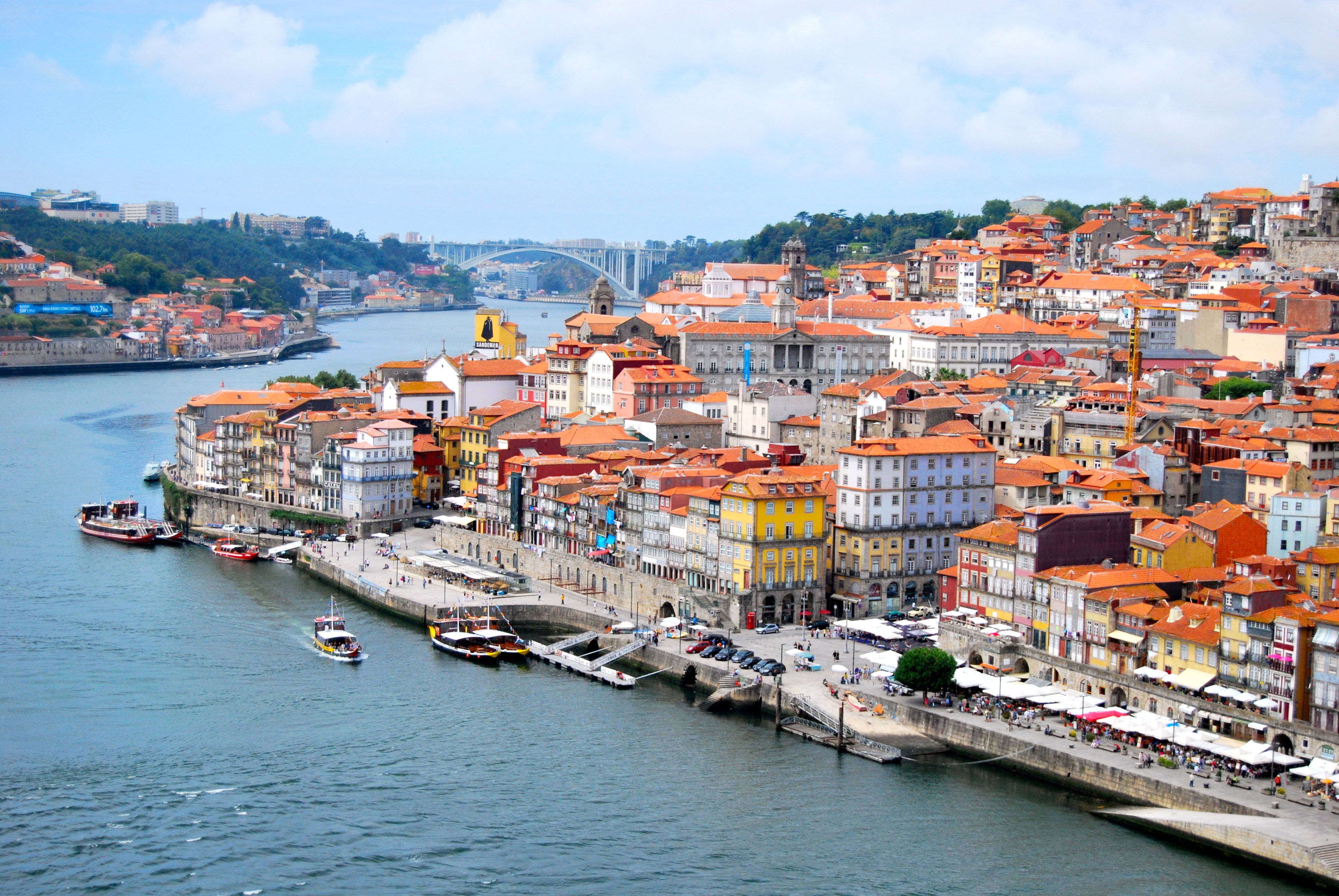
Porto is Portugal's second city and, in many ways, its most honest one. As the Portuguese saying goes: "Lisbon shows off, Braga prays, Coimbra studies, and Porto works." It is a place that has never tried to be pretty for visitors, yet its unvarnished beauty — crumbling azulejo facades, granite churches, iron bridges spanning the Douro gorge — makes it one of Europe's most rewarding cities.
The old town, a UNESCO World Heritage Site, tumbles down steep hillsides to the Cais da Ribeira waterfront. The streets are narrow, the staircases endless, and around every corner there is another tiled wall or hidden courtyard. The landmark Ponte de Dom Luís I, a double-deck iron bridge from the 1880s, connects Porto's upper and lower towns to Vila Nova de Gaia on the opposite bank, where the port wine lodges line the riverfront. Walking across the upper deck, with the Douro far below and the city spread out on both sides, is one of those free experiences that no amount of money could improve.
Porto is where port wine lives. The grapes grow upriver in the Douro Valley, but the wine has been aged, blended, and shipped from the Gaia lodges for centuries. You can visit Taylor's, Graham's, or any of the dozens of cellars for tastings — and you should. But Porto is not just about port. The city has reinvented itself over the past two decades, with a thriving food scene, bold contemporary architecture alongside the baroque, and a creative energy that feels entirely its own.
The locals, called tripeiros for their love of tripe stew, are direct and unpretentious. The food is hearty: francesinha (a meat sandwich drowned in beer sauce), bacalhau in a dozen variations, and fresh fish from the Atlantic at Matosinhos. Porto does not do delicate — it does satisfying.
Beyond the historic centre, the Foz do Douro neighbourhood along the coast is good for a long walk, the Serralves Museum of Contemporary Art is world-class, and the Livraria Lello bookshop draws crowds for good reason. The São Bento railway station is the best free museum in Porto. Give the city at least three days. It will reward every one of them.