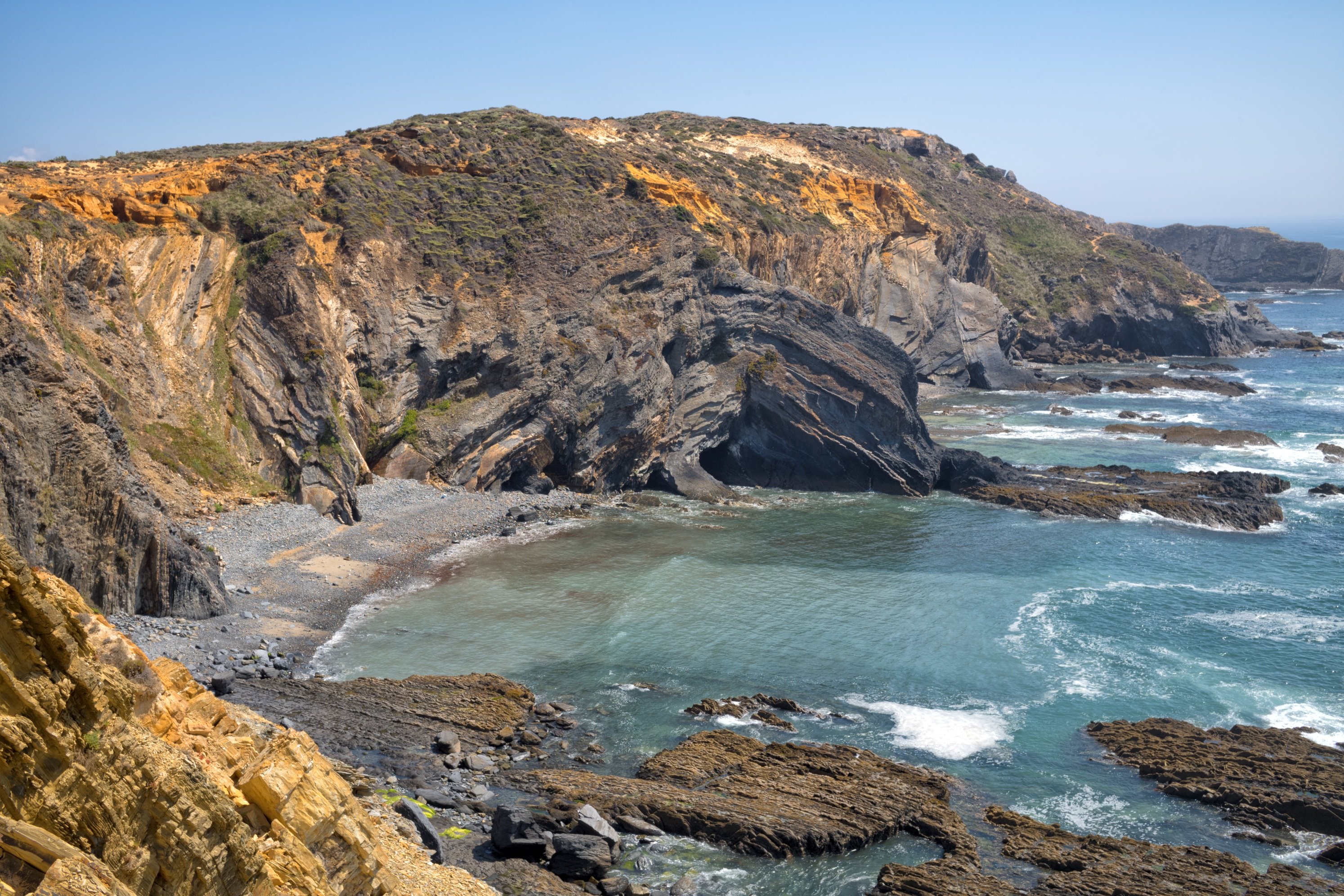
Odemira is Portugal's largest municipality by area, a vast sweep of Alentejo countryside that stretches from the rolling cork oak hills of the interior all the way to the wild Atlantic cliffs of the Costa Vicentina. Most visitors come for the coast — the beaches here are among the finest in Europe, protected within the Parque Natural do Sudoeste Alentejano e Costa Vicentina and largely spared the overdevelopment that has consumed the Algarve to the south.
The town of Odemira itself sits on the Rio Mira, a calm river that winds through wooded valleys before reaching the sea at Vila Nova de Milfontes. It's a working market town rather than a tourist destination, which is part of its charm: there are good local restaurants, a lively weekly market, and the unhurried pace of a place that hasn't been reshaped around tourism. The surrounding countryside holds megalithic monuments, Roman bridges, and whitewashed villages little changed over centuries.
The coast is the star attraction. Praia de Odeceixe in the south, Praia de Almograve, and Zambujeira do Mar are all spectacular — long, exposed beaches backed by dunes or cliffs, with cold, clean Atlantic water. The Rota Vicentina clifftop walking trails between them rank among Portugal's finest coastal hikes. Come in June or September to avoid peak crowds; July and August bring strong winds from the north (unpleasant for sunbathing but paradise for surfers).
The Alentejo interior rewards those willing to slow down. The Serra de Monchique hills to the southeast provide a green backdrop, and the Barragem de Santa Clara reservoir — one of the largest in Portugal — sits in the heart of the municipality, surrounded by eucalyptus and pine forests popular with wild campers and birdwatchers.