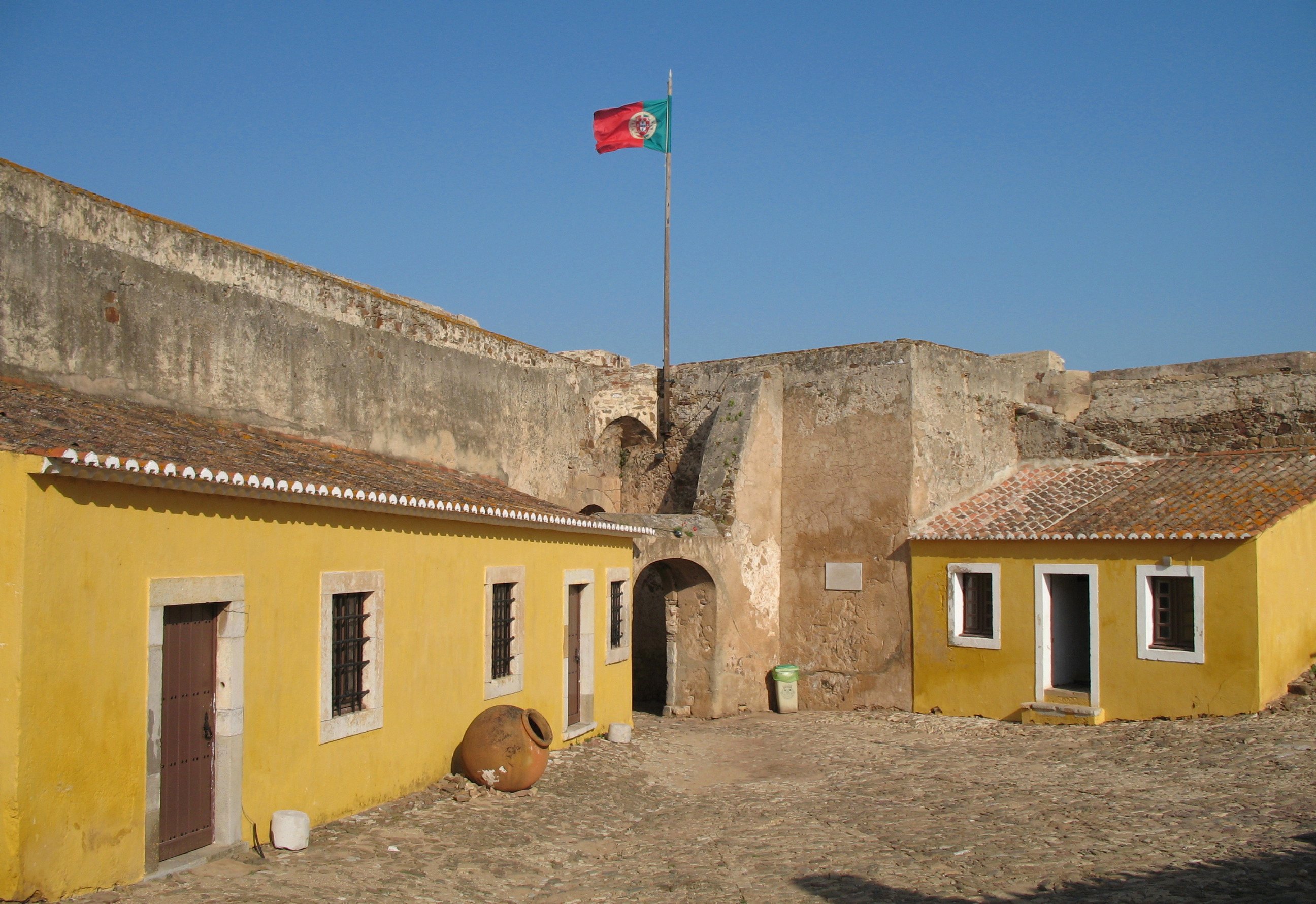
Castro Marim sits at the far eastern edge of the Algarve, just across the Guadiana River from Spain, and it wears its history plainly. Two castles dominate the low hill above the town — the medieval Castelo de Castro Marim and the smaller 17th-century Forte de São Sebastião — and below them spreads one of the largest saltmarsh nature reserves in Portugal. It is a quiet, unhurried place, easy to overlook on the drive between Faro and Seville, and all the more rewarding for it.
The town's strategic position on the river crossing made it important for most of Portugal's history. The Knights of Christ — the successors to the Templar order in Portugal — had their first headquarters here in the 14th century before moving to Tomar. The old castle walls are still substantial, and the views from the ramparts take in the salt flats, the river, and the low hills of the Spanish Extremadura beyond.
Those salt flats are the real surprise. The Reserva Natural do Sapal covers thousands of hectares of wetland and is an important stop on migratory bird routes. Flamingos are a regular sight, especially in autumn. The reserve is also one of the last places in the Algarve where traditional salt pans are still worked — the sea salt from Castro Marim has been harvested for over two millennia and is now sold as a premium product across Portugal.
Every August, the town holds a large Medieval Fair that fills the castle grounds with re-enactors, craftspeople, musicians, and archers. It draws visitors from across Portugal and Spain, and for a few days the ruins briefly feel inhabited again. Outside of that, Castro Marim is peaceful: a good base for birdwatching, a worthwhile detour on the way to or from Spain, and a place where you can have lunch overlooking the river and the border with almost no one else around.