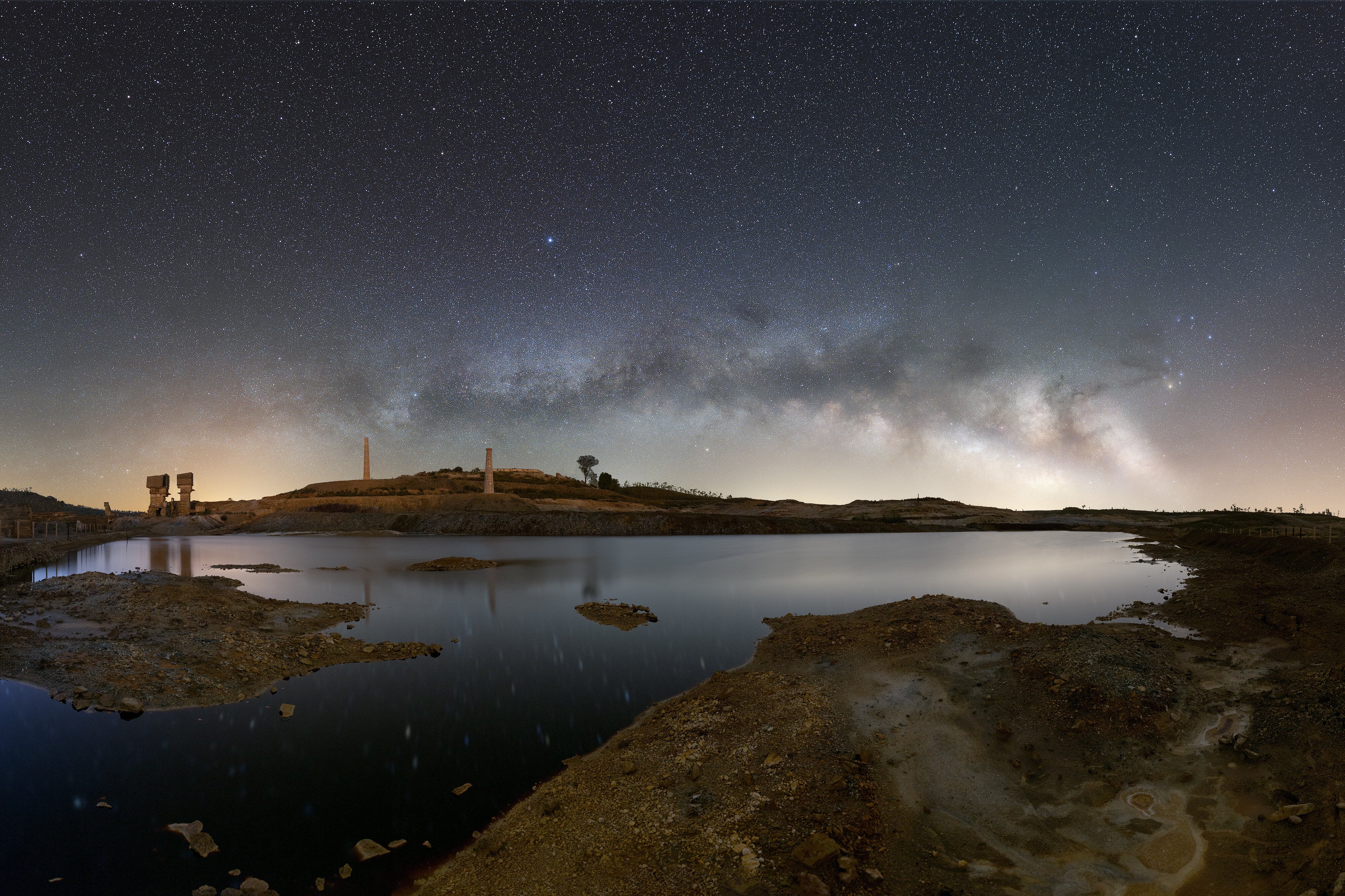
Mina de São Domingos
©
Mina de São Domingos

Mina de São Domingos

Abandoned Alentejo mining village near Spain, with Roman roots, British-era remains, and an acid-red pit lake.

Mina de São Domingos is a deserted mining village in the Alentejo, deep in the southeast of Portugal near the Spanish border. The Romans mined here for gold and silver for about four hundred years, and the British reopened the mines in the 19th century to extract copper pyrite, building a railway and an English-style village for the workers.

When the mines closed in 1966, the village was largely abandoned. Today it is an eerie, atmospheric place — the open pit with its acid-red lake, the English cemetery full of Cornish headstones, and the crumbling industrial buildings make for a striking landscape. A small mining museum in a restored worker's cottage tells the story of the people who lived here. The old loading quay at Pomarão, a few kilometres south, has become an unlikely riverside swimming spot at Praia do Peso in summer.

The mine was the first place in Portugal to have electric lighting — powered by its own generators long before the grid reached this remote corner of Alentejo.

Guide

Getting There

Mina de São Domingos is in the extreme southeast of Portugal, about 20 km from Mértola and 175 km east of Faro. There is no public transport; a car is essential. The drive from Mértola along the N265 takes around 25 minutes through typical Alentejo scrubland. From the Algarve, take the A22 to Castro Marim and head north through the back roads.

The nearest town with hotels and restaurants is Mértola, a beautiful walled town on a cliff above the Guadiana river and well worth a stop on any visit to this corner of Portugal.

Guide

Things to Do

The main draws at Mina de São Domingos are the open-cast pit and its rust-red acidic lake, the semi-ruined industrial landscape, and the mining museum in a restored worker's cottage. In summer, the reservoir beach at Chança offers an unlikely swimming spot in one of Portugal's most remote corners.