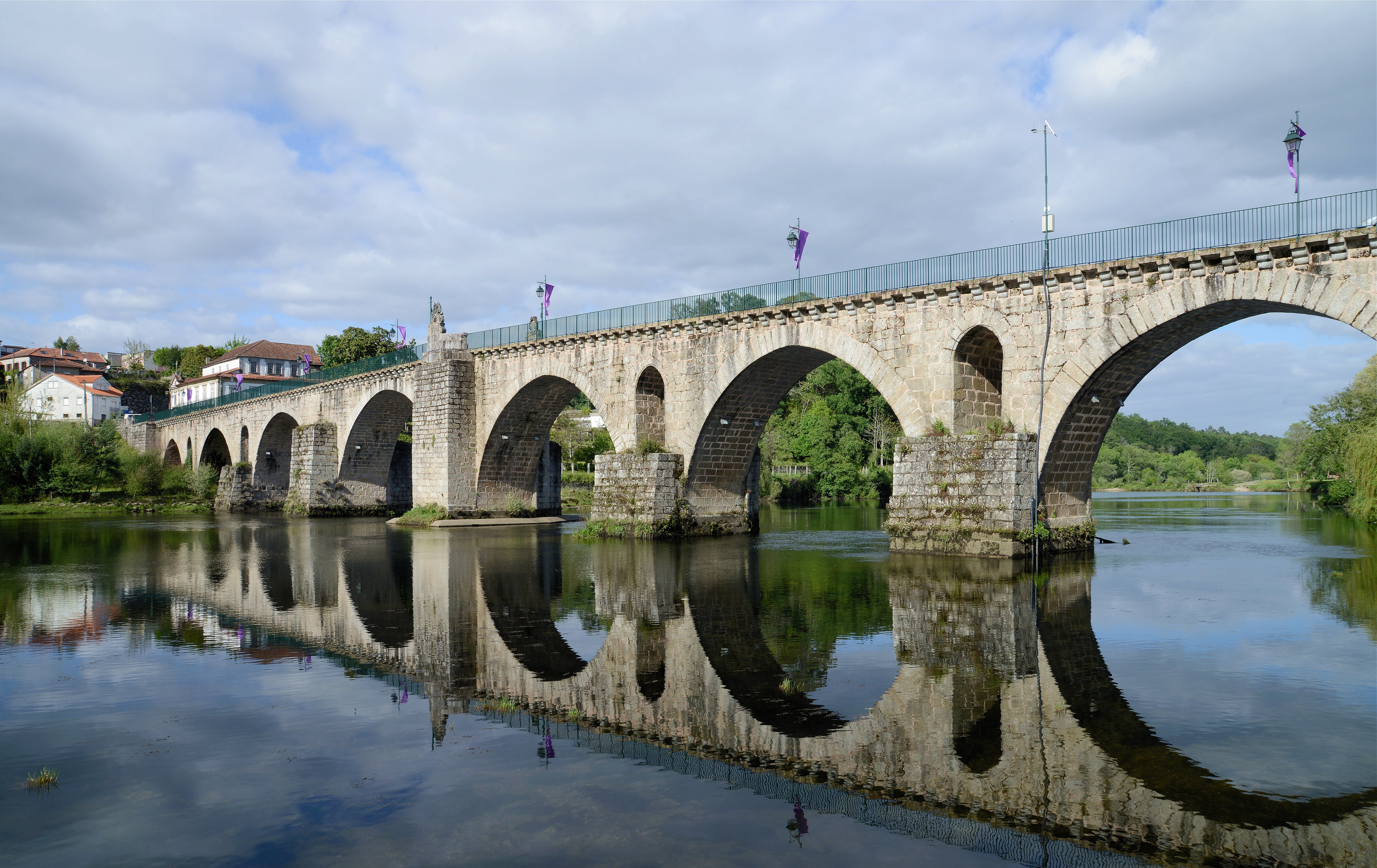
Ponte da Barca is a small town on the Lima river in the Minho — a few hundred metres of granite quays, a sixteenth-century bridge, and a market square that has stayed the same shape since the Renaissance. It takes its name from the barca, the ferry that used to carry pilgrims, traders, and ox-carts across the Lima before the bridge was built in the 1540s. The town sits at the foot of the Peneda-Gerês National Park and is one of the natural entry points to the wilder northern reaches.
The riverfront is the heart of it. The Romanesque Ponte de Ponte da Barca — a long stone bridge of ten unequal arches — frames the view of the old town from the south bank. Just upstream, the eighteenth-century Jardim dos Poetas, a small public garden, honours two local writers: Diogo Bernardes and his brother Friar Agostinho da Cruz, who wrote pastoral poetry by this stretch of water in the late sixteenth century. The Mercado Municipal, three minutes from the bridge, sells smoked sausages, broa cornbread, and the regional vinho verde from across the Lima valley.
A few kilometres west, in the village of Bravães, stands the Church of São Salvador — a twelfth-century Romanesque church with carved stone tympanums of oxen, apostles, and beasts, almost untouched since it was built and almost always empty. It is one of the most rewarding small churches in northern Portugal.
Most visitors use Ponte da Barca as a base for walking and driving in the Peneda-Gerês National Park. The town itself is sleepy and a day is plenty; combined with Arcos de Valdevez and a riverside walk between the two, it makes a satisfying low-key day in the Minho.