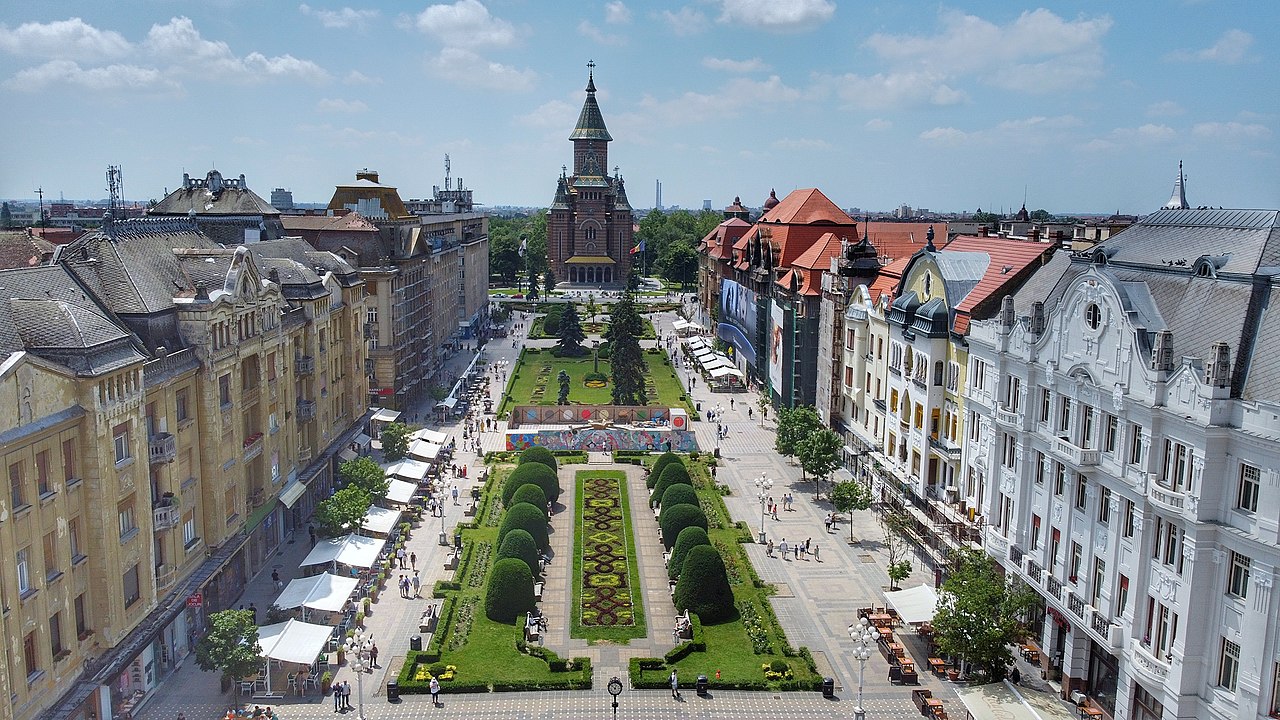
Timisoara is the largest city in western Romania, historically closer in spirit to Vienna and Budapest than to Bucharest. It was the first city in the world to have electric street lighting (in 1884), the first European city to introduce horse-drawn trams, and — most significantly — the city where the 1989 revolution began that brought down Ceausescu.
The city centre is built around three connected squares. Piata Unirii (Union Square) is the most beautiful, lined with Baroque palaces and dominated by the Catholic Dome and Serbian Orthodox Cathedral facing each other across the square. Piata Victoriei (Victory Square) has the grand Romanian Orthodox Metropolitan Cathedral and the Opera House, and still bears the marks and memorials of the revolution. Piata Libertatii (Liberty Square) is smaller and quieter, dominated by the 1756 plague column at its centre.
Timisoara is full of parks — the Roses Park, the Central Park, and the banks of the Bega Canal are all popular for walking. The city has a strong student population, which keeps the cafe and bar scene lively. The Museum of Banat in Huniade Castle covers regional history, archaeology, and natural sciences. The Cetate Synagogue on Marasesti Street, built in the 1860s with a capacity of 3,000, is one of the largest in Europe. The old industrial district of Fabric east of the centre is the other side of the city worth a half-day, with its own Fabric Synagogue, water tower and the public-transport museum in a working tram depot.