Vama Veche
©
Vama Veche

Vama Veche

Black Sea beach village with Romania's bohemian, music-heavy alternative seaside culture.

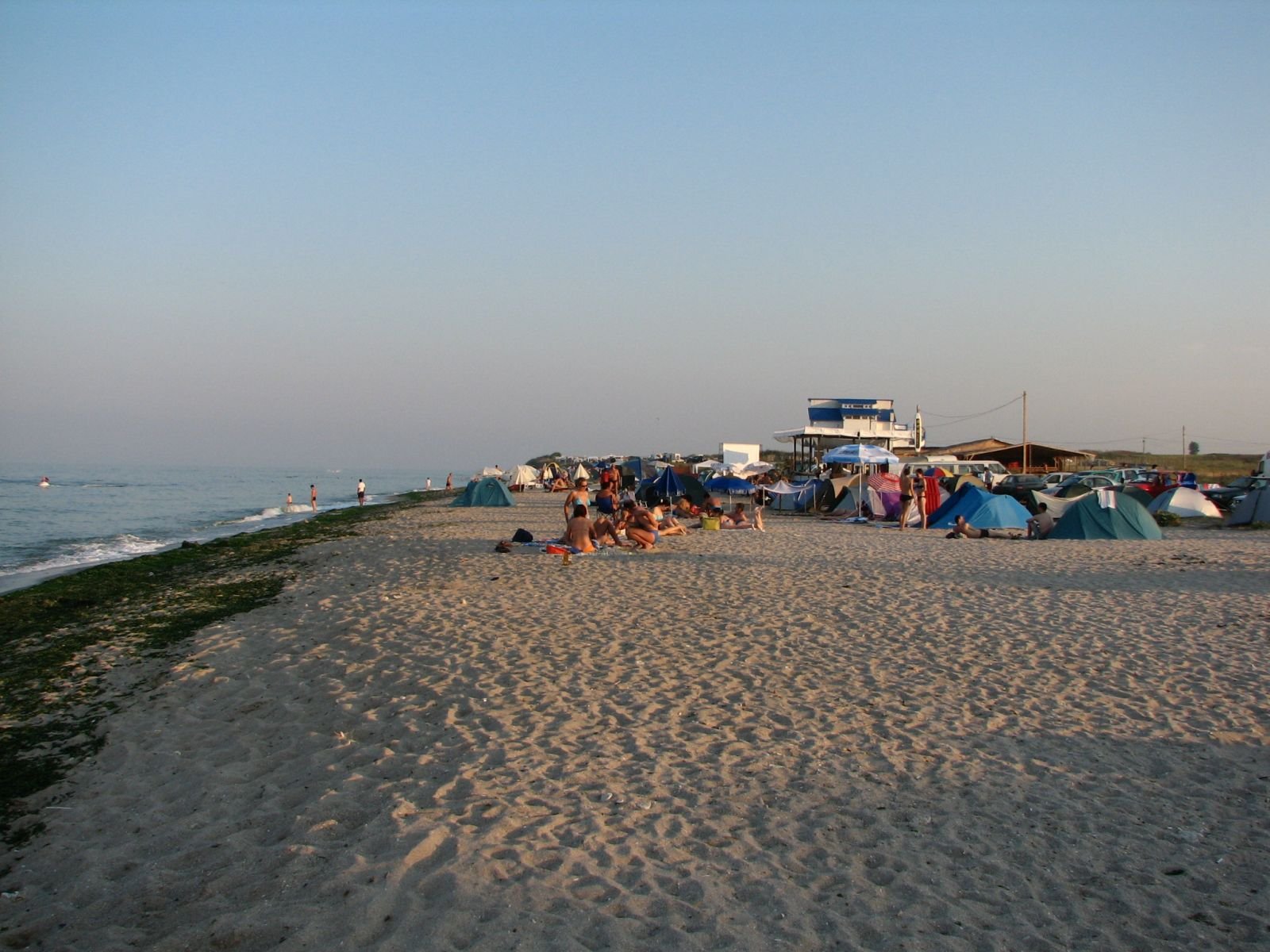
Vama Veche is Romania's most bohemian beach village — a scrappy, sun-baked strip on the Black Sea coast, just 7 km from the Bulgarian border. For decades it was the unofficial refuge of artists, students, nudists, and anyone seeking to escape the regimented seaside resorts further north. That spirit has survived, though barely.

The village once belonged to Gagauzian farmers and fishermen who called it Ilanlâc. After 1990, it became a magnet for free-spirited Romanians — it had 38 modest houses and almost nothing else, which was precisely the point. People camped on the beach, music played until sunrise, and the atmosphere was deliberately anti-resort. The nearby village of 2 Mai, 5 km to the north, drew a quieter literary crowd; Vama Veche got the party.

Today the village has grown considerably — there are guesthouses, restaurants, and even a couple of three- and four-star hotels like Hotel Laguna and Club d'Or. The streets are narrow and crowded in summer, the music from competing bars carries far into the night, and it has some of the feel of a student complex that forgot to grow up. Whether that's a selling point depends entirely on you.

The festival calendar is the real draw now: Stufstock (rock and alternative), Folk You, Filmstock, the International Freedom Festival Jazz, and Salsa & Bachata Week all pass through in summer. Come for one of these and the village makes complete sense. Come in late September, and you'll find something closer to the original: quieter, windswept, and genuinely lovely.

The beach is the anchor of it all — about a kilometre of fine sand, shallow water close to shore, and whatever the night has washed up. The quiet village of 2 Mai, 5 km north, offers a calmer alternative for those who want to read in peace rather than dance on the sand.

Guide

Bars and Cafes

Bars are what Vama Veche does best. The village has a dozen or so, ranging from improvised beach shacks to slightly more established terrace operations. Most play music — live or recorded — and most keep going well past midnight in summer. The atmosphere is collegiate and warm: strangers share tables, conversations start easily, and the local beer is cheap.

Guide

Eating Out

Eating in Vama Veche is reliably good if modest in scope. The village has developed a solid cluster of restaurants and beach bar-grills over the years, most of them concentrating on grilled fish, seafood, and standard Romanian dishes. Prices are noticeably lower than Bucharest.

Guide

Getting There

Vama Veche sits at the southern tip of the Romanian Black Sea coast, 7 km from the Bulgarian border. The nearest major city is Constanța, 63 km to the north.

By car from Constanța, take the DN39 south along the coast through Mangalia — the drive takes about an hour. From Bucharest, plan for around three to three-and-a-half hours on the A2 motorway to Constanța, then south on the DN39. The village has no formal car park; parking is improvised along the main street and fills up completely on summer weekends.

By bus, direct services run from Bucharest's Filaret terminal to Mangalia (about 4 hours), and from Mangalia there are local buses and minibuses the final 11 km to Vama Veche. In summer, dedicated tourist buses sometimes run directly from Bucharest — worth checking online forums closer to your travel date.

There is no train station in Vama Veche. The nearest rail stop is Mangalia, with connections to Constanța and Bucharest's Gara de Nord.

Guide

Things to Do

Vama Veche's charm lies in its simplicity — a Black Sea beach, a scattering of bars playing music into the night, and very little else. That's the whole point. The village is tiny enough to walk end to end in ten minutes, but given the right company and the right festival, it can feel like the centre of the universe.