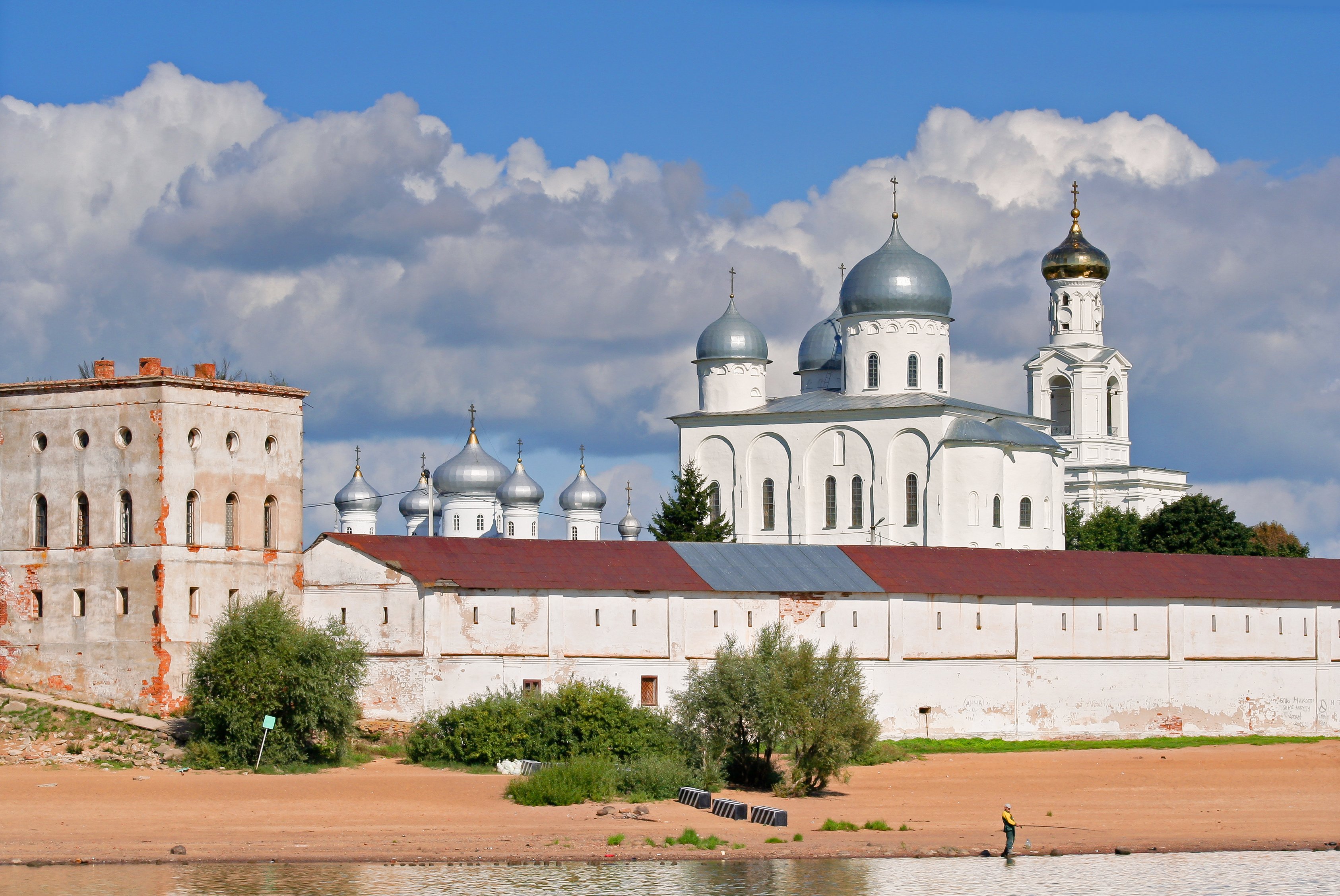
Veliky Novgorod (Great Novgorod) is one of Russia's oldest and most historically significant cities, situated about 160 km southeast of St Petersburg on the Volkhov River. Unlike Moscow and St Petersburg, it was never destroyed by the Mongols, which means it preserves an extraordinary collection of medieval architecture: the Kremlin walls date from the 15th century, and the city is full of churches and monasteries stretching back to the 11th and 12th centuries.
The Kremlin (known locally as the Detinets) is the centrepiece — its impressive walls contain the Cathedral of St Sophia, one of the oldest churches in Russia, built in 1045–1050. The Millennium of Russia monument in the Kremlin grounds is one of the great public sculptures of the 19th century, its 129 bronze figures covering a thousand years of Russian history. Across the river, the Yaroslav's Court district has a remarkable cluster of medieval churches, including St Nicholas' Cathedral, built in 1113.
The Museum of History, Architecture and Art within the Kremlin complex has a fine collection of icons from the Novgorod School, which produced some of the most distinctive Russian icon painting between the 12th and 16th centuries. The Museum of Wooden Architecture, in the grounds of the Yuryev Monastery south of the city, brings together traditional timber buildings from the surrounding region. A short detour east of Yaroslav's Court brings you to the Church of the Transfiguration on Ilyina Street, which contains the only surviving frescoes by Theophanes the Greek — one of the most important works of medieval art in Russia.
Getting here from St Petersburg is straightforward: frequent buses leave from the Obvodnogo Kanala bus station and take about three hours. Train connections are also available.