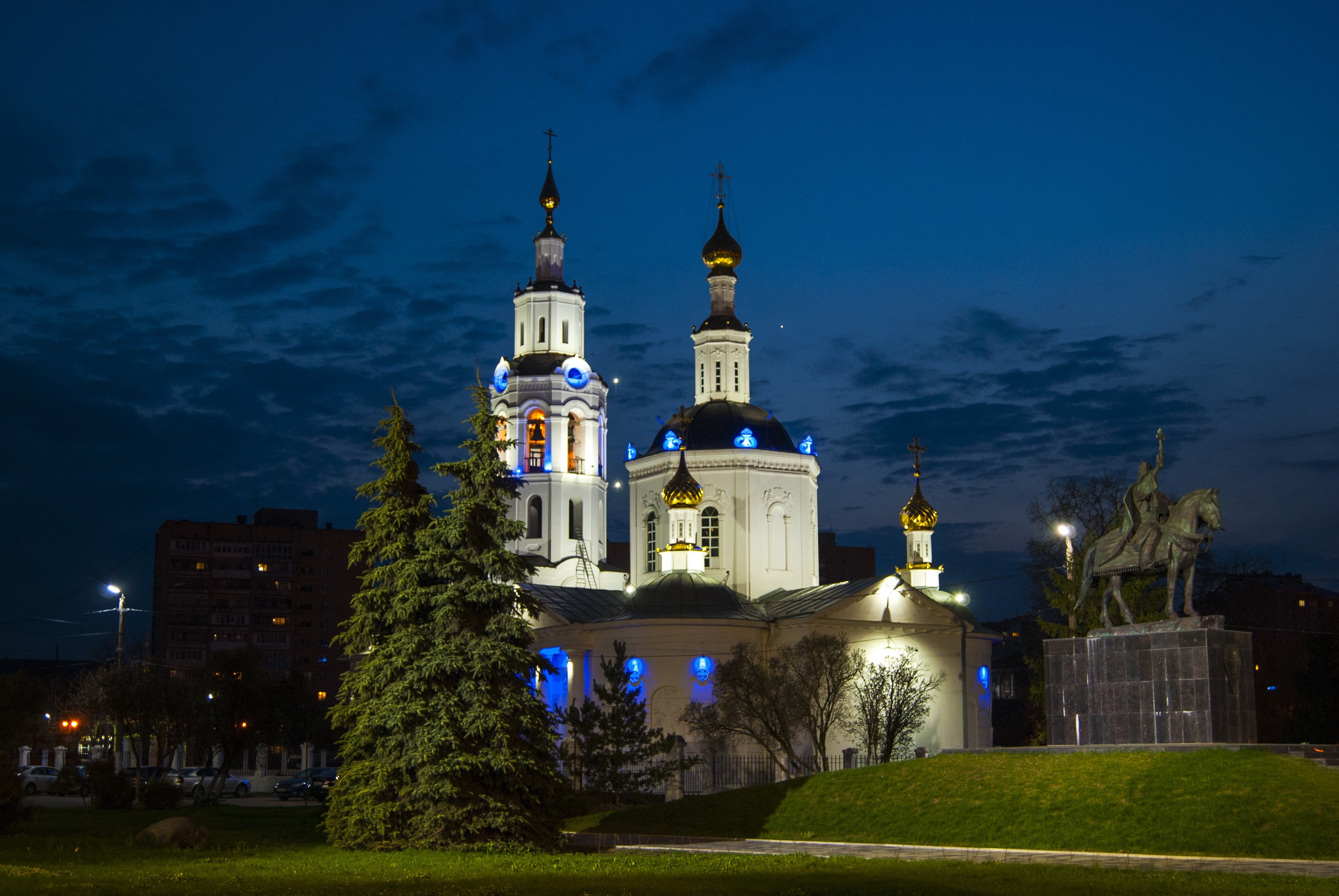
Oka River city south of Moscow, founded as a fortress and closely tied to Ivan Turgenev
Oryol — written Orel in Russian — sits on the Oka River in western Russia, about 370 kilometres south of Moscow. Ivan the Terrible founded it in 1564 as a defensive fort against Tatar raids from the steppe, and the town grew steadily as the frontier moved south.
The city is inseparable from Ivan Turgenev, one of Russia's great 19th-century novelists. Turgenev grew up at Spasskoye-Lutovinovo, a country estate about 70km north of Oryol, and the landscape of the surrounding forests and meadows shaped the prose of Sketches from a Hunter's Album and Fathers and Sons. The estate is open to visitors, and the Turgenev museum in the city centre fills in the biography. Two other major Russian writers — Nikolai Leskov and Leonid Andreyev — were also born here, giving Oryol an unusually dense literary pedigree for a provincial city.
During the Second World War the city was occupied by German forces from 1941 to 1943 and was badly damaged. Its liberation in August 1943 — the same week as Belgorod — was marked by the first Soviet artillery salute of the war, a signal honour that Muscovites heard from across the city. Much of what you see today was rebuilt in the Soviet era.
Oryol is a working regional capital: agricultural trade, light industry, a university. It is not on the main tourist trail, but for visitors interested in Russian literature or in the contested landscape of the Eastern Front, it rewards a day or two. The Oka River embankment and the old churches near it give a quiet sense of provincial Russian life.
Guide
Getting There
Oryol is well connected to Moscow by train. The Moscow–Oryol journey takes about 3–4 hours on faster trains (the Lastochka express takes around 3 hours), and there are frequent daily services from Moscow's Kursky station. Trains also connect Oryol with Kursk, Voronezh, and other central Russian cities.
By road, Oryol is about 370km south of Moscow on the M2 highway. By bus, there are regular services from Moscow's Yuzhny bus station. The city has a small airport, Oryol Yuzhny, but commercial passenger services have been limited; rail is the practical option for most visitors.
Guide
When to Go
The most pleasant time to visit Oryol is late spring and summer — May through August — when the park at Spasskoye-Lutovinovo is at its best and the riverside embankment is in full use. Summers are warm but not extreme, typically reaching 25–28°C at their peak. Spring in central Russia can be muddy and unpredictable, but by May the landscape has the fresh green quality that Turgenev described so vividly.
Autumn (September and October) brings colour to the parks and a certain melancholy that suits the literary mood of the city. Winter is cold and often snowy — temperatures regularly drop below -10°C — but the city functions normally and the museums are uncrowded. May 9 (Victory Day) is a significant date locally: the city holds ceremonies at the war memorial, and it is worth timing a visit around it if you are interested in Russian history.