Volgograd
©
Volgograd

Volgograd

Long Volga River city formerly called Stalingrad, rebuilt around the memory of its decisive wartime battle.

Volgograd is a Russian city of just over one million people, stretched for 80 kilometres along the west bank of the Volga River in the southern Russian steppe. It is known to the world almost entirely by its former name: Stalingrad. The Battle of Stalingrad, fought from August 1942 to February 1943, was the largest and bloodiest battle of the Second World War — an estimated two million casualties on all sides — and the point at which the German advance into the Soviet Union was broken. The city was essentially destroyed in the fighting and rebuilt from rubble after the war.

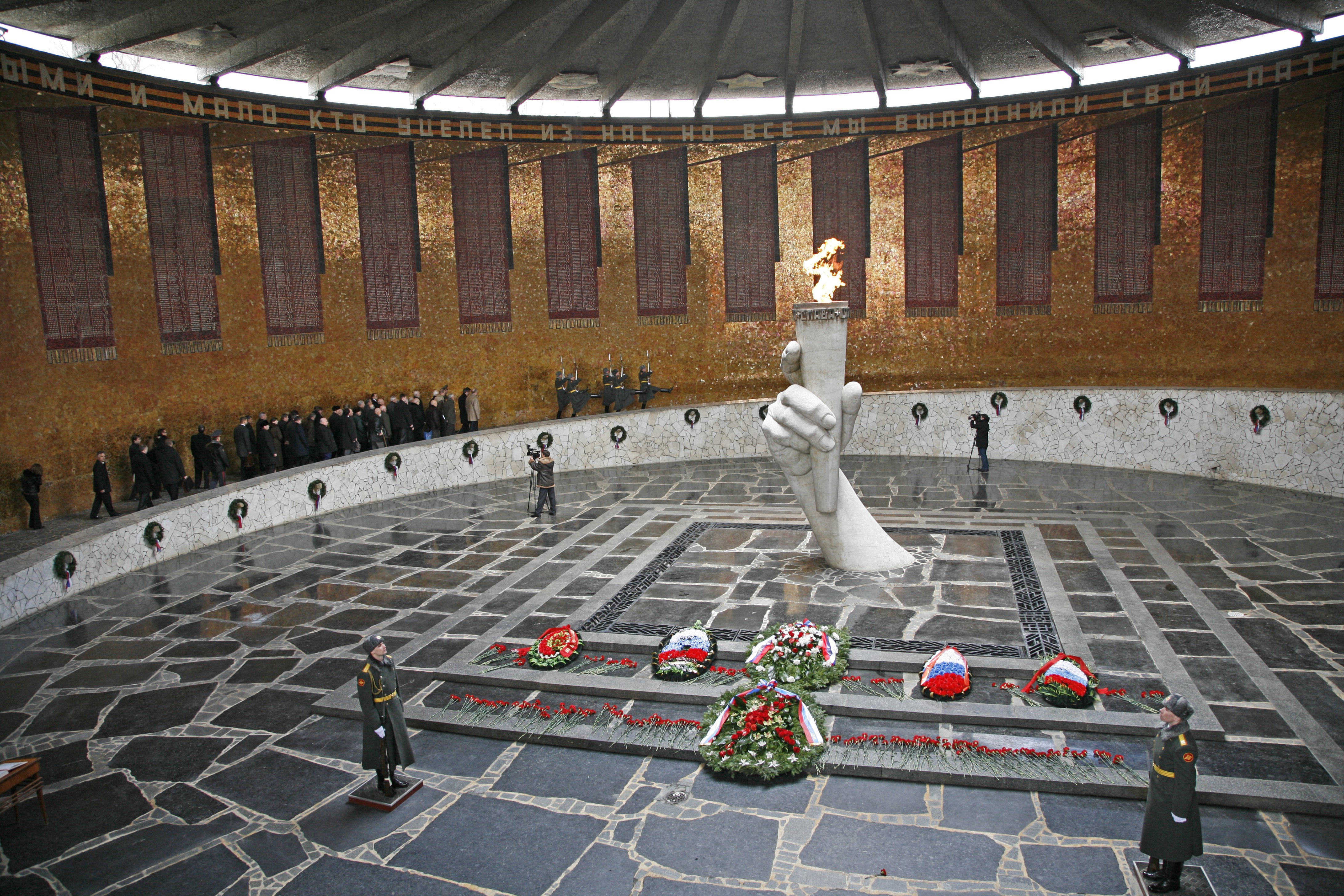
The war memorials are the reason most visitors come. Mamayev Kurgan, the hill above the city that was fought over for months and is now one of the great monumental complexes of the 20th century, culminates in The Motherland Calls — a colossal statue visible from kilometres away. The Stalingrad Battle Panorama Museum at the base of the hill documents the battle with a vast circular painting and thousands of artefacts. Pavlov's House, a preserved apartment building in the city centre, marks the spot where a small Soviet garrison held out for 58 days against continuous German assault. Walking these sites, even for visitors with no particular interest in military history, is a powerful experience.

The city that was rebuilt after the war is a product of Stalinist urban planning — wide boulevards, monumental public buildings, and the Alley of Heroes leading to a long riverfront embankment designed for parades and promenades. The Volga Embankment is very wide, and in summer is the social centre of the city. Volgograd is also notably long and narrow — a consequence of its geography — and the underground tram system (one of only a handful in the world) is an interesting quirk.

Note: Given Russia's invasion of Ukraine (2022) and resulting international sanctions and travel advisories, visitors should check their country's official guidance before planning travel to Russia.

Guide

Day Trips

Volga river cruises run from the central embankment in summer, with trips to nearby islands and upstream/downstream towns available. Astrakhan, 400 km south, is the gateway to the Volga Delta and Caspian Sea — reachable by train (about 5 hours) and worth an overnight stay rather than a day trip. The steppe landscape surrounding Volgograd is largely agricultural; the city is the main destination in this part of Russia rather than a base for wider exploration.

Guide

Eating Out

Russian café food is cheap and filling — bread, meat, potatoes, cabbage, and pelmeni (dumplings) are the staples. Café-style restaurants along the embankment and the central streets serve a standard Russian menu at low prices. Kvass (a fermented bread drink) and local beer are good choices; Georgian wine and food (from a neighbouring cuisine that Russians favour) is widely available in restaurants. Traditional Russian desserts — bliny (pancakes) with honey or sour cream, tvorog (cottage cheese) with berries — are worth trying.

Guide

Getting Around

Volgograd stretches 80 km along the Volga, making it one of the longest cities in Russia. The tram network — partly underground in the centre, functioning as a de facto metro — is the main way to travel between the city's widely spaced districts. Tram 2 connects the central embankment with Mamayev Kurgan and is the route most visitors use. Trolleybuses and buses cover the gaps. Marshrutki (shared minibus taxis) run fixed routes and are hailed from the street. Public transport fares are very low.

Guide

Shopping

The local markets — both covered and open-air — are the most interesting places to shop, with fresh produce, traditional foods, and cheap clothing from local vendors. Museum shops at Mamayev Kurgan and the Panorama Museum sell war-related books, maps, and souvenirs. The city centre has standard Russian shopping malls. Traditional crafts (matryoshka dolls, lacquerware, amber jewellery) are available in souvenir shops near the main tourist sites.

Guide

When to Go

May to September is the most pleasant time to visit. Summers are warm (25–35°C) and the embankment comes alive with riverside activity. Winters are harsh and cold (regularly below -10°C), with heavy snow from December to March; the city's war memorials are stark but atmospheric in winter. Victory Day on 9 May, with its major commemorations at Mamayev Kurgan, is a significant reason to visit in spring.