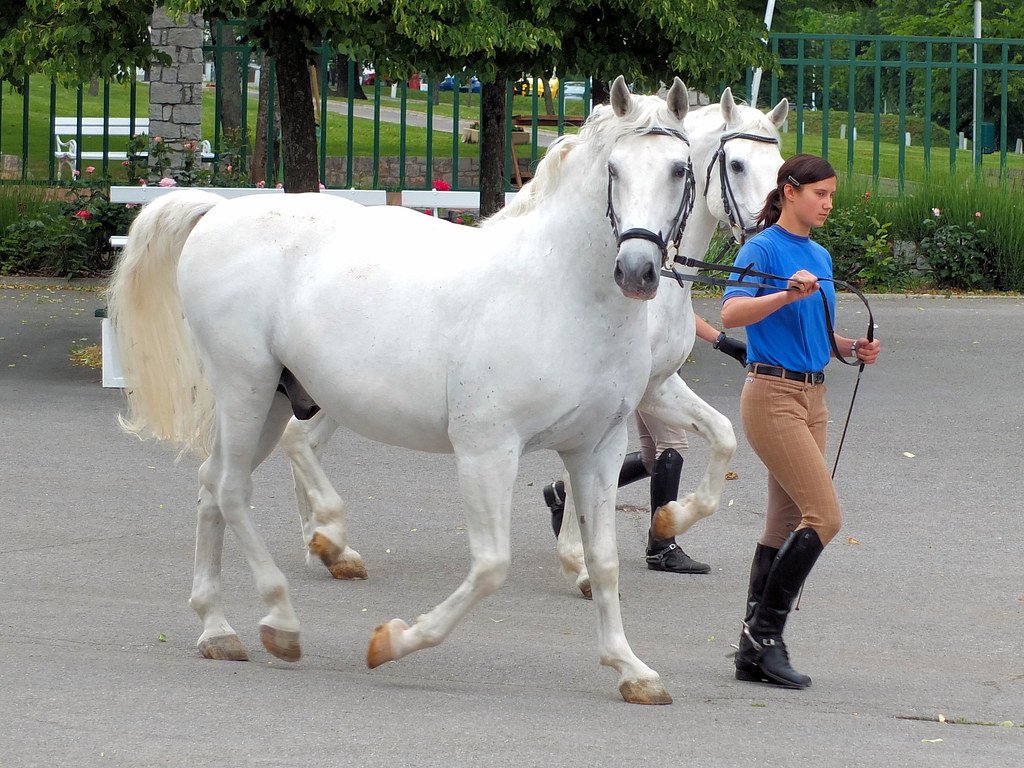
Lipica is a small village in the Karst region of southwestern Slovenia, a few kilometers from the Italian border, best known as the birthplace of the Lipizzan horse — the white horses of the Spanish Riding School in Vienna. The Lipica Stud Farm, founded in 1580 by Archduke Charles II of Austria, is one of the oldest continuously operating stud farms in the world and remains the main reason to visit.
The farm covers several hundred hectares of karst plateau. Visitors can tour the stables, watch the horses in the paddocks, and attend classical dressage performances where riders in formal attire put the horses through their paces. The performances are choreographed and elegant, a tradition stretching back four centuries. Foals are born grey or dark and whiten gradually over several years — the classic white coat does not fully appear until the horse is between six and ten years old.
Lipica also has a small hotel, a golf course, and tennis facilities, making it a quiet countryside retreat in addition to an equestrian attraction. The surrounding karst landscape is rocky, dotted with scrubby oak and pine, and underlain by the caves and sinkholes that give geology its word for this type of terrain. The Skocjan Caves, a UNESCO World Heritage Site, lie about 10 km northeast and make a natural pairing with a visit to the stud farm.