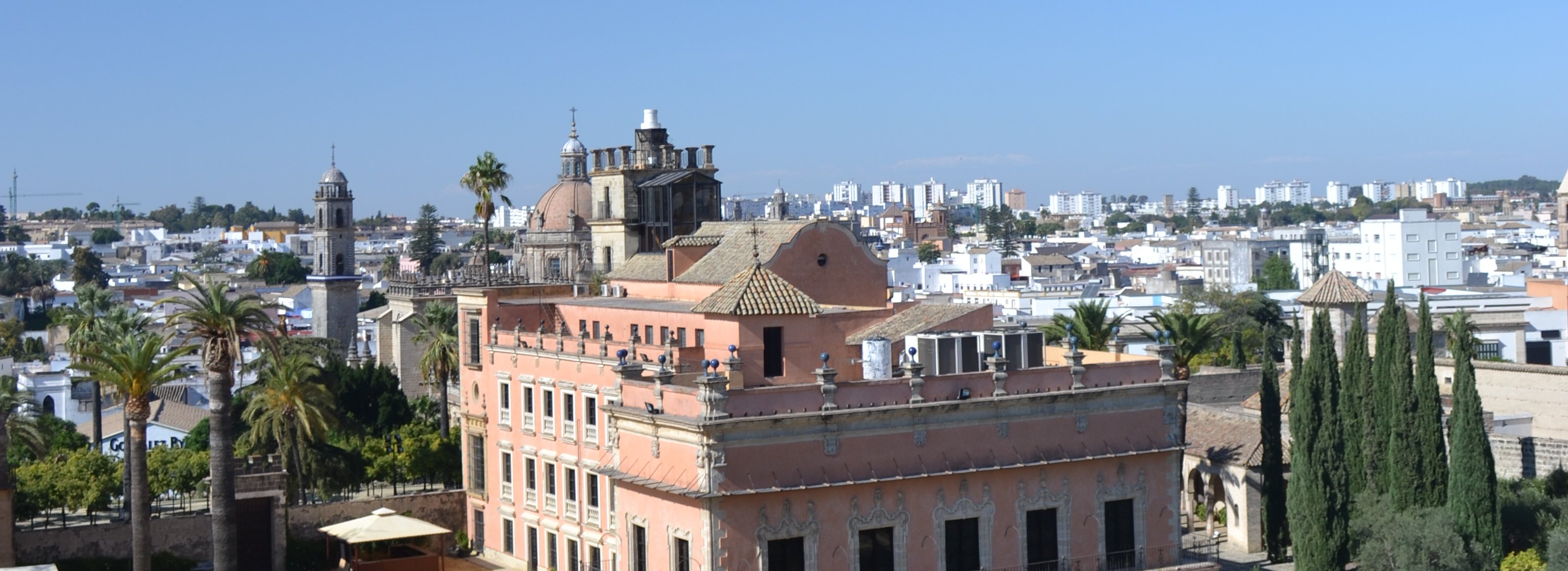
Jerez de la Frontera is built on sherry, horses, and flamenco — three things that Spain does nowhere better than here. The sherry bodegas fill the city with a particular aroma on damp mornings, and their white-painted walls line whole streets in the older quarters. The city's relationship with fortified wine goes back to Phoenician traders, and today the great names — González Byass, Domecq, Sandeman, Williams & Humbert — are headquartered in buildings that feel more like palaces than factories.
The Moorish Alcázar dominates one end of the old town, its walls and mosque preserved in good condition. Around it, a dense cluster of medieval churches and Renaissance palaces makes for genuinely rewarding street-level exploration. The Cathedral is the city's most prominent Gothic structure, though it was not completed until the eighteenth century, and the Church of San Miguel is considered one of the finest examples of Andalusian Gothic architecture. The cante jondo of the Santiago neighbourhood — the old Gypsy quarter — is as authentic as flamenco gets anywhere.
The Real Escuela Andaluza del Arte Ecuestre is one of the world's great equestrian institutions, and its shows — where Carthusian horses perform dressage routines to music — sell out weeks in advance. The Feria del Caballo in May is when the city transforms into something spectacular: tens of thousands of horses, riders in traditional dress, casetas serving manzanilla sherry from before noon. Jerez at feria time is one of the great Andalusian experiences.
The city is an easy base for exploring the sherry triangle — Sanlúcar de Barrameda and El Puerto de Santa María are both within half an hour — and Cádiz, one of the oldest cities in Europe, is forty minutes away by train.