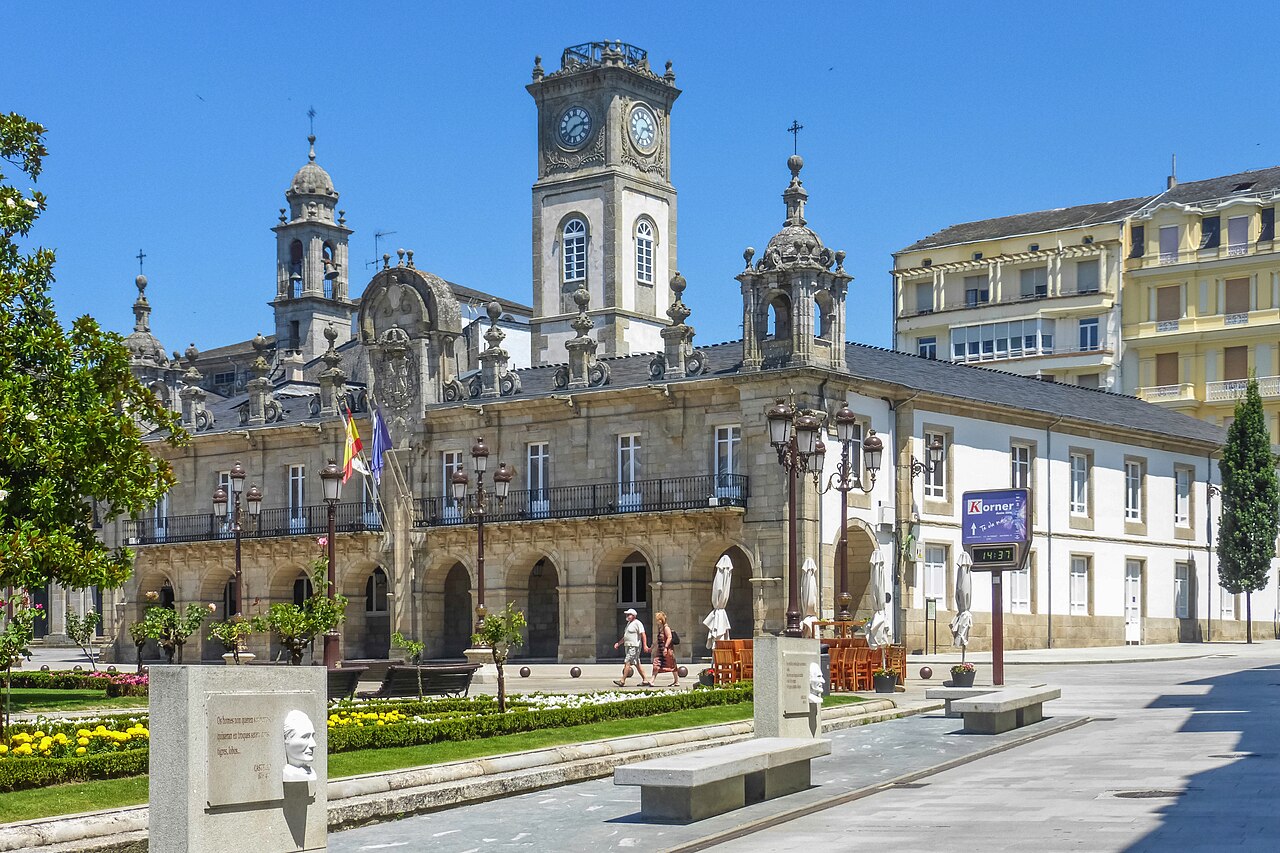
Lugo is one of Spain's most undervisited Roman cities, anchored by the finest surviving Roman wall in Europe. Built between 260 and 310 AD, the wall encloses the entire old town in an unbroken circuit of more than two kilometres — a feat no other city in the world can match. UNESCO recognised it as a World Heritage Site in 2000. Walking the sentry path on top of the wall, with views stretching over the Miño river valley and the hills of the Ancares, is reason enough to come.
Inside the walls, the city is an unhurried Galician capital. The 12th-century Romanesque cathedral holds a centuries-old privilege of perpetual Eucharistic exposition. The Provincial Museum, free to enter, traces the region's story from prehistoric gold through Roman mosaics to the medieval period. The nearby Domus do Mitreo museum occupies a building constructed around an excavated Roman house that was later converted into a Mithraeum — a find unique in Galicia. Down by the Miño river, the Roman bridge built in the first century AD still carries pedestrians across the water.
Lugo is also serious about eating. The old town's tapas bars — concentrated around Praza do Campo, Rúa da Cruz and Rúa Nova — serve generous free tapas with every drink, a Galician custom that feels genuinely lavish. The local wine of choice is Ribeiro, though Mencía reds from the nearby Ribeira Sacra valley are worth seeking out. In late June, the Arde Lucus festival fills the walled city with Roman legionaries, Celtic warriors, chariot races, and hundreds of thousands of visitors.