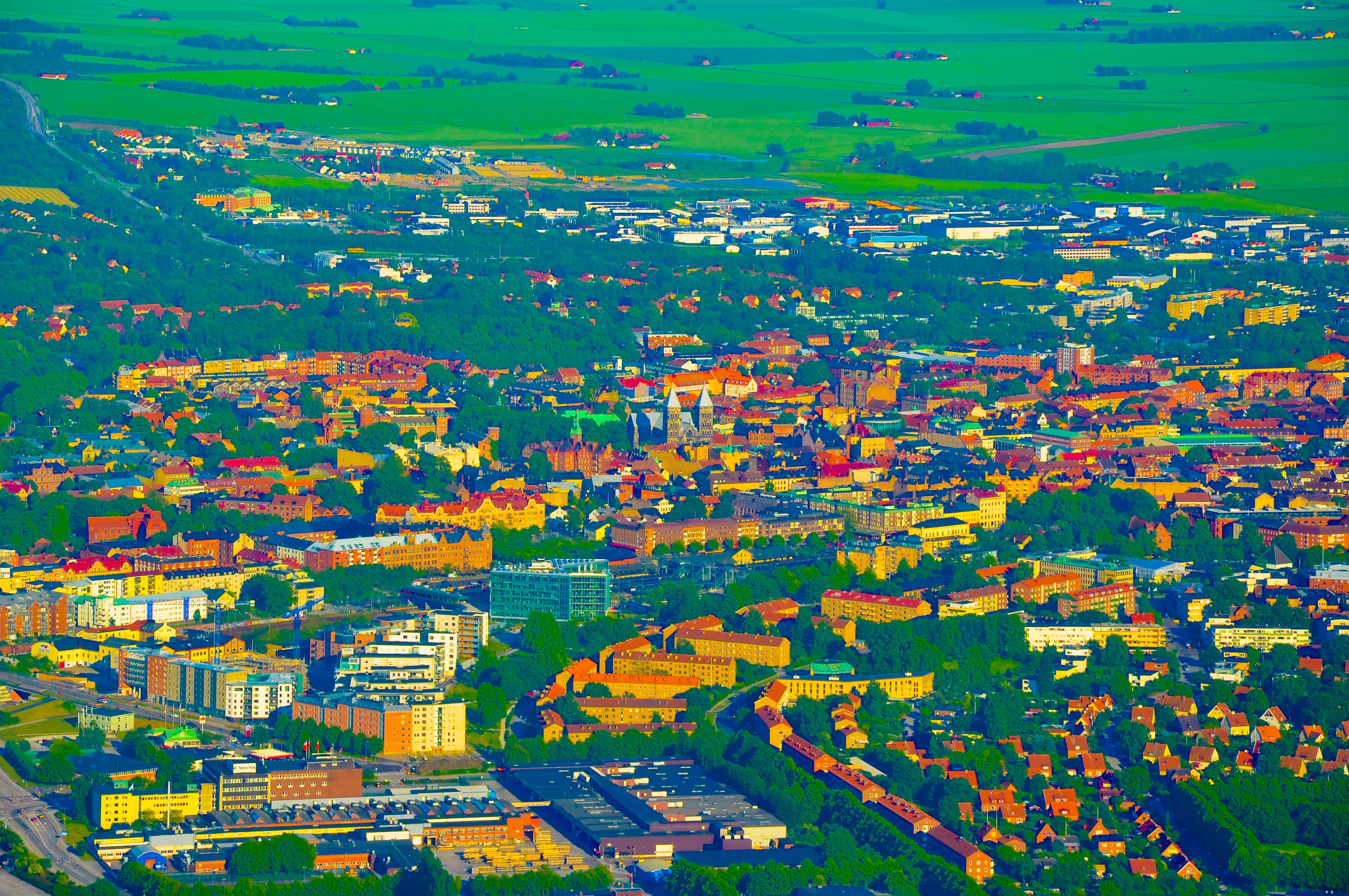
Lund is one of Scandinavia's oldest cities and one of its most likeable. Founded around 990 AD by Danish king Sweyn Forkbeard, it predates the Swedish state itself and spent its early centuries as the ecclesiastical capital of the north — a status that bequeathed the city a spectacular Romanesque cathedral and a dense concentration of medieval lanes and half-timbered buildings that survive largely intact.
Today Lund is defined by its university, founded in 1666 and now home to around 40,000 students in a city of only 90,000. That ratio gives the place an easy-going energy: the cafés fill early, the bookshops are serious, and there is always something on. The old centre is compact and entirely walkable, with Lund Cathedral and the Lund University Main Building at Lundagård park forming the architectural heart, and Kulturen — a sprawling open-air museum — just behind.
Despite its age and density of culture, Lund is unpretentious. It rewards a slow visit — a morning in the cathedral crypt with its extraordinary medieval astronomical clock, an afternoon wandering Kulturen or the Botanical Garden, an evening in one of the student-frequented bars near the main square. It sits twelve minutes by train from Malmö and forty minutes from Copenhagen, making it an easy day trip, though it deserves longer.