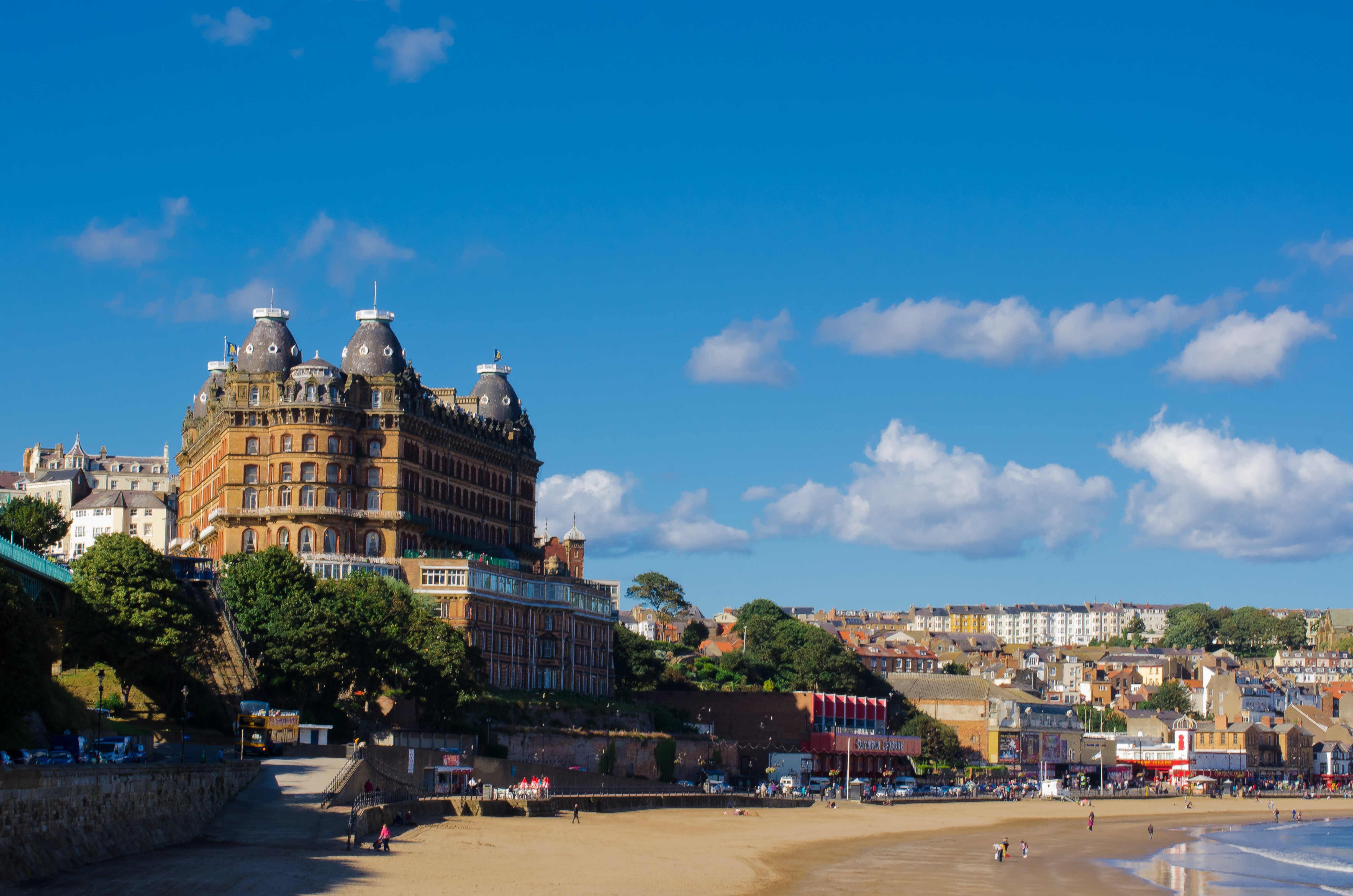
Scarborough is a classic seaside resort on the east coast of Yorkshire. The old town is built around a massive headland that juts out into the North Sea, dividing the town into a north side and a south side — each with its own character and its own beach.
The North Bay is relatively unspoiled and popular with surfers. The best walk in town is the Marine Drive — a Victorian seafront road that circles the base of the headland — continuing out to Scalby Mills and the Sea Life Centre. The South Bay is more commercialised, with amusement arcades, ice cream parlours, and fish and chips keeping most people happy. Victorian funicular railways connect the clifftop Esplanade to both beaches.
At the top of the headland is Scarborough Castle — a 12th-century fortress on a site that has been defended since the Iron Age. The climb is steep but the views are exceptional. Below, on the South Bay shore, the Scarborough Spa complex is the grand Victorian building that grew from the mineral spring that started the whole resort story in the 17th century.
The Grand Hotel — the largest hotel in Europe when it opened in 1867 — still dominates the Esplanade skyline. Anne Brontë died there in 1849 and is buried in the churchyard below the castle. The Stephen Joseph Theatre — where Alan Ayckbourn has been premiering his plays for six decades — gives Scarborough a cultural life well above what most seaside towns can manage. The Scarborough Art Gallery, in an Italianate villa on the Crescent, has a good collection of Yorkshire coast paintings and is free to enter.