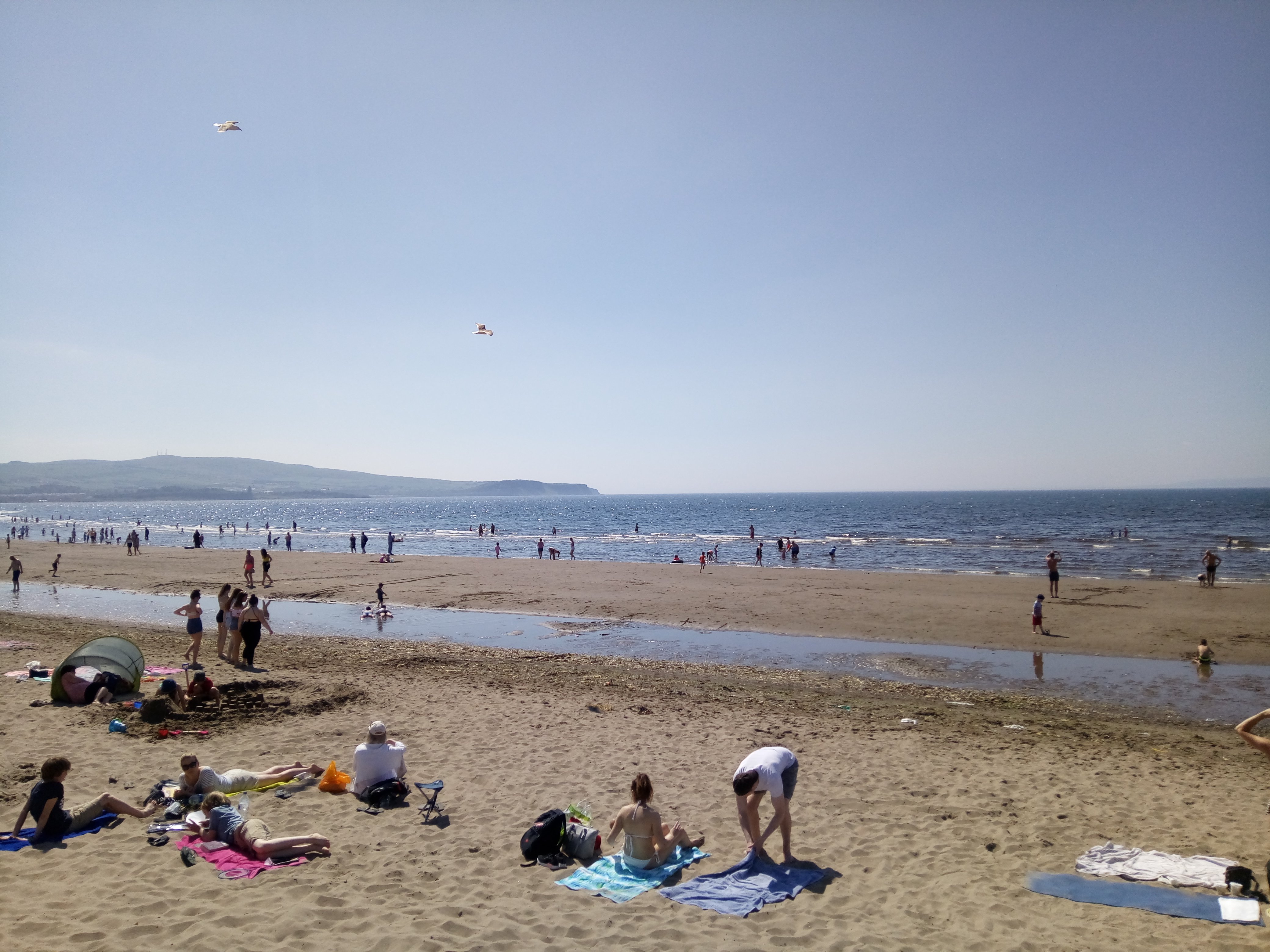
Ayr is a coastal town on the Firth of Clyde in South Ayrshire, best known as the birthplace of Robert Burns — Scotland's national poet, born at Alloway on the southern edge of the town in 1759. The Burns connection is Ayr's dominant attraction: Burns Cottage and the Burns National Heritage Park draw visitors from around the world, particularly on Burns Night (25 January) when the town is at its most animated. The nearby Auld Brig — the ancient bridge over the River Ayr that appears in Burns's narrative poem "Tam o' Shanter" — is still standing, still walkable, and still gives a shiver of recognition to anyone who knows the poem.
The town itself has a long sandy beach, a functioning harbour, and a Victorian-era promenade that has seen better days but still draws summer visitors. The Gaiety Theatre on Carrick Street, a Category B listed building, is the main arts venue in the area. Ayr racecourse, just north of the town centre, is one of the most important flat racing venues in Scotland — the Scottish Grand National is run here in April, and the Gold Cup in September.
Beyond the town, the countryside opens into productive agricultural land and some dramatic coastal scenery. Culzean Castle — a Robert Adam masterpiece perched on cliffs nine miles south — is one of the National Trust for Scotland's flagship properties and one of the finest buildings in the country. Electric Brae, a few miles further south, is a famous optical illusion where the road appears to slope uphill in the opposite direction to reality. Greenan Castle, a ruined clifftop tower three miles from the town centre, is accessible on foot along the beach and worth the walk for the views south to Arran and the Kintyre peninsula.
Glasgow is about 35 miles north by road or rail, making Ayr an easy day trip from the city. The train from Glasgow Central takes about 50 minutes.