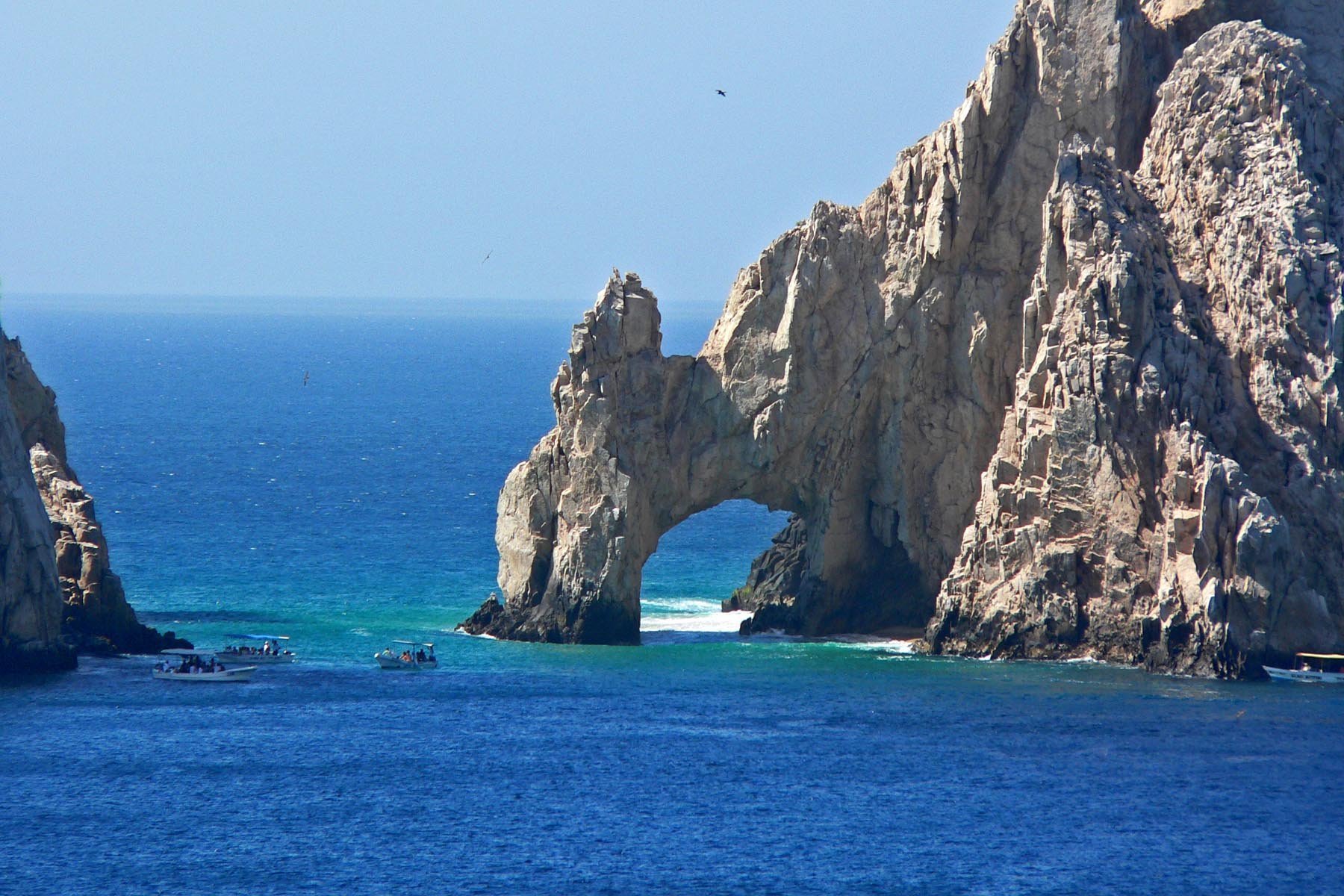
Cabo San Lucas sits at the very southern tip of the Baja California peninsula, at the point where the Pacific Ocean meets the Sea of Cortez. Together with its more sedate neighbour San José del Cabo, 30 km to the east, it forms the resort area known simply as Los Cabos — the most developed beach destination in Mexico's north-west, and a different kind of Mexico from almost anywhere else in the country. Fifty years ago Cabo was a fishing village of a few hundred people; today it is an international resort with a permanent population of around 90,000 and a constant rotation of American and Canadian visitors, cruise ship passengers and sport fishermen. If you are looking for authentic Mexican culture, Cabo is not where you will find it. If you are looking for reliable sunshine, turquoise water, and first-class deep-sea fishing, there are few better places on earth.
The town's defining landmark is El Arco — a natural rock arch at the tip of the peninsula where the Pacific meets the Sea of Cortez, widely used as the logo of Cabo San Lucas and reachable only by boat from the marina. A short trip in a glass-bottom water taxi takes you around the arch, past the sea lion colony at Pelican Rock, and lands you at Playa del Amor (Lover's Beach) — a tiny sandy cove between the two seas where you can actually walk from the Pacific side to the Sea of Cortez side in less than a minute. The Medano Beach along the marina is the main swimming beach, its calm Gulf-side water a welcome contrast to the rough Pacific surf.
Beyond El Arco, Cabo's reputation rests on sport fishing — marlin, tuna, wahoo and dorado are caught year-round, and the annual Bisbee's Black & Blue tournament in October is one of the richest sport-fishing competitions in the world — and on its diving and snorkelling, which thanks to the convergence of the two oceans is some of the most species-rich in North America. From December to April, grey whales and humpback whales pass through the surrounding waters on their migration. The town's nightlife, centred on the strip and the bars behind the marina including the famous Cabo Wabo Cantina, is relentlessly aimed at the spring-break crowd.