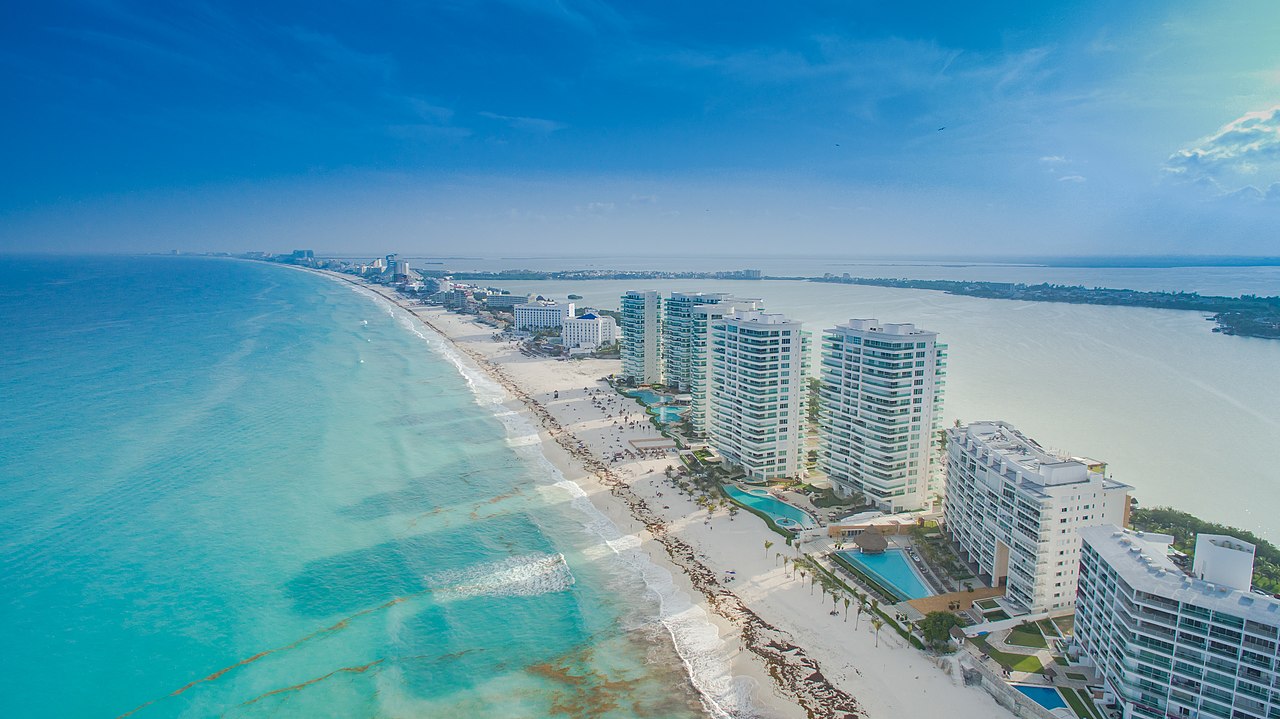
Cancun sits at the northeastern tip of the Yucatan Peninsula, where a long barrier island — the Hotel Zone — curves between the Caribbean and a quiet lagoon. The beach is genuinely spectacular: powder-white sand and turquoise water that shifts from pale jade to deep blue. The snorkelling and diving offshore are among the best in the Americas — try the underwater sculpture park at MUSA — and the island of Cozumel, easily reached by ferry, has some of the clearest water on earth.
The rest of the package is less compelling. The Hotel Zone is essentially a strip of international resort hotels, chain restaurants and nightclubs built for visitors who want to stay close to the beach and the pool. If that is what you are after, it delivers. If you want to see Mexico, you will need to venture elsewhere — across the bridge to downtown Centro, 20 minutes by ferry to Isla Mujeres, or two hours west to Valladolid, a handsome colonial city with a completely different character.
The real draw for many visitors is not Cancun itself but its surroundings. Chichén Itzá, one of the most impressive Maya sites in Mexico, is about 200 km west. Tulum, with its clifftop ruins above a Caribbean beach, is 130 km south. The cenotes — sinkholes filled with crystalline fresh water — are scattered all across the peninsula and make for excellent half-day excursions; Cenote Ik Kil near Chichén Itzá and Cenote Dos Ojos south of Tulum are the headline visits.