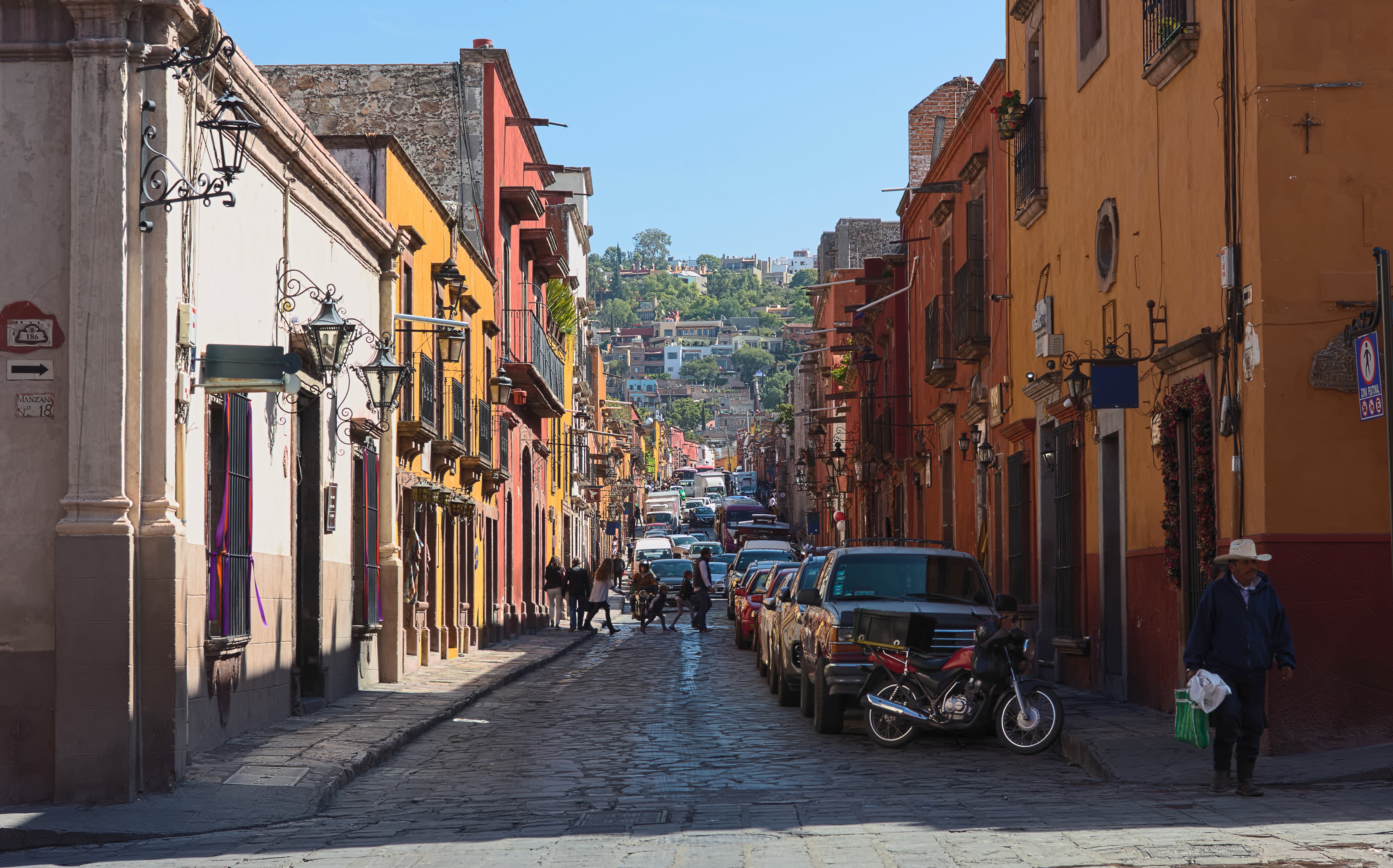
San Miguel de Allende sits at 1,900 metres in the high desert of Guanajuato state, and it is one of the most beautiful cities in Mexico — a fact that has been widely discovered. The UNESCO World Heritage historic centre is a collection of cobblestone streets, baroque churches, and colonial mansions in ochre and terracotta, centred on El Jardín, the main square, where the Parroquia de San Miguel Arcángel dominates the skyline with its extraordinary neo-Gothic pink stonework — an early 20th-century modification by an indigenous stonemason who taught himself Gothic architecture from postcards.
The city has a large foreign resident community, drawn by the climate (warm and dry most of the year, cool in winter), the beauty of the streets, and a thriving arts scene. The Instituto Allende, founded in 1951, drew American artists and writers through the 1950s and 1960s, and the city has retained that reputation. Today it supports galleries, studios, cooking schools, and Spanish language programs alongside the regular expat restaurants and boutique hotels. The result is a city that's simultaneously authentically Mexican and extremely comfortable for visitors — a combination that some travellers find ideal and others find too polished.
Ten kilometres north, the Sanctuary of Atotonilco is a baroque church that pilgrims have been visiting since the 18th century. Its interior is covered entirely in murals painted over two decades by a single artist — floor to ceiling, nave to apse. It is one of the most remarkable interiors in Mexico and alone justifies a visit to the region. San Miguel is also where Mexico's independence movement was born: the town was the base of Ignacio Allende, one of the conspirators who launched the 1810 rebellion that began at nearby Dolores Hidalgo.