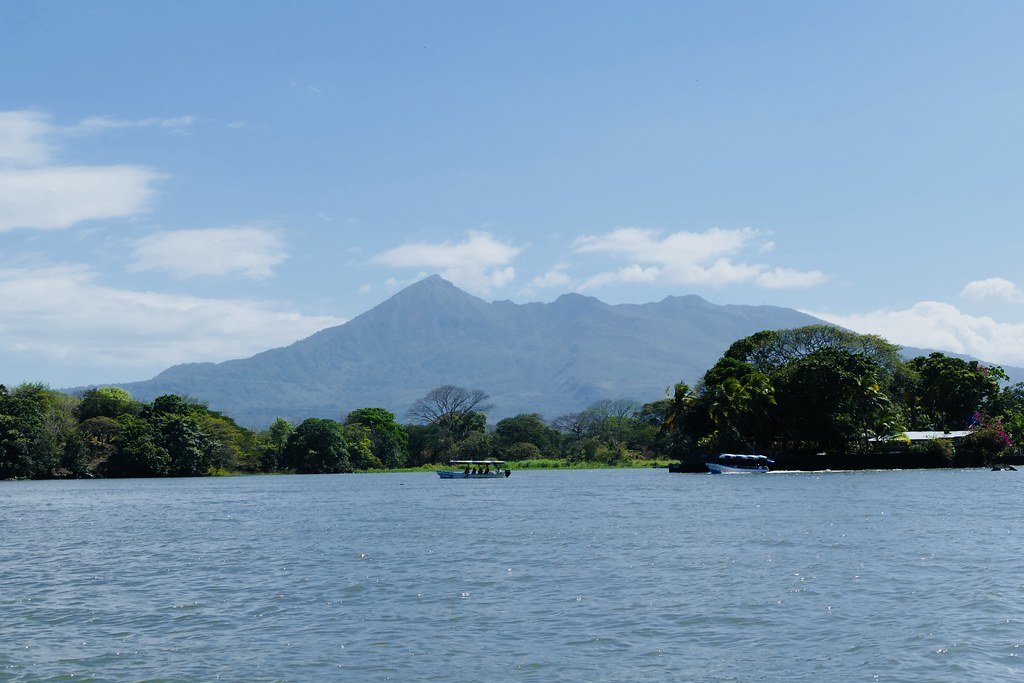
Lake Nicaragua — known locally as Lago de Nicaragua or Cocibolca — is one of the largest freshwater lakes in the Americas, stretching roughly 160 kilometres from northwest to southeast. It dominates the southwestern quarter of the country and defines much of Nicaragua's geography and identity. The lake is so large that colonial-era travellers mistook it for an inland sea, and the Spanish briefly considered routing a trans-oceanic canal through it.
The most striking feature of the lake is its islands. The lake contains some 400 of them, ranging from tiny volcanic rocks to Ometepe, a substantial island formed by two volcanoes — Concepción and Maderas — rising directly from the water. Ometepe is the most visited destination on the lake, with hiking, wildlife, and pre-Columbian petroglyphs. Closer to Granada, the Isletas de Granada and the wilder Zapatera Island make easy day trips. The Solentiname Archipelago in the remote southern end is known for its naive art tradition, started in the 1960s under the influence of the poet-priest Ernesto Cardenal.
The lake has an oddity that few freshwater lakes can match: bull sharks. Sharks were once thought to have been trapped here after the lake separated from the Pacific, but researchers now know they migrate in from the Caribbean via the Río San Juan, which drains the lake eastward. Bull sharks are aggressive and sightings, while rare, do occur. Swimming is generally considered safe in most areas, but locals know where to be cautious.
Granada, on the northwestern shore, is the main gateway city and one of the oldest European settlements in the Americas. Its colonial architecture and waterfront make it the most practical base for exploring the lake. Ferries and water taxis connect Granada to the islands and run the length of the lake south toward San Carlos and the Río San Juan.