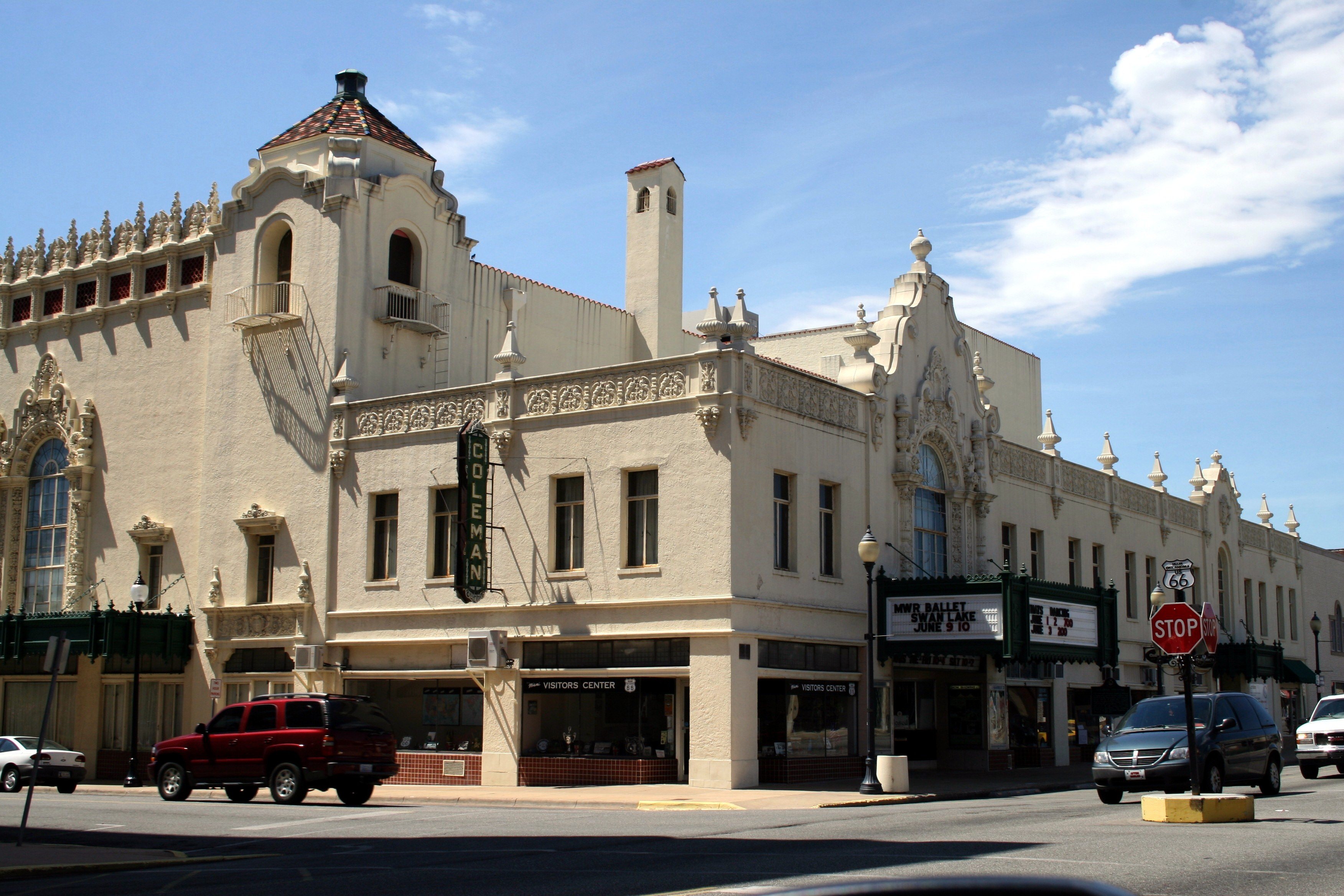
Miami — pronounced "My-AM-uh" by the locals, not like the Florida city — sits in the far northeast corner of Oklahoma, right on historic Route 66. With a population of around 14,000, it is one of the first Route 66 towns you hit when entering the state from the east, and it carries that roadside heritage proudly.
The town is the seat of Ottawa County and the headquarters of several Native American tribes, including the Miami Tribe of Oklahoma, who gave the city its name. That dual identity — Route 66 Americana layered on top of deep Indigenous history — gives Miami more texture than most small Oklahoma towns.
Downtown still has a handful of striking buildings from its early twentieth-century boom years. The Coleman Theatre, a lavish 1929 Spanish Colonial Revival movie palace built with zinc-mining money, is the standout — it was restored in the 1990s and hosts concerts, films, and tours. Strolling the old commercial blocks along Main Street, you will find a mix of antique shops, small-town diners, and murals celebrating the town's Route 66 connection, plus the restored Marathon Oil service station at the south end of Main.
Just south of town, a peculiar nine-foot-wide strip of original 1922 concrete — the Route 66 sidewalk highway — survives in farmland for nine miles, complete with the 1934 Narcissa D-X gas station along the way. To the north, the Mother Road runs on through Commerce, boyhood home of Mickey Mantle.
If you are driving the Mother Road, Miami makes a natural stop between Joplin, Missouri and Vinita to the west. Give it an hour or two — enough time to see the Coleman Theatre, grab a bite, and stretch your legs before the next stretch of highway.