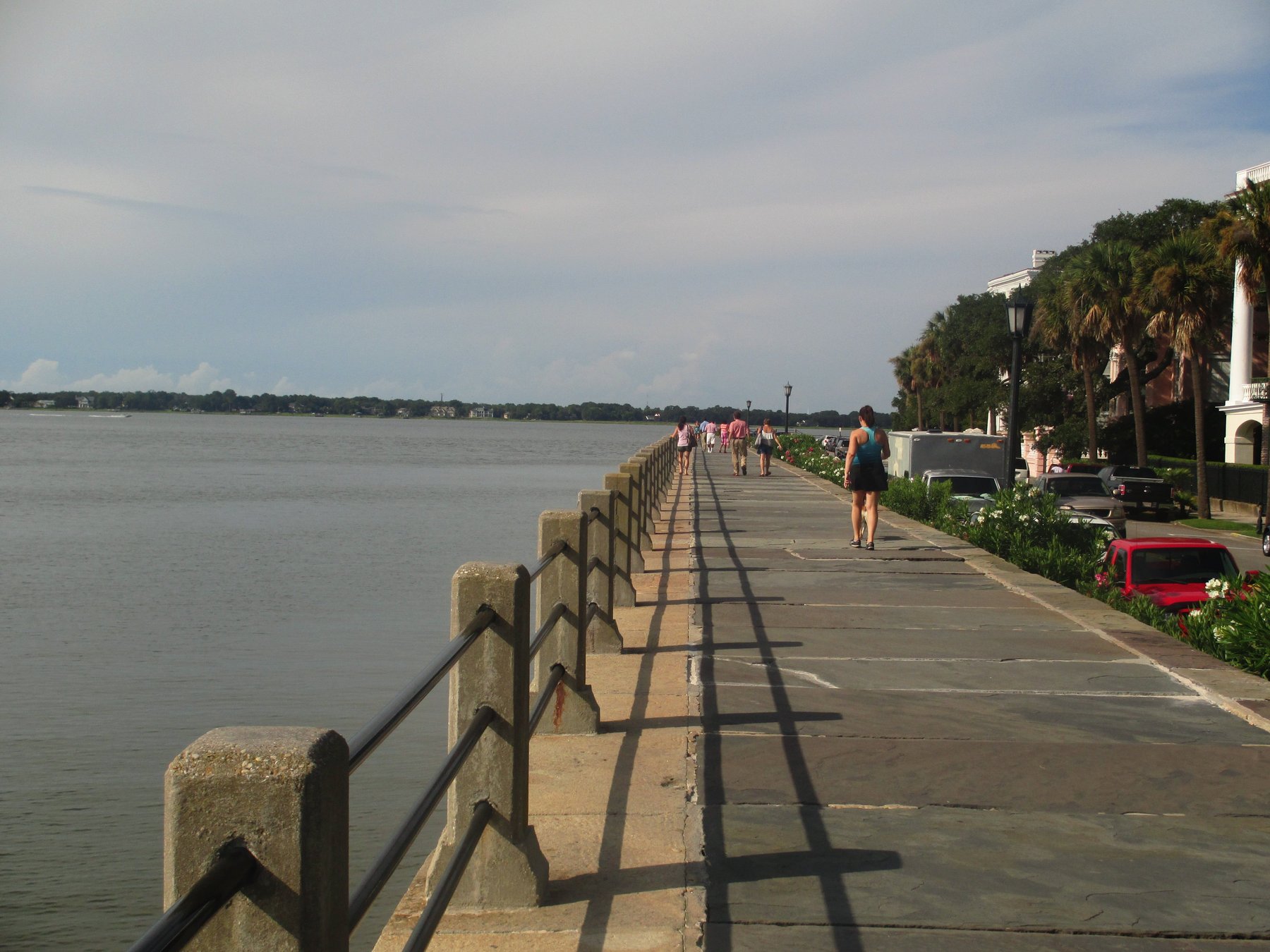
Charleston is one of the most beautiful and best-preserved cities in the United States — a 17th-century Atlantic port on a peninsula between the Ashley and Cooper rivers, laid out around pastel stucco townhouses, wrought-iron gates, palm-shaded cobbled streets and the long row of waterfront mansions along the Battery. Founded in 1670 and briefly the wealthiest city in colonial North America thanks to rice, indigo and the slave trade that produced it, Charleston declined slowly in the 20th century and, short of capital, preserved its old buildings instead of tearing them down. The result is a historic centre of extraordinary architectural coherence and a city that rewards slow wandering on foot.
It was also where the American Civil War began, with Confederate guns firing on Fort Sumter in the harbour in April 1861. The fort is now a national monument you reach by boat tour; the war and its afterlife, including the harder history of slavery and the Gullah culture of the Sea Islands, are the subject of the excellent International African American Museum that opened in 2023 on the old wharf where enslaved Africans first came ashore. The Old Slave Mart on Chalmers Street is the only surviving slave auction building in South Carolina.
Combine the historic sights with a stroll past Rainbow Row and the Battery, through the colonial-era Charleston City Market, a meal at one of the low-country restaurants for which the city is famous (shrimp and grits, she-crab soup, sweet tea), and an afternoon out on Sullivan's Island or Folly Beach. For the adventurous, the weekend-only H.L. Hunley submarine in North Charleston is one of the most fascinating archaeological sites in the country.