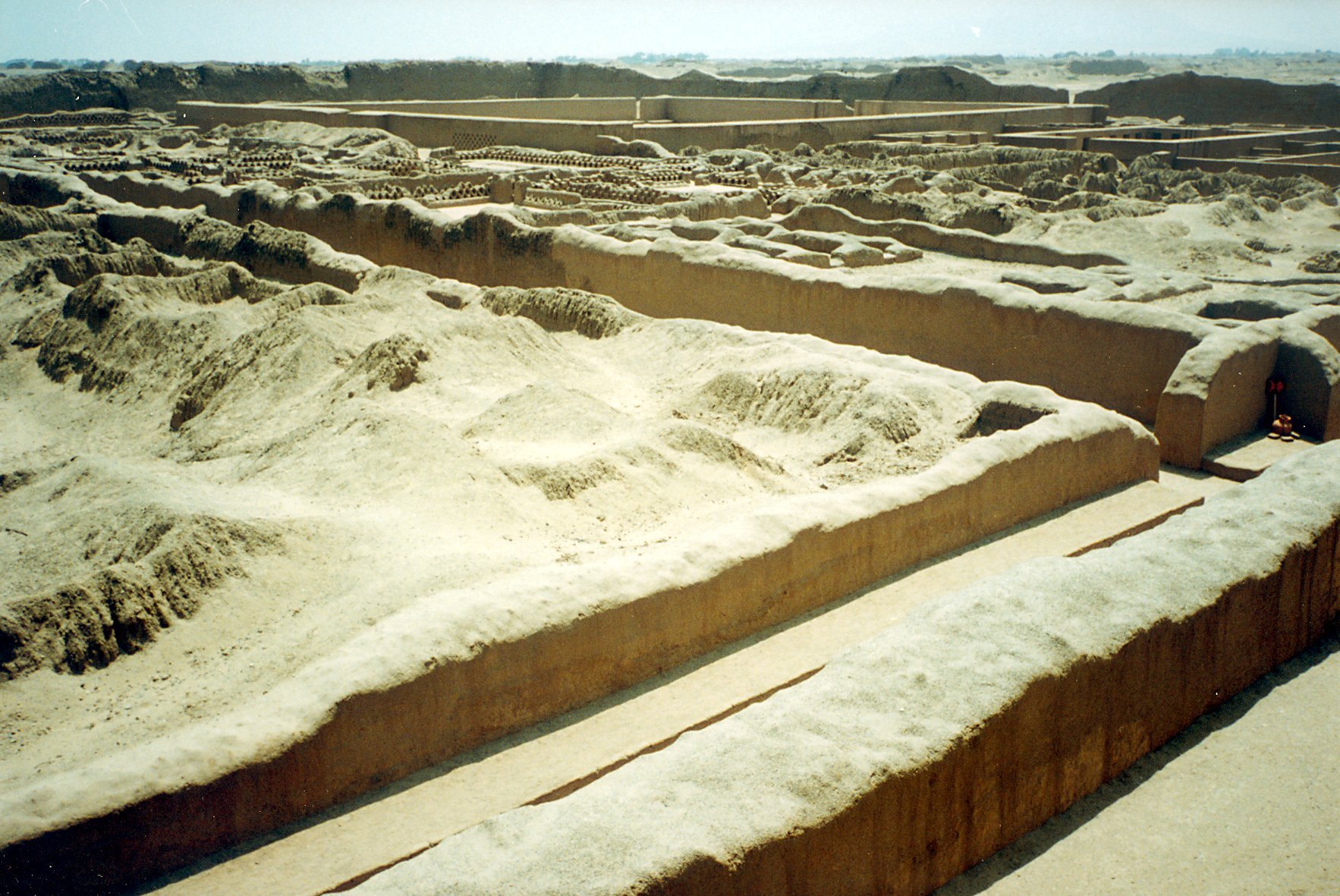
Chan Chan is the largest pre-Columbian city in South America and one of the great archaeological sites of the Americas. Built around 900 AD and reaching its peak under the Chimú Empire in the 13th and 14th centuries, it once housed around 30,000 people spread across a vast complex of royal palaces, temples, storehouses, and neighborhoods. The Spanish looted it thoroughly, but what remains — miles of crumbling adobe walls, geometric friezes, and ceremonial plazas — is still extraordinary.
The ruins sit 5 km west of Trujillo, easily reached by taxi or combi from the city. The main visitor entrance is at the Tschudi Complex, down a dirt road about 1.5 km from the main highway. One ticket covers Tschudi, Huaca Esmeralda, and Huaca Arco Iris, and is valid for two days — worth splitting across two visits if you want to take your time. Entry is around USD 5.
It takes imagination to see the city as it was. The adobe has melted in parts, and the looting stripped most of what made it glitter. But the scale is humbling: walk the corridors of Tschudi and the sheer size of the thing starts to land. UNESCO declared it a World Heritage Site in 1986, and also put it on the endangered list — rainfall from El Niño events has accelerated erosion in recent decades.