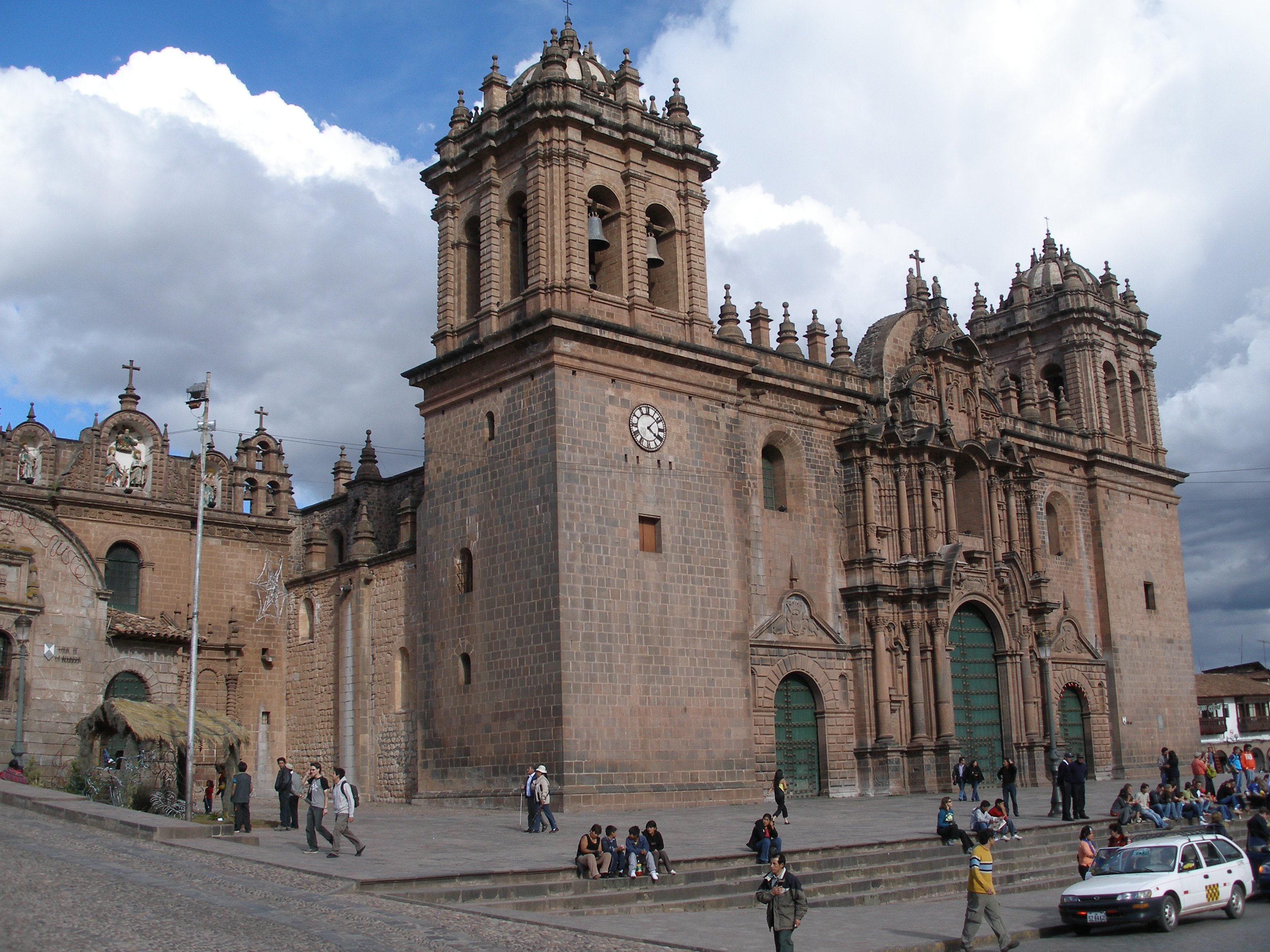
Cuzco was the capital of the Inca empire and is Peru's undisputed tourist capital today, thanks to a heritage unmatched anywhere in the Americas. Many streets in the city centre are lined with buildings that incorporate whole sections of ancient Inca walls — the Spanish built their colonial city directly on the foundations of the Inca one, and both layers are still visible everywhere you look.
The heart of the city is the Plaza de Armas, dominated by the Cusco Cathedral and the baroque facade of the Iglesia de la Compañía de Jesús. The Avenida del Sol leads southeast from the plaza to the Qorikancha — the Temple of the Sun, the most sacred site in the Inca empire — where a Spanish monastery sits on top of some of the finest Inca stonework you'll ever see. From there, look for the famous twelve-angled stone on Calle Hatunrumiyoc.
On the hill above town, Sacsayhuamán is the great Inca fortress with its zigzag walls of 125-tonne stones. The circuit continues to Q'enqo and Tambomachay, both covered by the Boleto Turístico. For pre-Columbian art, the Museo de Arte Precolombino is the best in the city.
The San Blas neighbourhood is the place for artisan workshops and better restaurants than those on the main plaza. The markets around the Plaza San Blas and the San Pedro market are great for Andean textiles and craftwork. And of course Machu Picchu and the Sacred Valley are the essential excursions from Cuzco.