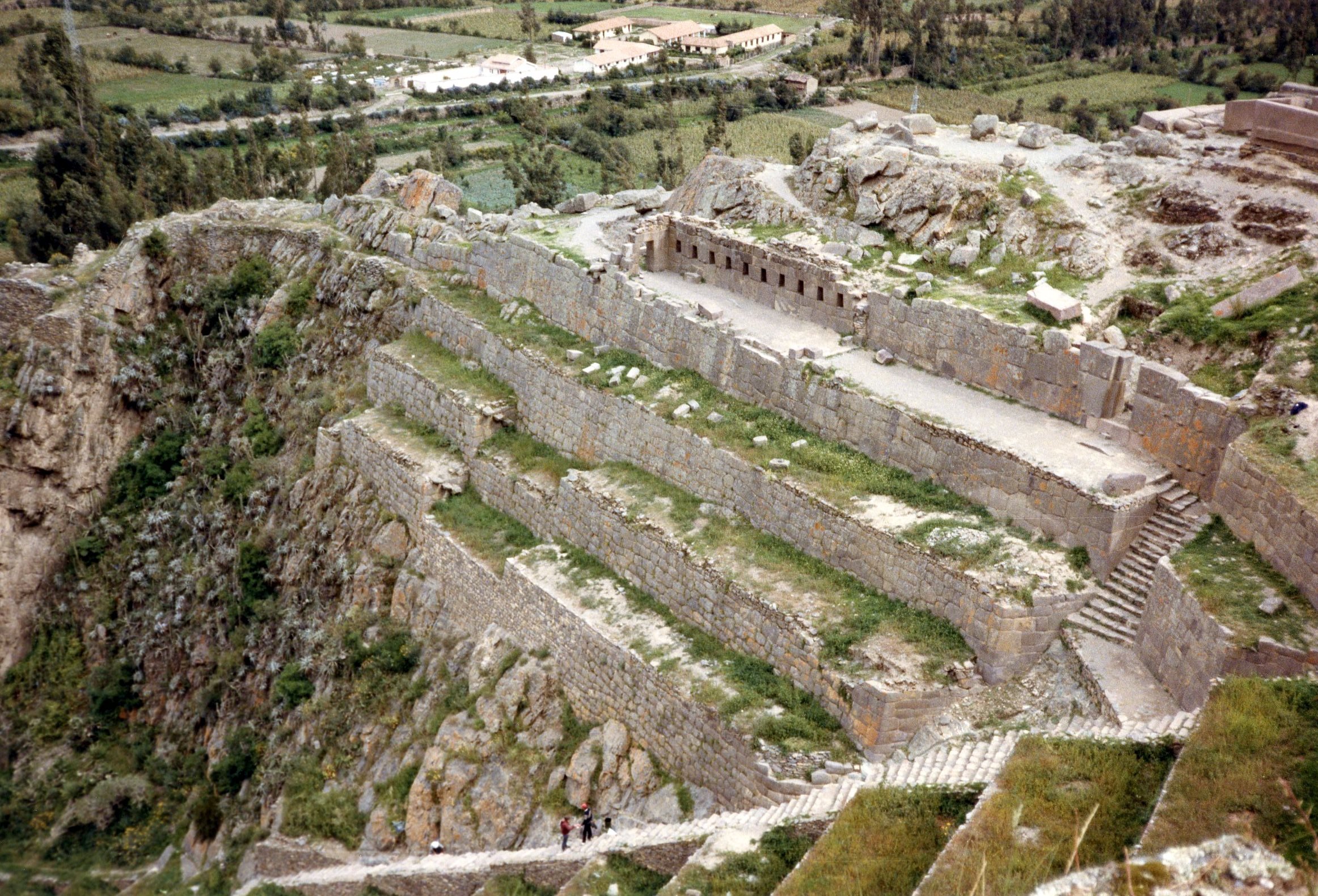
Ollantaytambo is one of the few surviving examples of Inca urban planning still inhabited today. The town sits at the western end of the Sacred Valley, 72 km from Cusco by road, where the Urubamba River narrows and the valley walls close in dramatically. What makes Ollantaytambo unusual is that the streets of the original Inca settlement are still in use — you walk down narrow alleys between stone walls built in the 15th century, past doorways and irrigation channels that predate the Spanish conquest by half a century.
The Ollantaytambo fortress dominates the town from its position above the main square. A massive complex of terraces, temples, and ceremonial structures, it was one of the last places where Inca resistance held off the Spanish — in 1537, Manco Inca defeated Hernando Pizarro's forces here in one of the few Inca military victories of the conquest. The fortress remains an extraordinary sight: the giant stone terraces rise in tiers from the valley floor to the ruins of a solar temple at the summit, and across the valley, you can see the Pinkuylluna storage warehouses clinging to the opposite hillside.
The town is also the main rail embarkation point for Machu Picchu. Trains for the Inca Trail and the scenic rail journey to Aguas Calientes depart from here, which means Ollantaytambo functions as a staging post for thousands of Machu Picchu visitors who arrive the night before to rest and avoid the Cusco crowds. Staying overnight rather than rushing through is worth it — the town at dusk and dawn, once the day-trippers have gone, has a quiet and genuinely ancient quality that is surprisingly easy to feel.