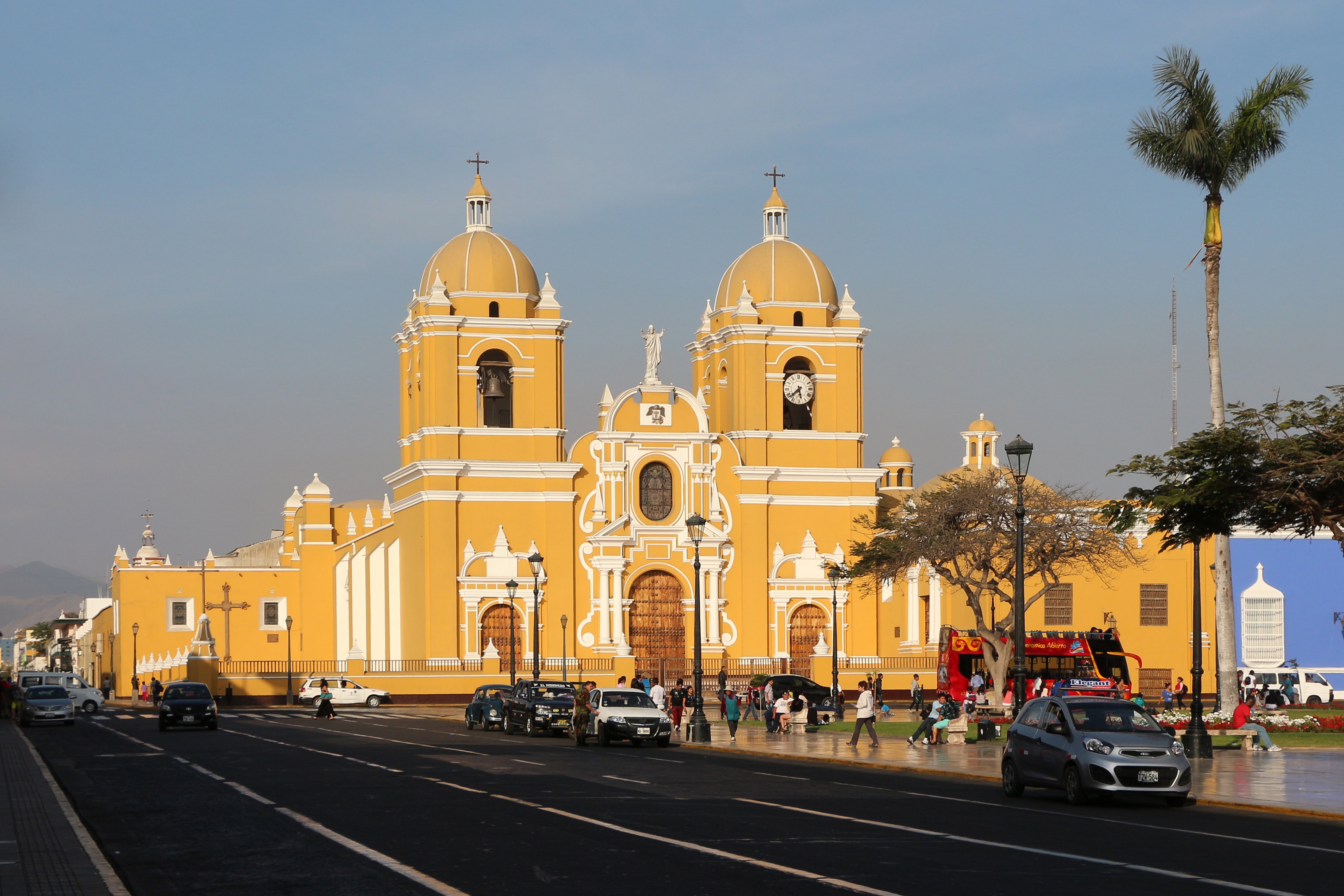
Trujillo is the largest city on Peru's northern coast, with about 800,000 people. It was founded by the Spanish in 1534 and retains a handsome colonial centre — pastel-coloured mansions with ornate wooden balconies line the streets around the Plaza de Armas.
The real draw, however, is the pre-Columbian archaeology in the surrounding area. Chan Chan, about 5 kilometres west of the city, is the largest adobe city in the world — the capital of the Chimú empire, which controlled much of the Peruvian coast before being conquered by the Inca in the 15th century. The site is vast, crumbling, and atmospheric. The Huaca de la Luna south of the city is a massive Moche pyramid dating from around 100–800 AD, with remarkably preserved polychrome murals depicting the Moche deity Ai Apaec. Sixty kilometres further north, the Huaca El Brujo complex yielded the sensational discovery of the Lady of Cao — a Moche woman buried with the full regalia of a ruler.
Back in the city, the Plaza de Armas is one of the handsomest colonial squares in northern Peru, and the eccentric Museo Cassinelli — in a petrol station basement — houses one of the best collections of Moche portrait ceramics anywhere.
Nearby Huanchaco, a beach town 12 kilometres northwest, is famous for its caballitos de totora — reed fishing boats that have been in continuous use here for over 3,000 years. Fishermen still ride them through the surf each morning.