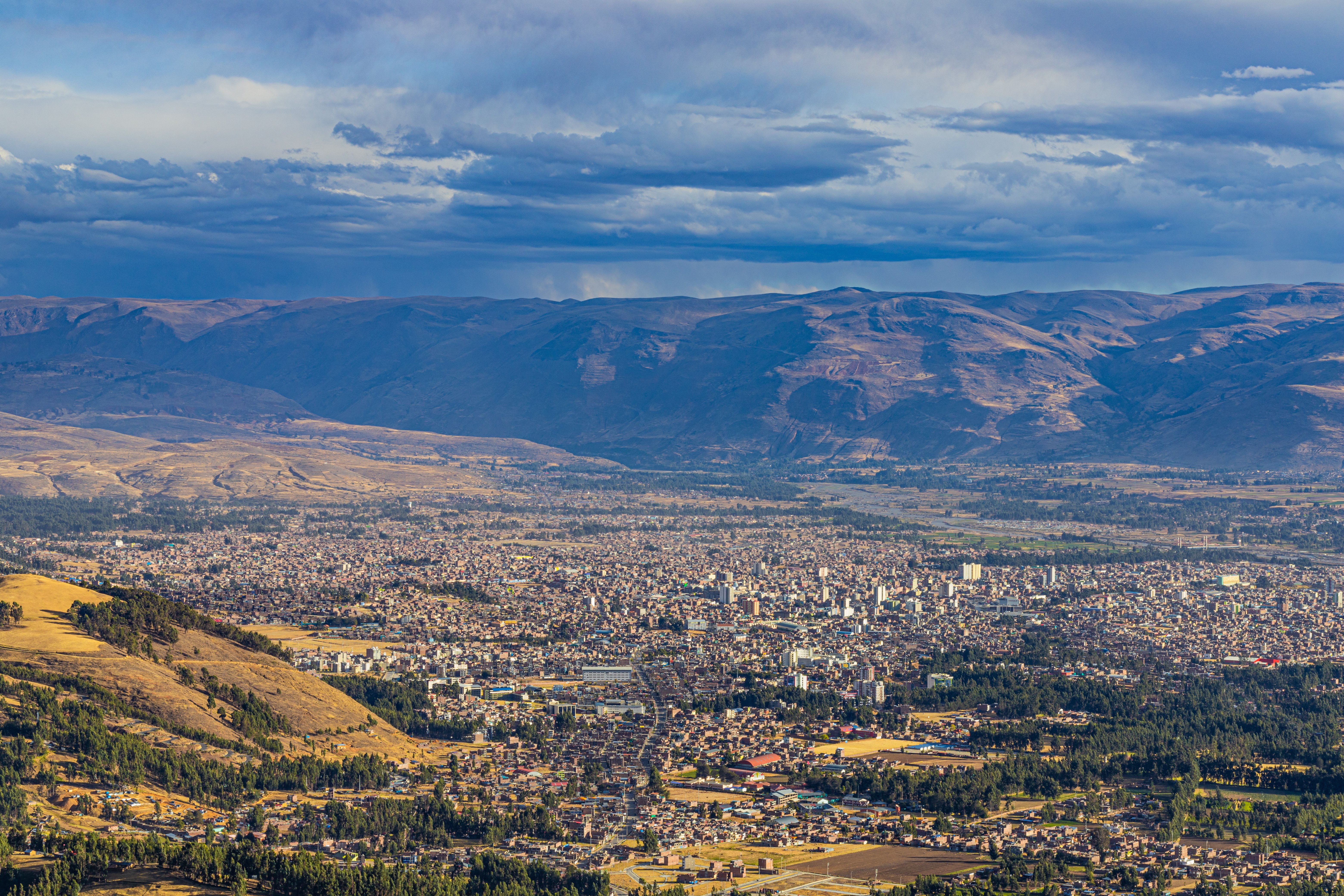
Highland Peruvian market city in the Mantaro Valley, known for textiles, gourds, and Wanka culture.
Huancayo is the main city of the Mantaro Valley in Peru's central highlands, sitting at about 3,270 metres. It is a busy commercial centre and market town — people from villages across the valley bring their handicrafts, produce, and livestock here to trade.
The Feria Dominical along Jirón Huancavelica is the highlight. It stretches for blocks, with stalls selling woven textiles, carved gourds, silverwork, fruit, and vegetables. It is chaotic, colourful, and one of the best markets in Peru. The Wednesday market in nearby San Jerónimo de Tunán is smaller but excellent for silver filigree jewellery.
The valley around Huancayo is worth exploring. Torre Torre, just outside town, is a cluster of eroded earth columns on a hillside with good views. The villages of Cochas Chico and Cochas Grande are known for carved gourd work (mates burilados). The train from Lima to Huancayo, when running, is one of the world's highest railway journeys. South of the city, the Wari Willka archaeological site traces the valley's pre-Inca past, and the Parque de la Identidad Wanka in El Tambo celebrates Wanka culture through murals, sculptures, and a section dedicated to the huaylarsh dance.
Guide
Getting There
Most travellers arrive by bus from Lima, a journey of six to eight hours depending on traffic and road conditions. Several companies operate on the route, including Cruz del Sur and Molina, with departures from Lima's Javier Prado bus terminals. The road climbs from the coast through spectacular mountain scenery before descending into the Mantaro Valley. Book in advance for weekend travel.
The Lima-Huancayo Central Railway is one of the world's most extraordinary train journeys, climbing to 4,781 metres at the La Galera pass before descending into the valley — higher than any railway in Europe. The line is operated by Ferrocarril Central Andino and runs only occasionally, typically on weekends during the dry season and for special excursions. When it is running, book well in advance; the seats sell out quickly. Check current schedules before planning around it, as operations are frequently suspended.
Huancayo also connects by bus to Huancavelica, Ayacucho, and other highland cities. The Huancavelica route, a slow but scenic journey of about four hours, follows a valley road into increasingly remote Andean country.
Guide
When to Go
Huancayo sits at 3,270 metres and has a classic highland climate: dry and cool in the Andean winter (May to September), wet in the summer (October to April). The dry season is the better time to visit — days are sunny, nights are cold, and the mountain views are clear. The rainy season brings daily afternoon downpours and muddy roads but makes the valley impossibly green.
The most spectacular time to visit is Carnival in February, when the city erupts with huaylarsh competitions, street parades, and water fights. It is chaotic and completely worth it if you can handle the crowds and the mud. The Feast of the Lord of Muruhuay in May is another important festival, drawing pilgrims from across the region to the sanctuary above Tarma, east of the city. September brings the regional festival season, when dances and processions from the different valley communities fill the plaza.
At altitude, the sun is fierce even when the air is cold. Sunscreen is essential year-round. Bring warm layers for evenings regardless of when you visit — the temperature drops sharply after dark.