Pisco is a small port city on Peru's southern Pacific coast, best known as the namesake of the country's national spirit and as the gateway to the Paracas National Reserve and the Islas Ballestas. The city was heavily damaged by a magnitude 8.0 earthquake in 2007, and while much has been rebuilt, parts of Pisco still show the scars — crumbled colonial facades and empty lots where buildings once stood. The main plaza and cathedral have been reconstructed, and the town has a scrappy, resilient feel.
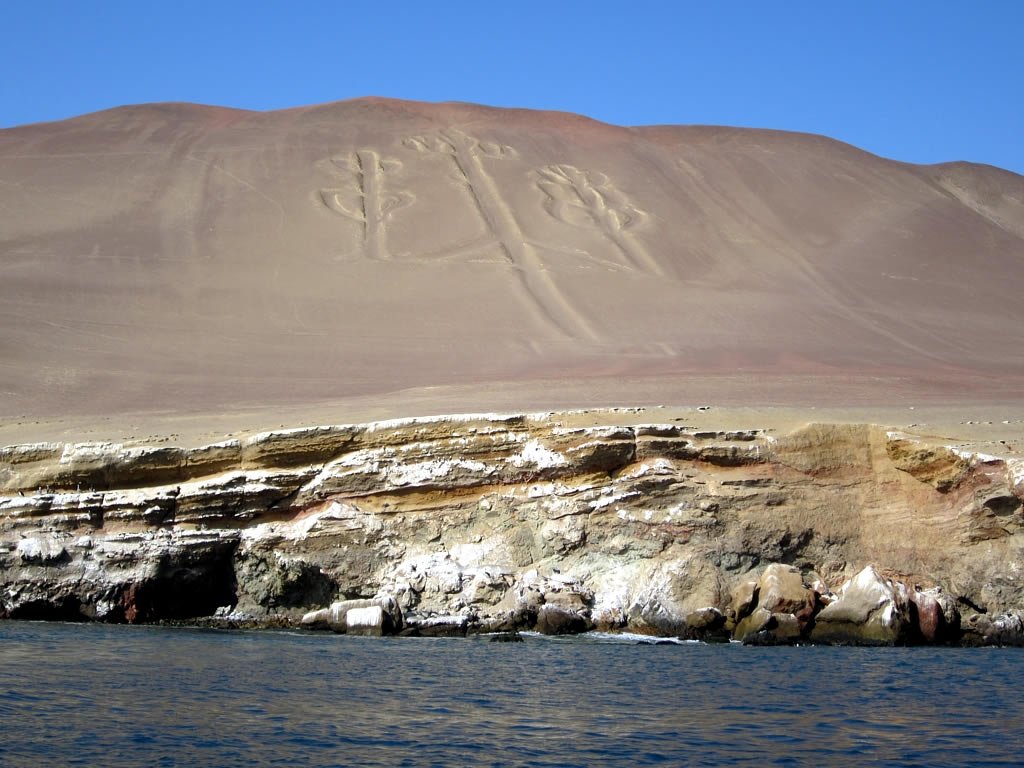
Most travelers pass through Pisco on their way to Paracas, 15 kilometers to the south, where boat tours depart for the Islas Ballestas. These rocky islands are home to huge colonies of sea lions, Humboldt penguins, and thousands of seabirds — they are sometimes called "the poor man's Galápagos," which undersells how impressive they actually are. On the way out, the boats pass the Paracas Candelabra, a giant geoglyph etched into a coastal hillside, mysterious as the Nazca Lines and just as unexplained. The Paracas National Reserve itself has dramatic desert-meets-ocean scenery and pre-Columbian archaeological sites, though the best artifacts from the Paracas culture — extraordinary woven textiles and elongated skulls — are now in museums in Lima.
Pisco's own beaches are not great for swimming — the water is cold and the sand is not particularly clean. But the town has decent, inexpensive seafood restaurants along the waterfront, and the ceviche here is excellent. Try the local pisco sour at any bar in town — there is a civic pride about the drink that makes it taste better at the source. Inland from the city, the Inca administrative centre of Tambo Colorado is one of the coast's best-preserved ancient sites and rarely crowded. The town is also a stop on the route south to Nazca and Arequipa, making it a natural overnight break on a longer coastal journey.